
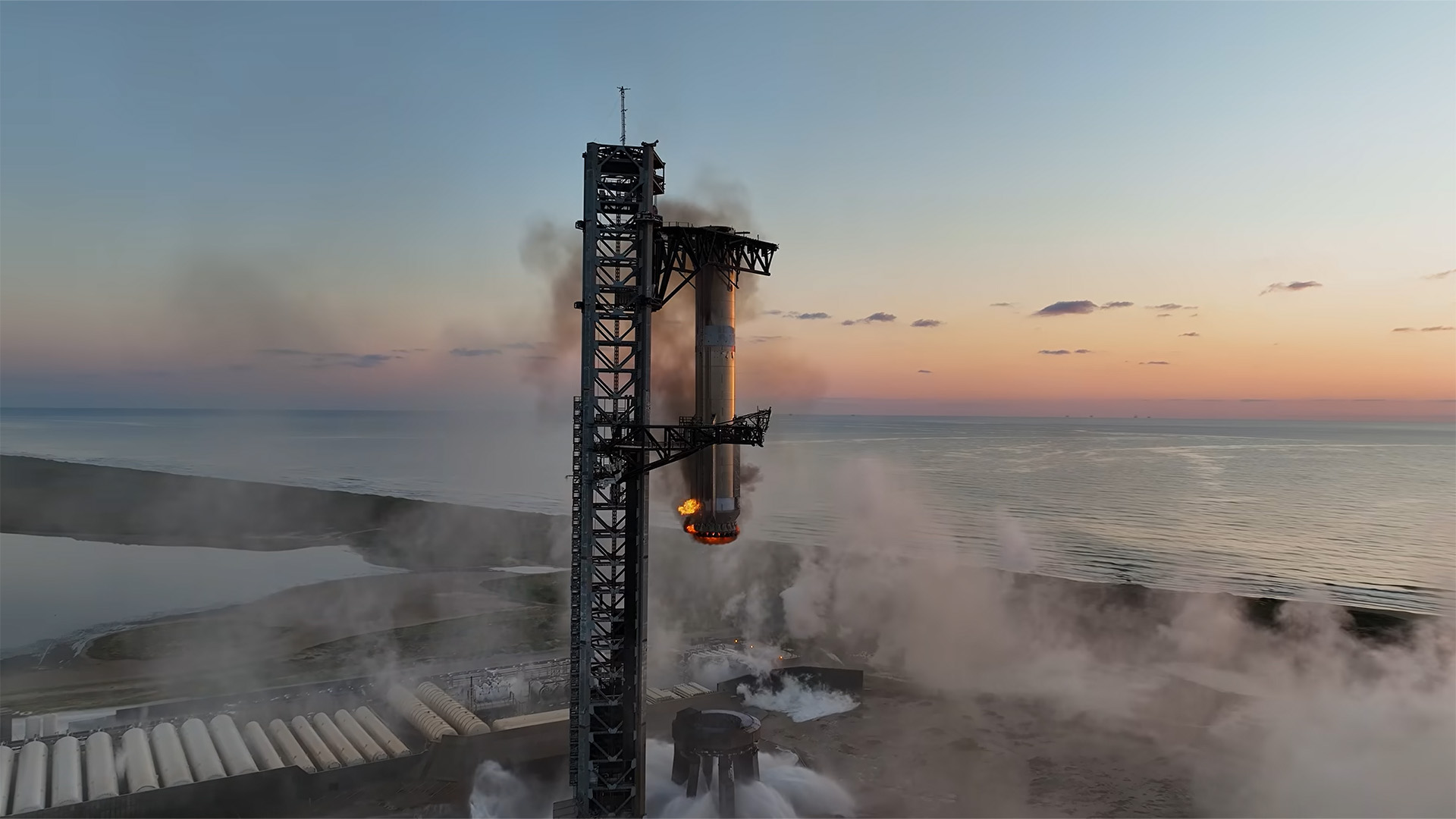
A little over two years ago, SpaceX launched a Starship into orbit and then caught the Super Heavy booster when it returned to Earth, a feat it has since repeated multiple times. The company is taking the next step in rocket reusability by catching both the booster and the upper stage of its Starship on Flight 15, something never achieved before. SpaceX is launching Flight 15 into orbit on Friday, Nov. 13, with the 75-minute launch window opening at 5:45 p.m. ET. On its mission, the Starship will deploy 26 Starlink V3 satellites, orbit Earth 14 times and return on Saturday. All of that is in line with most of SpaceX’s launches, of which there have been over 280 dating back to 2025. What makes the launch interesting is that SpaceX is attempting two things it hasn’t attempted before. The first is catching its latest booster, the Super Heavy V3, using Mechazilla, the informal name SpaceX gave to the launch-and-catch tower located at its facility in Boca Chica, Texas. SpaceX has caught the Super Heavy V1 successfully three times, but this is the first for the V3 rocket. The tower will use its arms like chopsticks to catch the Super Heavy V3 out of mid-air. The second is recovering both stages of the rocket. Prior Starship launches featured just the Super Heavy booster getting caught by Mechazilla while the upper stage landed in the ocean. This time around, SpaceX wants to catch the upper stage when it returns on Saturday with Mechazilla. How to watch Flight 15 SpaceX is streaming the flight from its X account and the company’s website. Coverage starts Friday at 5:15 p.m. ET, 30 minutes before the launch window opens. The stream should continue through the launch and the Super Heavy V3 catch, expected approximately 6.5 minutes after launch. The company promises “hours of live views” of Starship as it orbits Earth, offering viewers excellent views of the Planet from space. SpaceX hasn’t specified if it’s going to stream the entire mission, including the second catch when Starship returns to Earth on Saturday, Nov. 14. The expected time of arrival for that landing is 4:17 p.m. ET, assuming no delays or technical problems, which is a little more than 22 hours after launch. SpaceX streams from the same places every time, so if the company does stream it, the links above will be where to go. Should the launch be delayed due to weather, technical issues or something else (after all, it is Friday the 13th), SpaceX has not announced a backup launch date at this time.
SpaceX Attempts History Friday With the First-Ever Double Catch
Full Article
Original Source
Read the full article at Cnet →KhanList aggregates and links to publicly available news content. We do not host full articles from third-party sources. Always verify important information with original sources.