
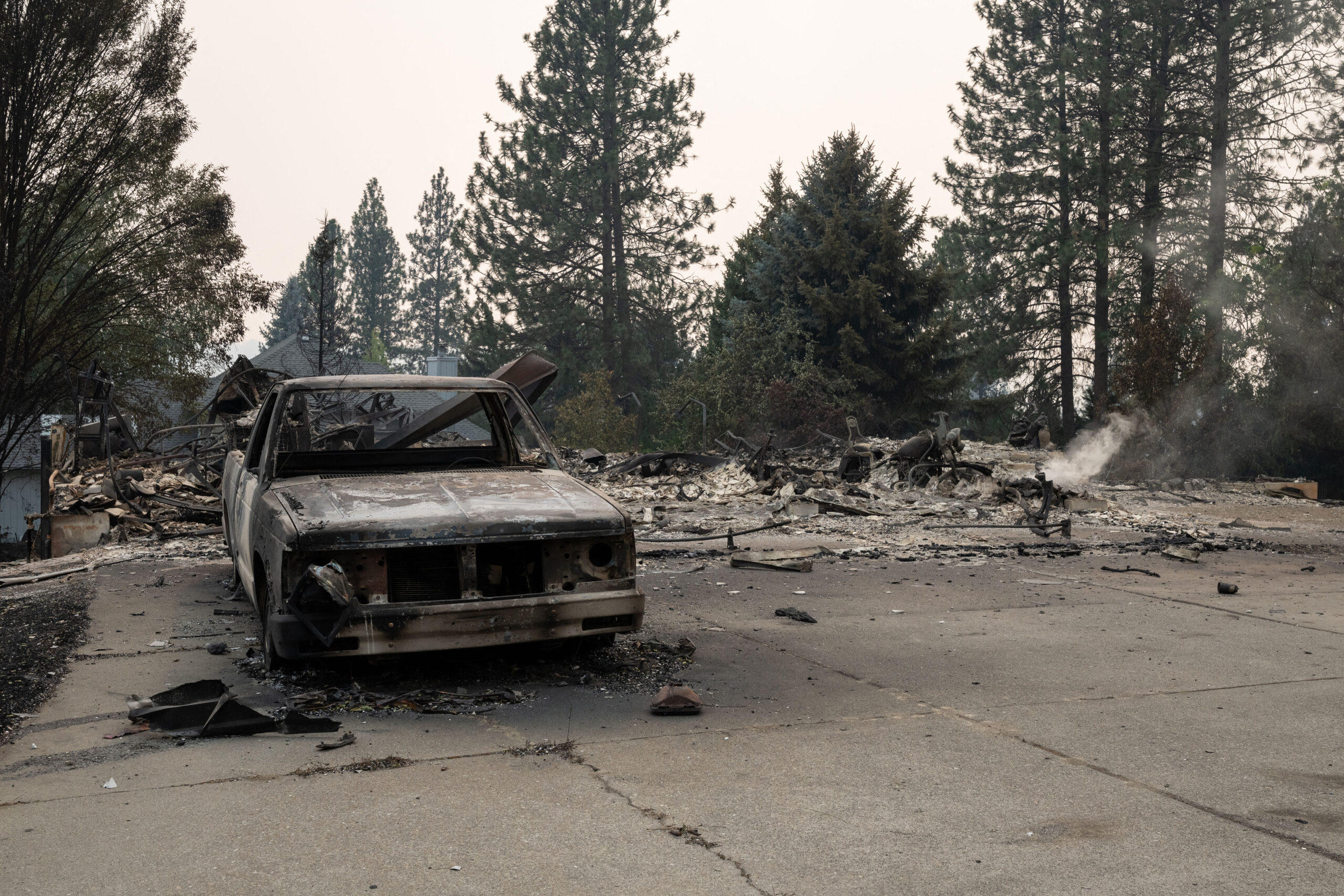
The tally of losses from the historic wildfires in Washington over the summer continues to grow, but by so do the lessons being learned. Insured losses from the wildfires that plagued Washington for nearly half the summer are nearing $1 billion from roughly 3,500 claims, far exceeding projections of $600 million in September for what has become the most expensive wildfires in state history. Those figures encompass all wildfires in the state from June to present, but most losses are from the Spokane Complex Fire, comprised of the Old Trails, Fairview and Autumn Lane fires that destroyed roughly 900 structures. An analysis from property data provider Cotality identified 5,256 properties that sustained at least some damage, of which 96% were single-family residences. The fires, which ignited on Aug. 1, grew to 10,000-acres-plus, burned 19 days and prompted evacuations of more than 65,000 people. The biggest insured loss came from the Old Trails Fire, which occurred in the wildland-urban interface, with an estimated $665 million in insured losses. The blaze was studied by the Insurance Institute for Business & Home Safety researchers, who looked into how factors such as structure spacing, connective fuels and building components interact under the fire weather conditions. The IBHS research on the Old Trails Fire in Spokane County, which destroyed 615 structures, shows connective fuels like combustible fences and mulch created pathways for fire to reach homes. Researchers documented damage and fire-spread pathways at 132 structures across nine areas, identifying vulnerabilities involving windows, decks, building materials and other structural features. Aerial imagery captured just six hours after ignition showed multiple fire outbreaks burning simultaneously. That stretched firefighting resources and left crews unable to protect all the threatened structures, according to the report. “As a result, structures with vulnerabilities to ember exposure, including combustible roofs, unmitigated vents, or fuels directly adjacent to the home, remain(ed) at risk of ignition,” the IBHS report states. “This scenario led to significant losses within the perimeter, even after the advancing fire front had slowed, and illustrates the challenges of structure protection, fire suppression, and fire management in communities with vulnerable structures.” Researchers looked at the January 2025 Los Angeles wildfires to compare the distances between the structures in the Eaton Fire with structural distances in the Old Trails Fire. They concluded the Washington fire could have been worse had the housing density been greater. They found that most (58%) structures in the Eaton Fire had another structure within 10 feet, while only 13.8% of structures within the Old Trails Fire perimeter were spaced so closely. Fire-resistant building materials alone were not always enough to keep a home safe. Researchers identified instances in which combustible landscaping allowed flames to reach fire-resistant exterior walls. In one case, burning mulch ignited combustible components beneath noncombustible lap siding where a wall met the foundation. Another exposure involving a stone-veneer wall did not result in an ignition, possibly because flashing at the base of the wall helped protect combustible materials underneath, according to the report. For David Forte, a senior policy adviser with the Washington Office of the Insurance Commissioner, the findings reinforced the importance of keeping combustible materials away from homes. A takeaway that stuck with him was “the Pacific Northwest love of mulch around the house.” Smoldering mulch can easily be hidden by smoke and darkness, making it hard for firefighters to see. “They did a terrific job saving lives. They did a terrific job saving property. But there were times where they thought a neighborhood was safe, they left to the next hot spot only to come back and find that a home was ignited due the mulch,” Forte said. “And so, for us, it reinforces the importance of noncombustible 0- to 5-feet around the house to make sure that it really is mitigated against embers.” Another concern Forte identified was the presence of motorhomes near houses. Once these vehicles ignite, the intense heat can threaten nearby structures. “The other item that struck me in the conversations were the number of RV’s in these neighborhoods, and once the RV ignited, there really is no defense for that house,” he said. “The amount of heat that the RV produced, the structure couldn’t withstand that at all.” Members of Task Force Utah backlit by flames of the Autumn Lane fire, part of the 2026 Spokane area fires. Source: U.S. Forest Service. IBHS investigators documented another case in which embers likely ignited a fence near its connection to a house, exposing a vinyl-framed, double-pane window to intense heat. The window frame ignited and the exterior pane broke, although firefighters prevented the damage from spreading. Researchers also found examples of wood fences carrying flames between properties, while vinyl fences often just melted. Decks were another potential ignition point. Those with combustible materials beneath them were particularly vulnerable. The report shows evidence of embers igniting ground cover around wooden deck supports, allowing flames to travel upward toward the walking surface. Decks with concrete bases beneath their supports could reduce this vulnerability, according to the report. Beyond the lessons for homeowners and builders, the losses are raising concerns about the future of Washington’s homeowners insurance market. Forte said the OIC is in a “wait and see pattern with how insurers react to this.” Following the 2023 Gray and Oregon Road fires in Spokane County, the insurance industry paid out $240 million. Those fires came amid a difficult period for the state’s homeowners insurance market, when rising claims costs were contributing to steep rate increases. “In 2023 and 2024, the whole country was experiencing dramatic homeowners rates, but we here in Washington were seeing stuff we had never seen before at the office of the insurance commissioner, and that was being driven by the cost of claims,” Forte said. In 2024, the cost of claims for all homeowners policies in Washington was $2.19 billion. By 2025, it had fallen to roughly $1.67 billion, while cancellations and nonrenewals fell from 34,573 in 2024 to 29,081 in 2025. “So, all these indicators to us were, OK we’ve kind of withstood the hard market, we’re entering back into a price competitive market for our homeowners, and then Aug. 1 happens, and we’re not quite sure how the industry is going to respond to this,” Forte said. “And here we are in 2026 and they’re anticipating $980 million of wildfire loss,” he added. “That’s a concerning number for us.” The OIC is promoting IBHS Wildfire Prepared Home standards as a way to reduce risk in wildfire-prone areas. Forte described those standards as “the pathway to a healthy insurance market in these high-risk areas.” “The commissioner is taking the effort to try to educate everybody that we can’t insurance our way out of this,” Forte said. “We need to figure out how to mitigate our way out of this.” Top photo: Burned neighborhood within the Olds Trail Fire scar. Photo by U.S. Forest Service. Topics Catastrophe Natural Disasters Claims Wildfire Washington
Washington Wildfire Claims Near $1B as Research Reveals Home Vulnerabilities
Full Article
Original Source
Read the full article at Insurancejournal →KhanList aggregates and links to publicly available news content. We do not host full articles from third-party sources. Always verify important information with original sources.