
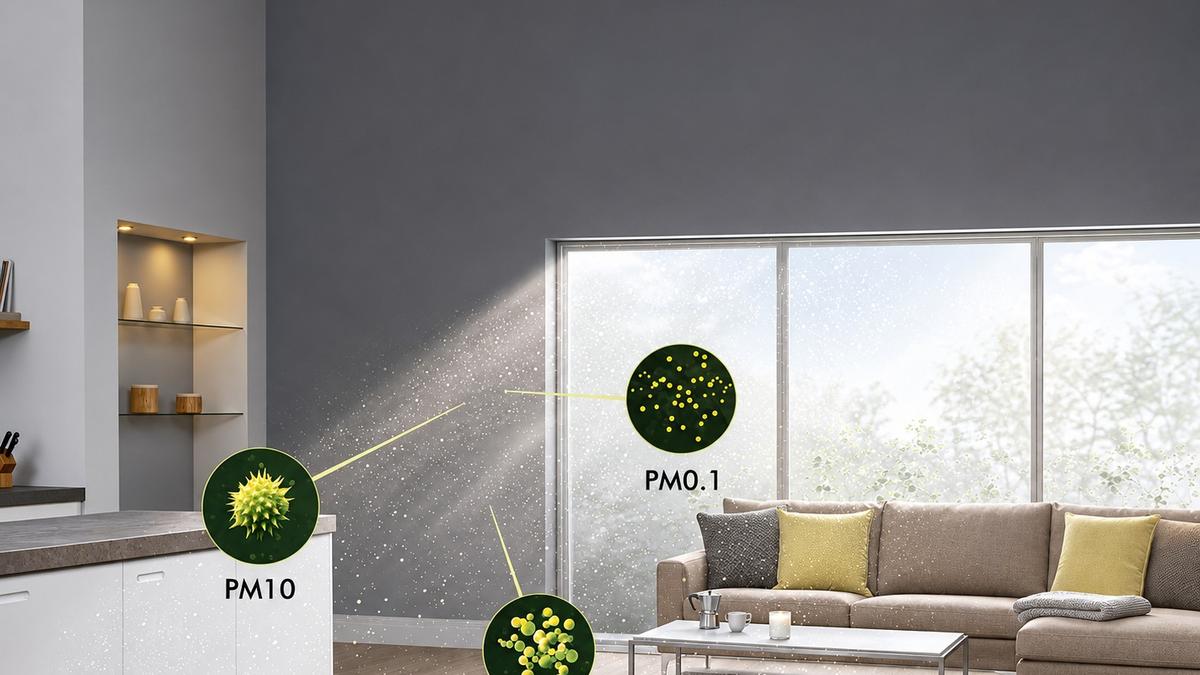
Indoor air pollution poses critical, year-round health threat | Photo Credit: Special Arrangement As Delhi, and various other parts in the northern parts of India, brace for severe winter smog, spokespeople for consumer durable makers LG and Dyson said that the air inside homes, too, presents a critical, year-round health threat. Outdoor emissions regularly infiltrate living spaces, combining with domestic activities to create complex, toxic indoor environments.Citing the 2026 Commission for Air Quality Management (CAQM) analysis, an LG spokesperson said that Delhi’s winter PM2.5 pollution stems from secondary particulates (27%), transport (23%), biomass burning (20%), dust (15%), and industry (9%).Closing doors and windows does not make homes airtight as outdoor pollutants enter through micro-gaps. They then mix with emissions from cooking, incense, candles, volatile organic compounds (VOCs) from paints and furniture, and human respiratory particles.Alex Hudson, a Dyson engineer, said that indoor air pollution is rarely driven by a single origin as even walking on carpets and sitting on sofas can stir up settled dust particles into breathing zones.The impact extends beyond respiratory irritation as the LG spokesperson highlighted the alarming cognitive toll on children’s brain development.A 2021 study in World Development linked higher short-term air pollution exposure among Indian children aged 5–16 to significantly lower reading and mathematics scores. A 2022 working paper by the Institute of Economic Growth and IIT Delhi confirmed similar cognitive declines in children aged 8–11.Furthermore, a 2024 analysis in Environmental Health involving 4,860 children across three continents found that every 1 µg/m³ increase in PM2.5 was associated with a 0.27-point drop in full-scale IQ. For older adults, cumulative exposure accelerates cardiovascular disease, stroke, and COPD risks.Dyson’s spokesperson told that young children breathe more air relative to their body size, making them particularly vulnerable given that people spend up to 90% of their time indoors.To combat indoor pollution, Dyson recommends source control such as using low-VOC products, installing microfibre doormats, and deep cleaning carpets with HEPA-filter vacuums. LG suggested monitoring outdoor AQI via the CPCB’s SAMEER app or IQAir to schedule ventilation, alongside kitchen exhaust fans.When choosing air purifiers, LG advises evaluating real-time sensing, comprehensive filtration (HEPA for particles and activated carbon for gases), and clean air delivery rate (CADR) for room-wide airflow. Addressing energy concerns, LG noted modern air purifiers consume roughly 1.73 units per day under continuous 24-hour operation, costing approximately ₹14 daily.Both spokespersons urged consumers to reject common misconceptions. LG quoted 2025 CAQM data showing Delhi had only 79 days of “Good” or “Satisfactory” AQI (≤100), with an annual PM2.5 average of 96 µg/m³, well above India’s 40 µg/m³ national standard and WHO’s 5 µg/m³ guideline.Mr. Hudson added that fine particulate matter and gases like nitrogen dioxide are often invisible, proving that indoor air quality requires active management throughout the entire year, not just during peak winter months. Published - November 12, 2026 11:50 am IST
Indoor air pollution poses critical, year-round health threat
Full Article
Original Source
Read the full article at Thehindu →KhanList aggregates and links to publicly available news content. We do not host full articles from third-party sources. Always verify important information with original sources.