
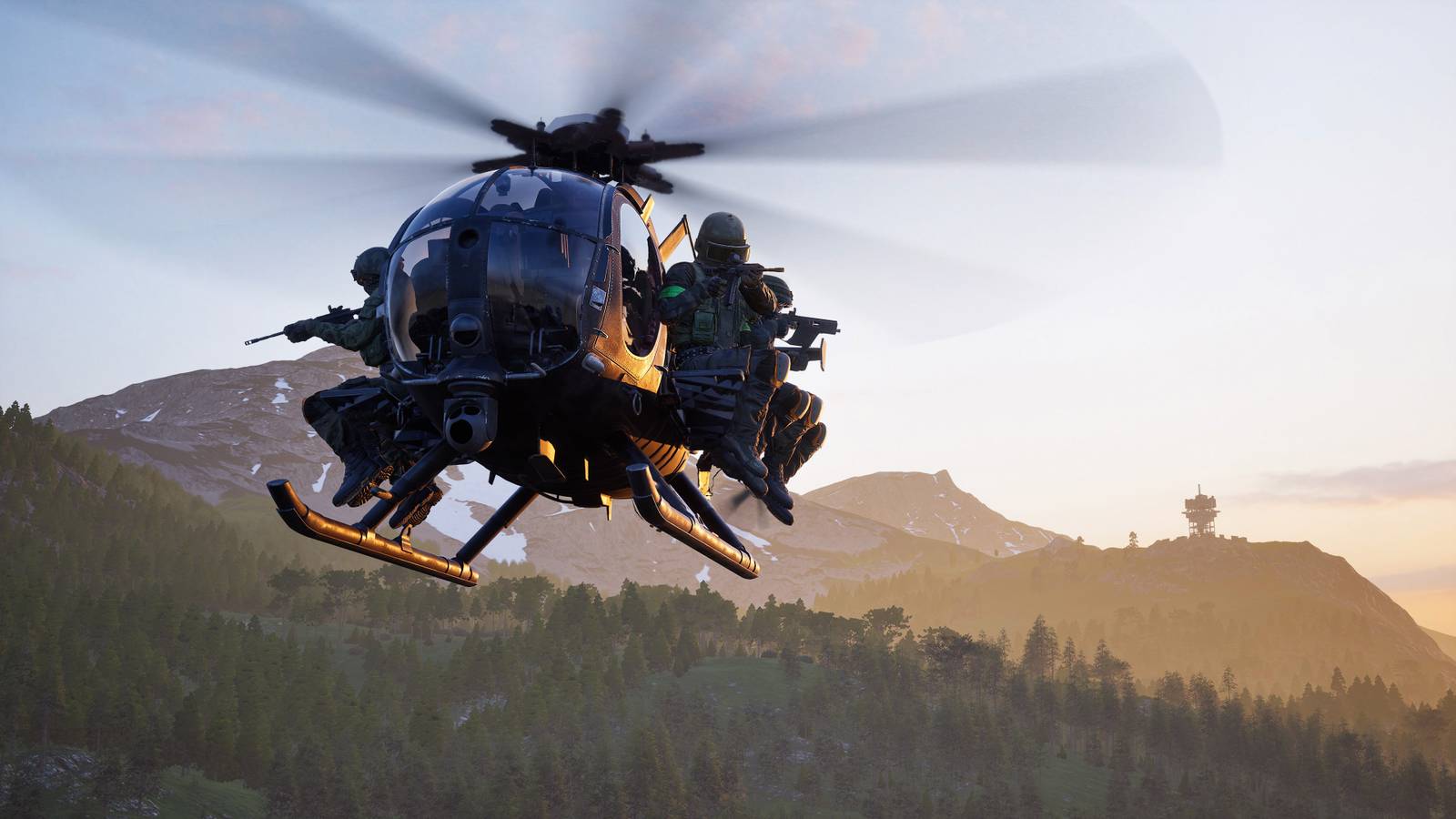
WARDOGS has sold 3 million copies just over two weeks after launching in Early Access, and after spending a lot of time playing BULKHEAD's 100-player shooter, its sudden popularity is well-earned. WARDOGS delivers the kind of large-scale warfare I've wanted from Battlefield for years. Its battles have more depth, teamwork is more rewarding, maps are bigger, and everything from ammunition and armor to transportation, logistics and base building contributes to how a team fights over the map. Its sandbox gameplay is also much more immersive than Battlefield, where the core multiplayer experience has become surprisingly basic for me. The familiar Battlefield loop of spawning, fighting over objectives, dying and respawning still works, but the broader battle offers relatively little for players to manage. Commander Mode is long gone, while recent games have expanded into other multiplayer formats, including Battlefield 2042's Hazard Zone extraction mode and Battlefield 6's REDSEC battle royale. WARDOGS puts much more of its depth into the battle itself. In WARDOGS, up to 100 players across three teams can fight over the same objective, while only some of them are actually positioned inside it. Other players are flying helicopters, transporting troops, driving supplies, constructing forward operating bases, protecting spawn vehicles, operating mortars, reviving casualties or preparing for an attack somewhere else on the map. That combination can make a single life a roguelike-esque adventure that's chaotic, slow, tactical, funny, and incredibly rewarding. Staying Alive In WARDOGS Actually Matters WARDOGS has one of the best risk-reward systems I've seen in a multiplayer shooter because everything you take into battle has a cost. Weapons, attachments, ammunition, armor, medical supplies and other equipment all cost money. Even the size of the magazine attached to your weapon becomes part of your loadout, and players can carry loose ammunition to refill magazines during a life. Vehicles represent another investment. Armor introduces its own tradeoffs. Better helmets and body armor provide more protection, but they're heavier and more expensive, and additional weight slows you down. Players who are low on cash or simply feeling risk-averse can enter with no armor, a free weapon, a free satchel and minimal equipment, then start scavenging supplies and gear from downed enemies or allies. WARDOGS gives players plenty of ways to earn that money back. Fighting inside the Control Zone pays, while fighting in the smaller Hot Zone increases the rewards from your actions. Damaging and killing enemies earns money too. If you die and respawn, the equipment you accumulated during that life is gone, creating a middle ground between a conventional respawn shooter and an extraction shooter. A free kit can also turn into an expensive loadout if you survive long enough. I've found myself replacing weapons, ammunition and equipment several times during a successful run. Ammo depletes and weapons can degrade from damage, while everybody represents another opportunity to find something useful. You can begin with basic equipment and eventually find yourself carrying gear worth enough that suddenly you're taking every window, rooftop and treeline much more seriously. It reminds me of some of the risk-reward that made PUBG so compelling when it helped popularize the battle royale genre. And spawning back in is a cost unto itself as it can take time to return to battle, especially if you're waiting for a helicopter pickup. WARDOGS' Combat Has More In Common With Tarkov Than Battlefield The shooting leans closer to milsim than the arcade-style combat of Battlefield or Call of Duty. WARDOGS feels like a hybrid of Escape From Tarkov, Hell Let Loose and PUBG, with equipment and ammunition management layered into large-scale PvP warfare. All weapons in WARDOGS are lethal even at the lower end, which allows a player running cheap or free equipment to remain dangerous. Better weapons, attachments, ammunition and armor still provide significant advantages, particularly as engagement distances increase. Progression gives players access to more attachments and better ammo types, which they then purchase using their in-game money. As with everything else, better weapons, ammo, and attachments simply cost more, so you need to earn more. Movement has the same methodical quality. Using cover and even foliage becomes essential, while loud footsteps make movement itself something you need to think about. Crouching and moving slowly make a major difference, and I've found myself timing movement with nearby gunfire, vehicles, and other battlefield noise to mask the sound I'm making when sneaking up or flanking enemies. It's something I wish Call of Duty would implement to put an end to complaints about not hearing enemy movements. Players can lean while aiming, mantle fences, climb, and navigate surprisingly steep rocky terrain. Carrying heavier equipment slows you down, giving mobility another direct connection to the gear you're willing to risk. You quickly learn to watch windows, rooftops, bushes and corners, especially when one careless move can cost you an expensive loadout. WARDOGS' Class System Is Better Than Other Shooters WARDOGS does something notably different than other class-based shooters like Battlefield or Hell Let Loose by not restricting players to a class, role, goofy specialist or character, or locking off subsets of usable gear, which speaks to its true sandbox nature. You can carry whatever equipment you want, whether you buy it when you spawn, pick it up from another player, grab it from a Forward Operating Base (FOB) or purchase it from a supply box. What you actually use determines where you earn experience. Use assault rifles and you gain Assault XP. Use binoculars and other reconnaissance equipment and you progress Recon. Heal teammates and use SMGs and you develop Medic, while building and other support activities progress Support. That means your role can change throughout the same life depending on what you're carrying, what you find and what your team needs at that moment. You might start out fighting with an assault rifle, pick up medical equipment from another player and begin reviving teammates, then grab something else when the situation changes. Progression still unlocks equipment associated with each specialization, including better sniper rifles through Recon and better medical equipment through Medic, but your progression never dictates what you're allowed to carry or do. In a given match, I find myself generally leveling up Assault, Recon, and Medic because of how I focus my play on capturing the Hot Zone, always on the move. My vehicle skills are low as a result (more on this later...), so I rely on other players to transport me, while my limited Support progression means I don't have access to anti-air rockets, which I feel I may desperately need now as the player community levels up. Having Three Teams Really Does Change The Game WARDOGS splits its players between three teams, and having another enemy force somewhere on the map adds a level of unpredictability that two-team shooters rarely create. You can commit to attacking one team in the Hot Zone and suddenly find the third team hitting your flank. A fight over an enemy FOB can turn into a three-way battle when another force arrives, while concentrating players on one front can leave somewhere else exposed. WARDOGS is based on the popular King of the Hill mod from ARMA 3, from its three-team structure to its in-game currency and loadout purchasing system. This is similar to how PUBG and the battle royale genre have their mainstream origins tied to the ARMA franchise. This works so well because each team can have more than 30 players operating across different parts of the map. Those players can all affect the same battle without ever standing next to each other or even being visible to each other given the map size. Much of that fighting revolves around the Hot Zone, a smaller circle located within the larger Control Zone that moves around the battlefield at random. Players inside effectively count double for zone control, so 10 soldiers occupying the Hot Zone provide the value of 20. Actions performed there are also worth more, giving players both strategic and financial reasons to stay close to it. Teams can activate drill sites within the Control Zone to temporarily pull the Hot Zone toward their position, which becomes particularly useful when a team has constructed a strong defensive position nearby. An enemy can effectively bring the most important part of the battlefield toward a fortified base, leaving the other two teams to figure out how to break into it. The first team to reach 100 points through zone control wins. Kills, deaths and the amount of money players earn have no direct bearing on the final score. Closely contested games where all three teams approach 100 points can stretch toward two hours, with control shifting repeatedly between them. WARDOGS Has Some Of The Best In-Game Comms I've Experienced Proximity chat has become one of WARDOGS' most important features and one of its funniest. At least during these opening weeks of Early Access, players are remarkably active on microphones. You hear the people around you, including enemies, which creates interactions that other shooters rarely allow. Though I will note that this weekend, as WARDOGS achieved 3 million units in sales, a lot of players were noticeably not using mics and I worry this will ruin a core pillar of the game. I've been downed and simply started talking to the enemy players standing over me. WARDOGS even lets you offer another player in-game cash to revive you, effectively allowing you to bribe an enemy into saving your life. The bribe works for allies too, of course, to encourage them to take the risk to get you back in action. I've even managed to talk my way into enemy revives by offering information instead. They let me get away, and I've subsequently returned and killed half the group that rescued me. Teams can also create squads of any size and use a dedicated squad channel that sounds more like radio communication. The audio changes contextually too. Proximity chat inside a loud helicopter gets filtered to sound like communication between people trying to hear each other inside the aircraft. Communication has a practical purpose because WARDOGS gives teams so much to coordinate. Players call enemy positions, ask for transportation, organize pushes, request supplies and try to find medics. With more than 30 people available on a team, smaller groups naturally begin taking on different responsibilities, and much of that organization comes from the players themselves. Some great examples of this are a roaming squad asking for a supply box of medical items, or a player calling out an enemy spawn vehicle in the open (using spotting gear) and asking for artillery vehicles to target it. Getting Shot Doesn't Have To End The Fight Speaking of in-game comms, WARDOGS handles incapacitated players particularly well because going down can become the beginning of another interaction. A downed player can choose to remain on the battlefield for a long time while waiting for help, and players can't simply execute them to permanently end their run and force a respawn. This is a game-changing feature that Call of Duty doesn't have and that Battlefield only partway delivers. Any teammate can equip a free one-time-use Field Resuscitator into battle from the vendor at the spawn base, but even without any medical gear, you can bring a downed player back, albeit slowly in that case. You can even drag players to safety which is essential during skirmishes. Players who level up Medic gain access to better tools such as Defibrillators, Adrenaline Pens, and the mighty Medical Bag. This system really changes how large engagements play out and the flow of a match. At times, you can look at the map and see a pile of downed allies, all of whom can choose to respawn or wait for someone to revive them. It's another layer of the risk-reward element in the WARDOGS sandbox. I've moved around the Hot Zone with groups of 15 or more soldiers as repeated attacks and ambushes break out around us. Players go down, survivors secure the area, smoke gets deployed and teammates start bringing casualties back. Once revived, those players can loot the downed enemies, essentially restocking and resetting the little army. Some WARDOGS Players Spend Their Matches Building Bases Base building is one of the clearest examples of how far WARDOGS takes its sandbox. Around towers and player-built Forward Operating Bases (FOBs), which can be placed practically anywhere, teams can use different supplies to construct walls, doors, gates and other structures. Those supplies have to come from somewhere, which creates another job for players willing to transport them across the map from the spawn base to wherever the team is building out FOBs. Players are already getting creative with what the system allows. Some teams construct high walls with barbed wire perimeters, multiple defensive layers and controlled entrances. Others build dedicated anti-air towers or garages specifically designed to protect the team's spawn vehicle. A well-designed FOB can include areas for mortar crews and defensive weapons while providing another place for players to regroup and operate from. The highlight for WARDOGS here is that the building system is a huge part of the sandbox and a key differentiator from other popular shooters. Players decide what these positions become and where they are. A FOB can serve as a staging area near the Hot Zone, a protected spawn point, a mortar position or a heavily fortified base that another team eventually has to crack open. Meanwhile, some players genuinely seem to enjoy the trucking life, driving supplies several kilometers from the main base, so other players can continue expanding or repairing them. And of course, there's the fun of trying to attack, dismantle, and sabotage enemy FOBs to turn the tide of battle. This is an especially useful trick if you notice a team using a tower drill to pull the Hot Zone to their base frequently or if they have too many soldiers in the Hot Zone, leaving their base poorly defended. Vehicles Are Essential, But Driving Them Needs Work Vehicles are an essential part of moving players, supplies, and equipment across WARDOGS' three huge maps, but it's not currently one of the game's positives. Driving with a mouse and keyboard feels poor, quads are frustratingly slow for vehicles you'd expect to provide a quick way into the Control Zone, and trucks have an inexplicable tendency to slide around the terrain as if it were icy everywhere. The truck handling is especially noticeable given how important it becomes for players hauling supplies between bases and FOBs. Helicopters present a different challenge because they have a steep learning curve and are highly skill-based. Many of the best pilots I've encountered seem to come from games like ARMA and Squad, and a skilled pilot can have an enormous impact by ferrying groups of infantry into the Hot Zone, repositioning players across the map or providing aerial support during a push. Now that we're two weeks into the first, one-month test season of WARDOGS, a lot of pilots are using weaponized helicopters and the good ones can clear out squads or bases on their own, or worse, carry soldiers equipped with super overpowered grenade launchers. That dependence on other players is another part of what makes the sandbox work for me. I have little interest in spending my time leveling up vehicle skills, so a good pilot becomes valuable when I need to get back to the fight, or a straight-up hero mid-battle. The player flying that helicopter may be spending most of the match doing something completely different from me while still directly affecting what I'm able to accomplish. And they spent the in-game money to do so. You Can Blow Bases Apart Too It's not advertised as much, but environmental destruction is a big part of WARDOGS like it is for Battlefield, and it gives attackers ways to dismantle defensive positions and reshape parts of the battlefield. The difference is that in WARDOGS, these are often player-made structures. Explosives and rocket launchers can destroy environmental elements, while mortar strikes provide some of the most obvious demonstrations of the system. Watching mortar fire hit a tall building can result in walls and floors being blown apart as repeated strikes land. The ambient sound and feeling of this is quite unique in WARDOGS. The sandbox becomes particularly interesting when one group of players has spent time constructing a defensive position and another group has to figure out how to break into it. If an enemy team has pulled the Hot Zone toward one of its bases, attackers can use C4 and rockets to knock through walls and doors, mortars to hit fortified positions or vehicles to create another route inside. Vehicles can smash through fences and lighter trees, while bullets can penetrate wood and lighter walls. Higher-caliber ammunition is becoming increasingly useful for shooting through materials as well, and armor-piercing ammunition is becoming increasingly valuable as more players reach higher levels and begin running around in the much-maligned Tier 4 armor. Those players are basically juggernauts. WARDOGS' Progression Is Also Its Biggest Problem WARDOGS works like a huge rock-paper-scissors sandbox, with different weapons and equipment providing answers to other threats. The progression system currently creates situations where one player has unlocked scissors while a large portion of the server still lacks access to rock, opening up notable balance issues that can make or break some matches. Attack helicopters are a good example. Skilled pilots can dominate a battlefield while infantry players are still progressing toward effective anti-air equipment. My own progression demonstrates the problem from another angle. I've spent most of my time fighting over the Hot Zone and leveling Assault, Recon and Medic, which means I'm now encountering aircraft I increasingly want an answer for while still lacking access to the Support equipment designed to counter them. The second layer to that issue is that high-level snipers with strong rifles, optics, and helmets (or a ghillie suit) can similarly dominate players who have yet to reach the equipment needed to challenge them effectively without being seen. Tier 4 armor is already becoming increasingly common among players who have progressed quickly, which raises the value of armor-piercing ammunition (which most players do not have) and increases the equipment gap between players at different stages of progression. Season 1 of WARDOGS in Steam Early Access is only one month long for this reason and will include a full wipe before longer, regular seasons begin. There are strange pricing decisions too. Some upgraded equipment costs many times more than the commonly used alternative while providing too little practical benefit to justify the expense. A better parachute, for example, can cost roughly 10 times as much as the basic version, which makes its practical value difficult to see. The starter SMG also seems better than everything that comes later, certainly in terms of pricing and attachment availability. Across all the classes currently, there are levels that have no unlocks (yet) and serve as meaningless placeholder numbers. The economy works because expensive equipment creates risk, while the sandbox works because players have different tools available to solve problems. Progression and pricing need substantial balancing, so players have reasonable access to those counters without eliminating the value of specialization. Joe Brammer, BULKHEAD's CEO and Exec Producer on WARDOGS, did say that while new content and features are on the way, they may even "remove content" at times to change up each season. Early Access Still Has Plenty of Rough Edges The freedom that allows for an awesome match in WARDOGS also puts a lot of responsibility on its players. When 30-plus people communicate and take on different jobs, all of these systems can work extremely well together. A poorly organized team can leave you walking huge distances, spawning far from the fight and repeatedly running into coordinated groups without enough support. This becomes especially frustrating for players who want to actively contribute toward winning. That's me, always putting the team first! One person can become an effective medic, builder, pilot or infantry player, but they can't make 30 other people coordinate, and if some are not even communicating, it's time to choose another server because a WARDOGS match is long and you're going to lose everything you have at the end of the season anyway. There are also plenty of issues that come with WARDOGS being an Early Access game. I've frequently had bullets strike invisible geometry while trying to fire around corners or over cover, and the launch version lists some fundamental systems, including loadouts and skill trees, as works in progress. The eventual cosmetic system could have a substantial effect on the game's military aesthetic. WARDOGS currently benefits from players looking like soldiers who belong on the same battlefield, and BULKHEAD's approach to skins as it expands progression and monetization will help determine whether it maintains that immersive atmosphere. WARDOGS Makes Large-Scale Warfare Feel Deeper Than Battlefield Battlefield remains one of the defining names in large-scale multiplayer shooters, and certainly one of the most visually appealing, but its core multiplayer has become too basic for me, made worse by bad UI design and the abandonment of server browsers which WARDOGS already offers. Battlefield 6's maps can be big, though most are not, and while its battles are chaotic, most of what I'm doing still revolves around spawning, pushing an objective, fighting and eventually doing it again with limited depth and teamwork. WARDOGS gives me far more to think about and do, with far greater risks and rewards. Getting to the fight matters because another player may need to fly or drive me there. Staying alive matters because I'm carrying equipment I paid for and gear I've accumulated during that life. Keeping teammates alive matters because a coordinated group can survive multiple engagements without respawning. Capturing territory matters beyond standing inside an objective because teams can build around it, supply it, fortify it and eventually tear those defenses apart. Even players several kilometers away hauling supplies can influence what happens at the front and there's not much else out there like it. WARDOGS has progression, balancing, and Early Access problems that need work, but the foundation is there. It's already a deeper, more immersive, and more rewarding large-scale multiplayer experience than Battlefield has offered me in years.
WARDOGS Is The Battlefield Alternative I’ve Wanted For Years
Full Article
Original Source
Read the full article at Screenrant →KhanList aggregates and links to publicly available news content. We do not host full articles from third-party sources. Always verify important information with original sources.