
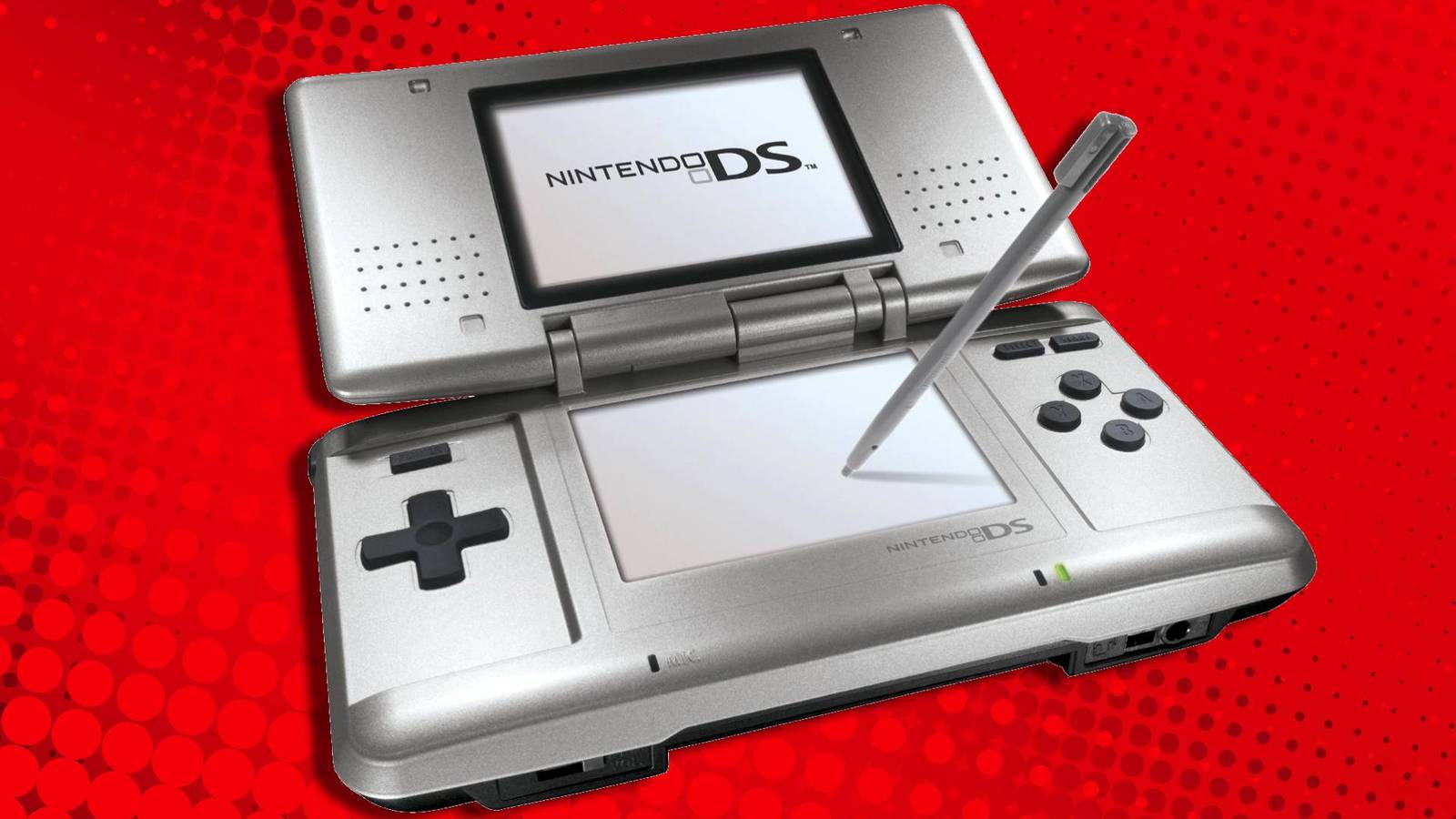
Published Sep 27, 2026, 5:00 PM EDT Sharmila is an engineer-turned-gaming hardware journalist and freelance contributor at ScreenRant who has been covering the gaming and tech industry since 2021. While she first built her expertise writing about video games, she has since pivoted towards gaming hardware, with a focus on PC components, peripherals, handhelds, and performance-driven tech. When she’s not testing gear or writing about the latest hardware trends, she can usually be found diving into competitive shooters or keeping up with the evolving esports scene. The Nintendo DS was an unusual—but popular—piece of hardware. Nintendo gave it two screens, a stylus, a microphone, and a touchscreen, creating a system that encouraged developers to rethink how games could be played. Of course, the touchscreen quickly became the star of the show at that time, and it led to developers building entire mechanics around tapping, dragging, drawing, and even blowing into the microphone. The novelty of interacting directly with the game was a big part of what made the Nintendo DS so appealing. More than a decade later, though, some of those design choices have become harder to appreciate. The Nintendo DS games I’ve listed down here aren’t worthless relics, and many remain fascinating examples of a period when developers were still figuring out what a touchscreen could actually bring to a video game, but they've aged less gracefully thanks to their focus on the DS’s hyped-up features. Super Mario 64 DS Super Mario 64 DS is a strange example of a game that managed to improve on an Nintendo 64 classic while also making some of its best ideas more frustrating. Adding Luigi, Yoshi, and Wario was a fun way to expand the original adventure, and the extra characters gave players plenty of reasons to explore familiar levels again. The problem was the way Mario himself felt on the DS. The original game was built around an analog stick, so replacing it with the DS’s tiny directional controls was never going to be a perfect transition. Nintendo tried to compensate with the touchscreen, letting players control movement using a virtual analog stick. In theory, that sounds clever. In practice, it meant dragging a stylus around the bottom screen while trying to control Mario on the top screen. Then there was the camera. Anyone who has played the original Super Mario 64 knows it can already be temperamental, but the DS version adds another layer of awkwardness to the experience. Super Mario 64 DS is still a fascinating handheld version of one of Nintendo’s most popular games. It’s just that the DS hardware may constantly remind you that this was never where Super Mario 64 was meant to live. The Legend of Zelda: Phantom Hourglass The Legend of Zelda: Phantom Hourglass might be one of the clearest examples of Nintendo taking a perfectly good control scheme and throwing it out the window. Phantom Hourglass tries to utilize the DS’s touchscreen to its fullest potential, so Link is controlled almost entirely with the stylus, with taps and swipes replacing buttons and an analog stick. There is something undeniably clever about the idea. You point where Link should move, draw the path of a boomerang, and slash enemies by dragging the stylus across them. It makes the game feel like a DS game rather than a smaller Zelda adventure squeezed onto a handheld. But the trouble starts when you actually have to play it for several hours. Constantly holding the stylus makes movement feel less natural than traditional controls, while combat can become surprisingly fiddly when several enemies are attacking at once. The game also occasionally asks you to make use of the microphone when the stylus just isn’t enough. All that said, Phantom Hourglass remains a charming Zelda game with some genuinely creative ideas. The only apparent problem is that the touchscreen often feels like the star of the show, even when Link’s adventure would have benefited from simply getting out of its way. Yoshi Touch & Go Yoshi Touch & Go feels like Nintendo took a DS developer’s meeting and asked one simple question: “How much of a game can we build around the touchscreen?” The answer turned out to be quite a lot. Rather than giving Yoshi a traditional platforming adventure, the game turns the touchscreen into your main tool. You draw clouds to guide Baby Mario through the air, create paths, manipulate enemies, and generally spend more time looking at the bottom of the screen than you might expect from a Nintendo platformer. It was a neat showcase for the hardware, particularly when the DS was still new. Drawing a path and watching the game respond to it immediately is oddly satisfying, to say the least. The problem is that the touchscreen novelty doesn’t necessarily translate into a game you want to play for hours. Yoshi Touch & Go is built around short challenges, and that works in its favor. It is easy to pick up, play for a while, and put down. But when you return to it in 2026, its limitations become obvious. There isn’t much hiding underneath the touchscreen gimmick, and once you’ve figured out how its mechanics work, there’s no longer much to discover. It is less a traditional Yoshi game and more a very polished demonstration of what the DS could do, which is precisely why it hasn’t aged quite as gracefully as some of Nintendo’s other handheld experiments. WarioWare: Touched! WarioWare: Touched! is probably the game on this list that makes the most sense as a DS experiment. The entire series is built around ridiculous little challenges, so Nintendo had plenty of opportunities to throw the touchscreen into the mix. And boy did they utilize every opportunity they could. There are several “micro games” that push you to make use of the touchscreen in all possible ways. If one asks you to poke something, another has you dragging an object around. Then suddenly, you’re rubbing the screen, spinning something with the stylus or blowing into the microphone. The sheer variety is part of what makes Touched! so entertaining, but it also makes the game feel like a time capsule of Nintendo’s obsession with the DS’s hardware. The touchscreen actually works remarkably well for WarioWare’s bite-sized format. A strange control scheme doesn’t have much time to become irritating when each challenge lasts a few seconds. But when you look at the individual ideas outside that context, that’s where things get a little dull. Some of these micro games in WarioWare: Touched! feel like they exist only because Nintendo had a touchscreen and needed something for you to do with it. That doesn’t ruin the game entirely, but it does make it one of the clearest examples of a DS experience whose identity is inseparable from the hardware it was designed for. Metroid Prime: Hunters Metroid Prime: Hunters deserves credit for attempting something that seemed completely unreasonable on the Nintendo DS: playing a first-person shooter on a handheld. The developers used the touchscreen as a makeshift mouse. You moved the stylus around the bottom screen to aim, tapped buttons to fire, and used the directional controls for movement. On paper, it was an ingenious solution to the DS’s lack of a second analog stick. But playing it was a different story altogether. Hunters can feel surprisingly precise when you’re used to its controls, but getting comfortable with them takes work. You essentially have to hold the DS in a way that makes one hand responsible for movement and the other responsible for constantly dragging a stylus across the screen. Long sessions can become tiring, particularly when you’re expected to move, aim, and shoot at the same time. Metroid Prime: Hunters itself is more ambitious than the hardware really had any business handling. The problem is that its most memorable feature is also its biggest obstacle. Hunters wanted to prove that a Nintendo DS could handle a proper first-person shooter, and in doing so, it created a control scheme that is fascinating to look back on but considerably harder to love today. Brand Nintendo Original Release Date November 21, 2004 Original MSRP (USD) $149.99 Hardware Versions Nintendo DS Weight 9.7 oz
5 Nintendo DS Games That Have Aged Like Milk
Full Article
Original Source
Read the full article at Screenrant →KhanList aggregates and links to publicly available news content. We do not host full articles from third-party sources. Always verify important information with original sources.