
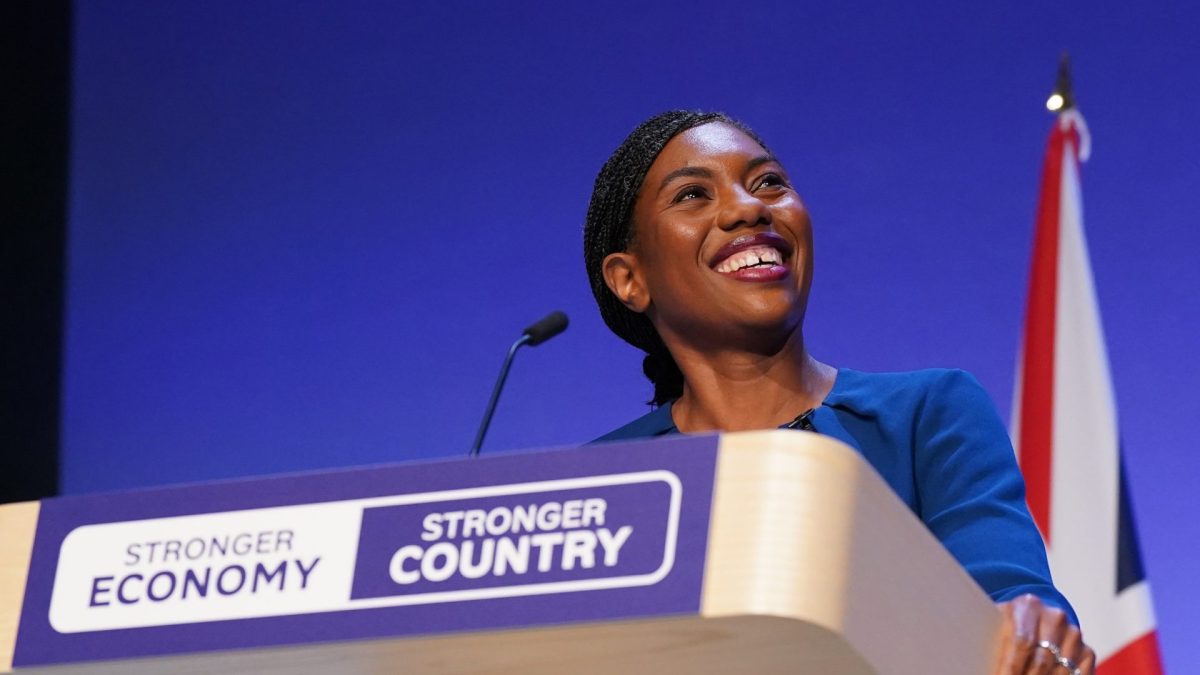
Much has been made of the Burnham bounce – the rapid improvement in the fortunes of the Labour Party after Andy Burnham took over from Sir Keir Starmer. Less noticed has been the slow rise of Kemi Badenoch – not a bounce so much as a baby step towards re-establishing the Conservatives as a credible party electoral force. Which is exactly as Tory strategists like it. Badenoch has been in control of the party for just shy of two years. For much of that time they have trailed in third place in the polls behind Reform, after their historic drubbing at the 2024 General Election Shorts Following months in which Nigel Farage’s party appeared to occupy much of the political space the Tories once claimed, her party has struggled to convince voters that it still has something meaningful to say. After the drubbing of the 2024 General Election, and months in which Nigel Farage’s Reform UK appeared to occupy much of the political space the Tories once claimed, her party has struggled to convince voters that it still has something meaningful to say. Tories move ahead of Reform in the polls Now the mood inside the party has begun to change. A Conservative Party that spent much of the last parliament at war with itself now looks more united, more disciplined and more confident in its message. But unity is not the same as momentum, and until this month there was little evidence that the change was registering with the public. Two post-conference polls have given Badenoch her first serious opening. Neither shows a dramatic surge. Instead, they suggest a modest improvement of the kind the leadership believes can provide the foundation for a longer recovery. A YouGov poll for The Times and Sky News put the Conservatives on 23 per cent, up three points and at their highest level on YouGov’s tracker since January 2025 and, crucially, in second place. Labour stood on 24 per cent and Reform UK on 21 per cent, leaving the Tories just one point behind Labour and two ahead of Farage’s party. More in Common subsequently put the Conservatives on 24 per cent, ahead of Reform on 21 per cent but still behind Labour on 28 per cent – again second place for the Tories after more than 18 months in third. Only days earlier, the polling expert Sir John Curtice had told a conference fringe event at the Conservative Party Conference, that the party had made little progress and remained broadly where they were after the election. Changing the political dynamic His assessment and the new figures are less contradictory than they might appear. Against the scale of the 2024 defeat, the party has barely recovered. Against the more immediate target set by its leadership, however, it may be beginning to make headway. That distinction goes to the heart of Badenoch’s strategy. The first objective is not a spectacular leap in support, but to establish a consistent lead over Reform – enough to begin changing the political dynamic on the right. The argument for incremental progress is that small gains, if sustained, can gradually change how voters, commentators and rival parties perceive the contest. A narrow lead becomes evidence that the Conservatives are recovering; that perception, in turn, may help them attract voters who want a credible alternative to Labour. The larger ambition is to re-establish the Tories as the main party of opposition and the government-in-waiting. Overtaking Reform is the first step towards that goal. Without it, the Conservatives struggle to claim that they are once again the natural home for voters seeking a change of government. With it, they can at least begin to make the case. But that requires more than winning back voters who have defected to Farage. ‘We can’t kill them by trying to kill them’ Badenoch must also rebuild the coalition that once made the Conservatives electorally dominant, including centrist and economically successful voters who have moved towards Labour or the Liberal Democrats. This is a different proposition from Boris Johnson’s 2019 coalition, which relied heavily on working-class Brexit voters in the Red Wall. Instead it is a move towards a group of voters dubbed ‘Waitrose women’ – relatively affluent, socially liberal, centre-right women who have traditionally supported the Conservatives but have become increasingly disillusioned with the party and so been tempted by Labour and the Lib Dems. It follows a long tradition in politics of profiling stereotypical swing voters – such as Tony Blair’s Mondeo Man – a man from a Labour background who now had his own home and business – and Boris Johnson’s Workington Man – a 45-year old white, male, leave voter. The current approach has more in common with David Cameron’s pitch to aspirational voters in 2015: a renewed emphasis on family finances, economic opportunity and the interests of people who feel that working hard should leave them better off. The party’s childcare announcement fits that strategy. Under the current rules in England, families can lose access to certain childcare support when either parent earns more than £100,000 a year. Removing that cliff edge is aimed at professional working families who can find themselves worse off when one parent crosses the threshold. It is a targeted policy rather than a grand gesture. It will not transform the polls on its own, but it speaks directly to a group the Conservatives need to win back. The hope is that a series of such offers can gradually rebuild trust with this cohort of voters. The same incremental thinking informs the Conservatives’ approach to Reform. There is little appetite among some Tory strategists for an all-out assault on Farage, not least because the party’s own voters have little taste for blue-on-blue warfare. “We can’t kill them by trying to kill them,” said one senior Tory source. “Our voters don’t like it.” Badenoch’s approval rating rises A frontal attack might generate headlines, but it could also alienate voters the Conservatives hope to win back and reinforce Farage’s claim to be the insurgent alternative to an established political class. The more intriguing question is whether Badenoch herself is turning a corner. More in Common’s post-conference research reportedly put her net approval rating at +5, her highest with the pollster since she became leader. Her personal profile appears to be running ahead of that of much of her front bench. As The Guardian has highlighted, there is a substantial gulf in public recognition between the Tory leader and some of her colleagues, including shadow chancellor Andrew Griffith. That is both an advantage and a problem. Badenoch has become the party’s most recognisable face, but she cannot rebuild its credibility alone. She appeared conscious of the challenge at conference. In her keynote speech, she sought to showcase the talent around her, praising her shadow cabinet and highlighting a new generation of Conservatives, including Harriet Cross, Katie Lam and Rebecca Paul. The message was that the party has depth beyond its leader: a team with ideas and the capacity to govern, rather than a one-woman show. The shadow education secretary Laura Trott has likened Badenoch’s growing public profile to Madonna’s, suggesting that she is becoming “Madonna-level” – increasingly recognised simply as Kemi. It is a memorable comparison, capturing the kind of name recognition most politicians can only dream of. But Madonna is a solo act; a political party cannot be.
‘Waitrose Woman’ is Badenoch’s new Tory target as she ditches Red Wall
Full Article
Original Source
Read the full article at Inews →KhanList aggregates and links to publicly available news content. We do not host full articles from third-party sources. Always verify important information with original sources.