
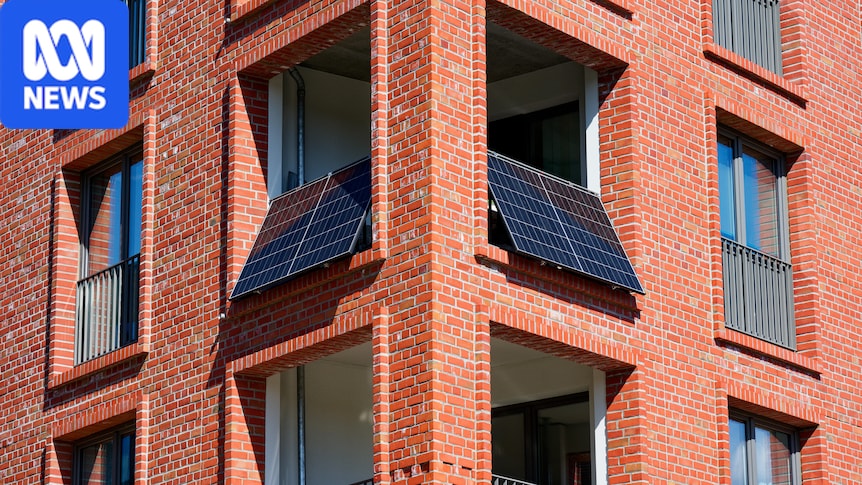
Renters and people living in apartments could save hundreds of dollars on their power bills when Western Australia becomes the first state to legalise plug-in solar panels and batteries.WA is set to unlock access to the technology commonly known as "balcony solar", used by millions of people in Europe and the United Kingdom.Overseas, the technology is usually attached to apartment balconies or installed in backyards, typically at a cost of up to $1,300, plus extra for a plug-in battery.In September, Australia's energy ministers agreed to explore how to safely roll out plug-in solar across the nation.But WA is the first state or territory to give the technology the green light, announcing the start of consultation on a safety standard for the energy-saving devices, including how to ensure they do not overload power circuits.Plug-in solar panels are a popular choice for people who live in apartments or those who do not own their home. (Unsplash: Yuma Solar)"For too long, the benefits of cheap solar have been out of reach for anyone who doesn't own their roof. That isn't fair," Energy and Decarbonisation Minister Amber-Jade Sanderson said.As the name suggests, they plug into regular power points and do not require an electrician for installation.The power generated by the panels is fed into the home network via an inverter and a standard plug, helping offset electricity used by appliances.That means renters, who have no incentive to spend thousands putting solar panels on their rental's roof, can now benefit from solar energy.And people living in apartments with a balcony or other reliable spot in the sun can also benefit.Big savingsThe state government estimated a typical plug-in solar system could save households $240 a year on their electricity bill, and up to $500 if they have a battery as well.But industry experts believe the payback period for plug-in solar systems ranges from four to 10 years.Solar Citizens, a community organisation that has been pushing for the legalisation of the technology, has previously said an average plug-in solar panel would save people $300-400 a year, and double that with a plug-in battery.On top of that, renters can take the device with them when they move out.An apartment building with plug-in solar panels on the balconies. (Supplied: AlexGo)Ms Sanderson said WA was leading the nation on the take-up of the technology. "Millions of European households already use these systems every day, and WA families should be able to do the same," she said."Western Australians are already taking up solar and batteries in record numbers, and this will ensure even more families can see the savings from the energy transition."More than 40 per cent of homes in the South West Interconnected System, WA's main electricity grid, have solar panels.The state government will now need to bring landlords and body corporates on board to allow plug-in solar to be hung on balconies or set up in backyards.Plug-in solar was legalised in the UK earlier this year, and New Zealand is looking to do the same within 12 months.Germany is a world leader in plug-in solar, with an estimated one in 10 households having a system installed.
WA set to become first state to legalise plug-in solar panels, batteries
Full Article
Original Source
Read the full article at Abc →KhanList aggregates and links to publicly available news content. We do not host full articles from third-party sources. Always verify important information with original sources.