Venice Film Festival artistic director Alberto Barbera unveiled the lineup for its 83rd edition on Thursday, his 19th selection over two stints in the role, firstly from 1998 to 2001, and most recently since 2012, which his term extended to 2027 and 2028 earlier this year. He has delivered a varied and politically-engaged selection with competition highlights including South Korean filmmaker Lee Chang-Dong’s Possible Love, Hirokazu Koreeda’s Look Back, Martin McDonagh’s Wild Horse Nine, and Lance Oppenheim Primetime, starring Robert Pattinson. Talking points in the backdrop include the absence of the studios and the dearth of female-directed features in competition. Deadline caught up with Barbera in the wake of the announcement for some insight into the challenges and drivers as he pulled this year’s selection together. Watch on Deadline DEADLINE: You have received a record 4,500 submissions this year. Were there any overriding themes or trends? ALBERTO BARBERA: Yes, it’s obvious, you’ll see it when you watch the films, but even skimming the titles makes you realize that in some ways this edition is the most political ever, in the broadest sense, because it addresses the great, complex problems of contemporary times: wars, Palestine, Putin’s Russia, Ukraine, climate change, immigration, social conflicts, the shrinking space for freedom of expression; the violence inflicted on opponents of regimes, but also the crisis of the family institution, of school, and the lack of a future for young adolescents. In short, all the worst things we’re experiencing in one of the most disastrous periods in the recent history of the world. Films are a kind of catalogue raisonné of all these problems, not by choice, but because today’s filmmakers are sponges that absorb problems, imagine them, rework them, and then throw out stories that help us better understand reality, providing us with tools to understand the real complexity of the problems, not just the news we see in newspapers or on television. DEADLINE: In relation to this turbulent time, Venice has never shied away from showing difficult films. Last year, you selected Gaza drama The Voice of Hind Rajab at a time when many festivals appeared to be shying away from films on the Israel-Palestinian conflict. What’s driving this? BARBERA: It’s because the Venice Biennale [the festival’s parent body] is one of the most important cultural institutions in the world. Fortunately, we operate with complete autonomy, thanks in part to a president (Pietrangelo Buttafuoco) who has maintained an attitude of absolute rigor and consistency, even in the face of the unprecedented political pressure we’ve received this year. DEADLINE: Are you referring to the storm over Russia’s participation in the Arts Biennale which has resulted in the European Union withdrawing funding? BARBERA: One can disagree with the situation that was created, but the Biennale couldn’t do anything because the pavilion is owned by Russia and Russia simply announced it would return. The Biennale had no legal or judicial means to prevent this. DEADLINE: But didn’t the Biennale invite Russia back to the Art Biennale? BARBERA: The Biennale doesn’t invite anyone. It curates an exhibition that it entrusts to a curator, who chooses the artists. But then there are the pavilions, which are owned by individual countries, who do what they want. That said, the Biennale has maintained a rigorous and consistent position, saying: “We are a cultural institution, we have no prejudice against artists of any kind. We are a place of exchange, discussion, and freedom of expression, and this attitude must be firmly maintained until the end. This also applies to the choices we made for the film festival. We’re not closed-minded towards anyone, but open-minded and unprejudiced towards all artists. Then the fact that most of the films were politically and socially relevant, relevant to the entire world, is a trend in contemporary auteur cinema that we couldn’t ignore. DEADLINE: You actually have a handful of films directed by Russians in selection this year – such as Julia Loktev’s My Undesirable Friends: Part II – Exile, Ilya Khrzhanovsky’s Dau and Victor Kossakovsky’s Holy Wood Dust– but I guess they are all by dissident filmmakers. BARBERA: Even there, it’s not a choice in the sense that there weren’t any films by Russian directors who weren’t dissidents… the Russian dictatorship is such that right now in Russia no one dares make a film against Putin. People flee Russia, taking refuge in the West, if they want to do counter-information against Putin, as is demonstrated in My Undesirable Friends: Part II – Exile. The journalists in the documentary had to escape Russia before Putin had them arrested. Today, no one funds a film that’s even slightly critical of the Russian government or politics out of Russia. If one had been submitted, we’d have invited it… but this is an approach we have for all films, whatever their provenance. I’ve said it many times, even reductively, but we judge only based on the quality of the individual film, not on its genre, or if it’s made by a man or a woman, or on its politics or its origins. DEADLINE: This leads onto another aspect of this year and the fact that only one female-directed film – May-el Toukhy’s Woman Unknown – has made it into the 21-title competition this year? What’s going on? I don’t believe it can objectively be argued that Venice has a negative attitude toward women. From 2020 to today, the Venice Film Festival has awarded more films by women than any other festival in the world including Cannes and Berlin. We’ve had a lot of female jury presidents. This year, the three juries are headed by women. I would have given anything to have more female-directed films to put in the main competition. But there’s also another aspect, the percentage of fiction films submitted by women this year was 24% against 30% last year. It’s a countertrend compared to recent years in which the number of female-directed films grew. This year it’s decreased. I don’t know why. It’s inexplicable because the pursuit of gender equality seemed like an unstoppable trend. Instead, the number of films has decreased, and unfortunately, the quality of the films has also decreased. Probably, the budgets available for films have decreased. I don’t know. It’s difficult to explain certain production dynamics which are beyond our control. DEADLINE: Another absence is that of the big studio films, which has been a trend across the European festivals this year. Do think Hollywood is pulling back from the festival scene for good?BARBERA: If you look closely at the prediction pieces published in the trades on films that could be at Venice in the last few months, there were very few studio films. There was Iñárritu’s Digger which Warner Bros. immediately declared they didn’t want to participate in the festival for marketing reasons. Alan Sorkin’s film (The Social Reckoning) isn’t finished because they have to reshoot sequences in August and therefore it won’t be ready for Venice. David Fincher’s film (The Adventures of Cliff Booth), which at one point seemed certain to be a contender for Venice, has had production delays because Fincher, due to a personal issue, interrupted post-production and accumulated a delay that has meant the film isn’t ready. I’ve been in constant contact with Denis Villeneuve (on Dune: Part 3), who told me, ‘We’re very far from finishing the film. The film will be released at Christmas, and we’ll be ready a little earlier.’ It’s also fair to say that the studios are going through a complex time, merging, redefining production strategies, earning less… in short there’s a whole series of things. For sure the studios are questioning how to promote the films… but again I don’t want to jump to conclusions and say that from now on, studios won’t go to festivals because it’s not worth it, it costs too much. DEADLINE: Another film that got away was Luca Guadagnino’s Artificial. We were hoping Neon might launch it in Venice after it took on the film in June... BARBERA: Me too. The film is beautiful. I spoke at length with Tom Quinn, and he told me that the film won’t be released until January. He said, ‘We’ll do a technical release in December to qualify it for the Oscars, as is often done, but we can’t release it any earlier; we don’t want to release it any earlier. We have to sell the film. We paid dearly for it. We have to sell the rest of the world. We need time to succeed. So we’ve decided not to do any festivals.’
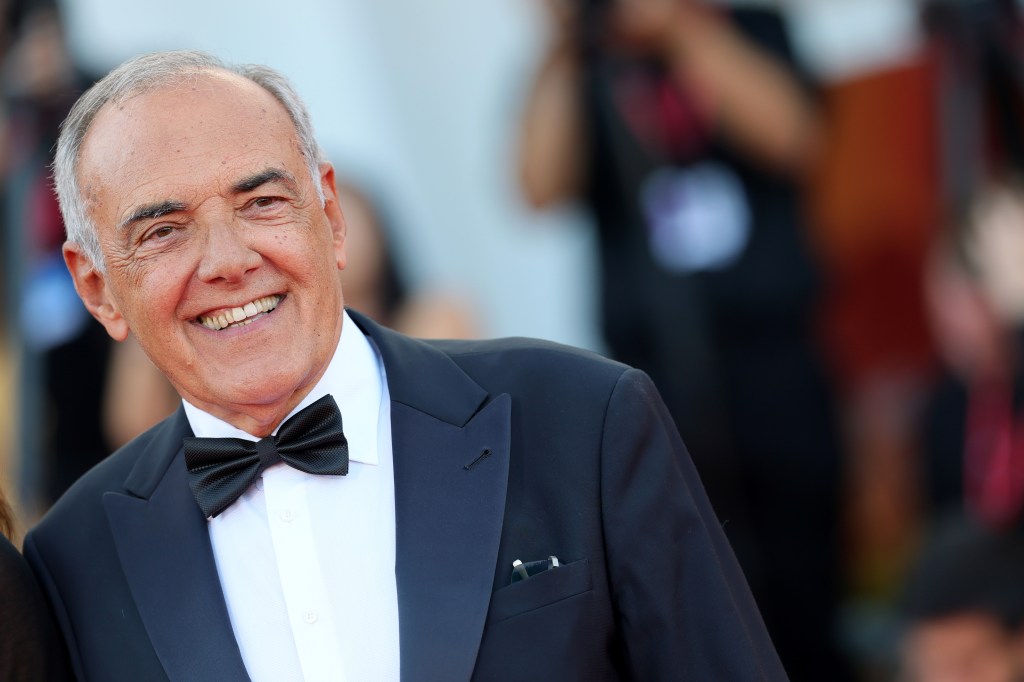
Venice Head Talks Studio Absence; Dearth Of Female Golden Lion Contenders & Why Neon Nixed Festival Bow For Luca Guadagnino’s ‘Artificial’
Full Article
Original Source
Read the full article at Deadline →KhanList aggregates and links to publicly available news content. We do not host full articles from third-party sources. Always verify important information with original sources.