
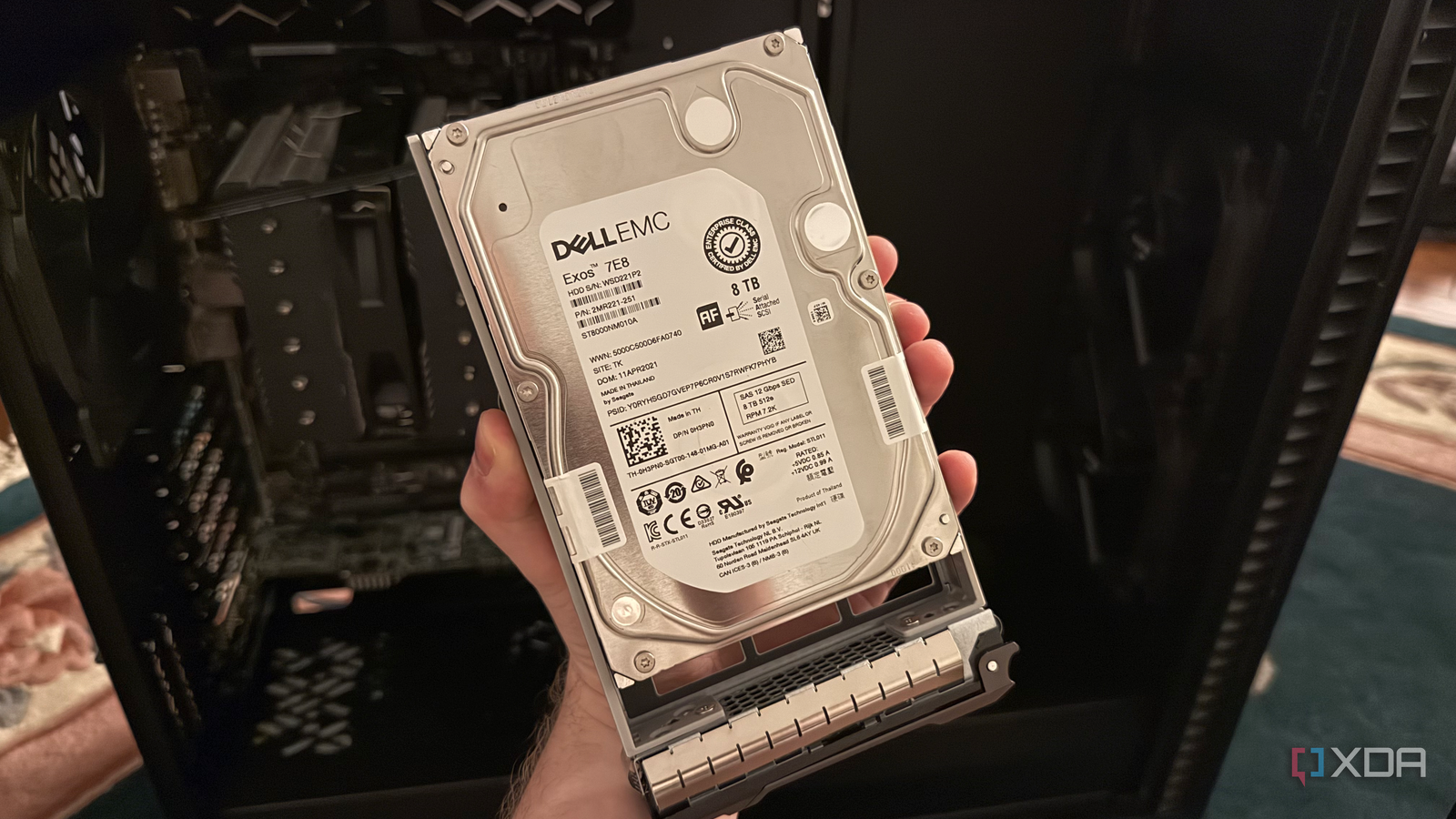
Published Oct 9, 2026, 5:00 PM EDT His love of PCs and their components was born out of trying to squeeze every ounce of performance out of the family computer. Tinkering with his own build at age 10 turned into building PCs for friends and family, fostering a passion that would ultimately take shape as a career path. Besides being the first call for tech support for those close to him, Ty is a computer science student, with his focus being cloud computing and networking. He also competed in semi-pro Counter-Strike for 8 years, making him intimately familiar with everything to do with peripherals. The case made against used hard drives is similar to all other kinds of pre-owned hardware, but it rings truer because of the moving parts inside. You’re putting your data on something that has already spent years spinning in a chassis you’ve never seen, so some hesitation is definitely natural, but I think we have the risk backwards. A used enterprise drive tells you what it is and where it’s been, while a new consumer drive tells you nothing until it fails. Add what’s happened to storage prices across the board, and secondhand enterprise drives are the last real deal in storage and the ones I’d rather own. New drives got expensive, and used ones only partly followed suit Prices went up for pre-owned enterprise storage, but by as much as new storage did The hard drive market stopped prioritizing home buyers somewhere in the last year. Western Digital’s CEO told investors in January that the company was essentially sold out for calendar 2026, with supply agreements already reaching into the following two years, and Seagate has described similar commitments. Prices followed suit with this sentiment, and some consumers were priced out of higher-capacity storage. Used enterprise storage sits further downstream from that, and while it hasn't been complete immune to price increases because of the overall increase in demand, its supply comes from a different place entirely. These drives are pulled from servers that have been decomissioned or the drives themselves have reached that data center's quota for wear and tear. Resellers get these drives as manufacturer recertified in many cases, but sometimes they'll refurbish them for sale on their own. That stock tends to sit a tier or two below the current flagship capacities, which is where home NAS users shop anyway. If you're willing to go the SAS route, your pool of potential storage options widens further, but with some asterisks. I happen to have two used enterprise SAS drives in my home lab, running off of an LSI 9207-8i HBA card. Running one of those cards is a hard requirement if you're using a consumer motherboard as a foundation like I am. Add in the cost of the cables and extra power draw, and some of the savings disappear up front, but you can also add more drives without paying that cost again, since a SAS HBA can handle many drives on it at the same time. I know what I got myself into These drives have a known history, and sometimes that's better than no history A used enterprise drive is an open book and can tell you things about it that a brand-new consumer drive simply can't, so long as you get it from a reputable source. Seagate rates the Exos 7E8s in my system for 550TB of workload a year and a two-million-hour MTBF, and its own datasheet puts that workload at ten times what a desktop drive is built for. Mainstream NAS drives like the IronWolf and WD Red are rated for 180TB, and while my pool will probably never reach either number, having that extra breathing room is important. I'm living well within the confines of the drive's limits, despite the fact that they've been pre-owned. The 7E8 also uses conventional magnetic recording, a detail that once upon a time, wasn't so easy to find on a spec sheet. Western Digital admitted in 2020 that some WD Red models had shipped with undisclosed shingled recording, which is suboptimal for the exact kind of use that they were sold for. The second-biggest thing is the drive's history, which is easily checked with a SMART scan. One of my drives arrived with roughly 2,700 power-on hours and the other with about 3,100, which is still well within the limits for this drive. One had been power-cycled a couple of thousand times and the other a few dozen, and neither has a grown defect or an uncorrected error on its record. Used drives don't necessarily fail less It's more of a timing phenomenon Enterprise customers buy brand-new enterprise drives, not used ones. That sounds like a really obvious statement, but when drive failures follow a bathtub curve, with most failures happening in a drives infancy or late in its life cycle, there's always going to be some percentage of drives that fail early in any given batch. That doesn't mean that recertified drives fail less often than brand-new ones, and it also doesn't take into account things like warranty coverage, which is always going to be better with new drives. Buy from a reputable seller, and you should be fine Recertified enterprise drives are pretty reliable Used enterprise storage is way more sketchy if purchased from a seller with no track record. Random eBay sellers with no history are way more likely to be selling you a drive that has had its SMART data scrubbed away, so picking and choosing who you buy from is just as important as the make and model. One of the most popular spots for home lab enthusiasts and NAS-enjoyers is ServerPartDeals, who take decommissioned hardware, recertify/refurbish it if the manufacturer didn't, and then sell it at a discount. It's where I've bought all of my pre-owned storage personally, and they're held in pretty high regard in home storage circles. There are multiple eBay sellers that have hundreds (or thousands) of positive reviews doing exactly the same thing, though I can't personally vouch for them. Used enterprise storage is still an unlock despite the price increases If your storage plan is a two-bay Synology box and no backup, none of this applies, and you should buy new with the longest warranty you can afford. If you’re willing to add redundancy, keep a backup, and read a SMART report, the used enterprise market is still the best value in storage. It just won’t stay that way forever.
Used enterprise hard drives are the last real storage deal, and I trust them more than new ones
Full Article
Original Source
Read the full article at Xda-developers →KhanList aggregates and links to publicly available news content. We do not host full articles from third-party sources. Always verify important information with original sources.