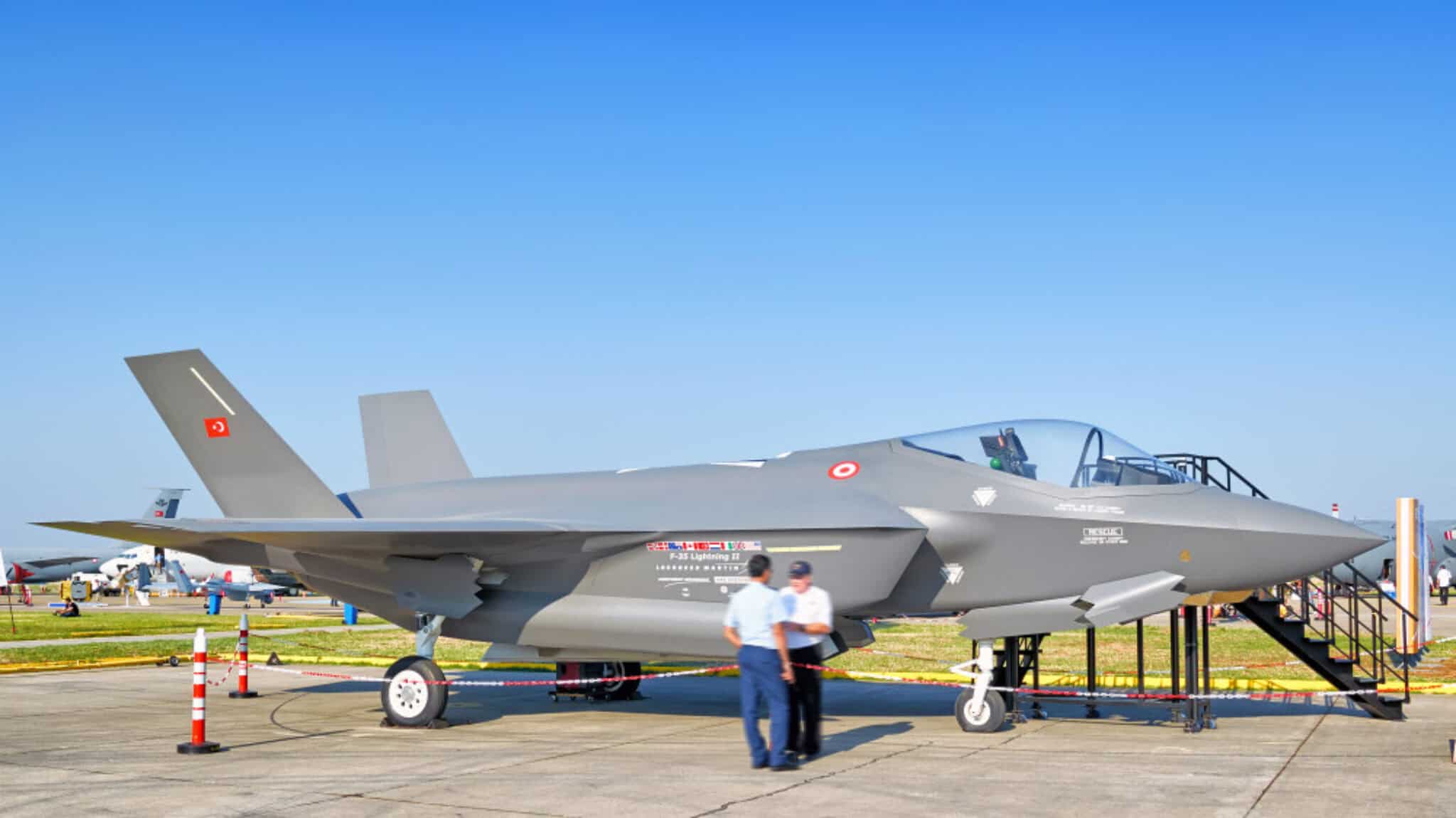
On July 23, the US Treasury Department’s Office of Foreign Assets Control (OFAC) designated a Turkey-based Hamas money exchange alongside a senior Muslim Brotherhood official. Treasury said that the exchange, El-Kahira for General Trading, transferred hundreds of thousands of dollars for Hamas, while its owner and shareholders separately laundered funds for organized-crime networks, including the Swedish network Foxtrot. In the same action, OFAC also designated Mahmoud al Abyari, the UK-based secretary general of the Muslim Brotherhood’s General Secretariat, in part for helping raise funds for Filistin Vakfi and Hayat Yolu — two Turkey-based charities that Treasury had already blocked for supporting Hamas. Treasury said that these latest measures build on sanctions imposed in January and March. In March, FDD’s Long War Journal reported that OFAC designated three Turkish charities: Ghazi Destek Dernegi, Hayat Yolu, and the Palestinian White Hands Assistance and Solidarity Association, for channeling money to Hamas-controlled organizations in Gaza, with Hayat Yolu doubling as a financing hub for the Muslim Brotherhood. That action followed Treasury’s 2024 designation of Jihad Yaghmour, Hamas’s Turkey representative, who liaises with parliamentarians close to Erdogan and helps arrange meetings between Hamas leaders and AKP officials. Three rounds of sanctions in under two years point to the same conclusion: Turkish territory keeps supplying Hamas with fundraising channels and political access that Ankara has not shut down. That record complicates Turkey’s most coveted defense request. A US State Department letter to Congress dated July 22, 2026, and obtained by the Greek daily Kathimerini, reaffirmed that Ankara cannot rejoin the F-35 program under the Countering America’s Adversaries Through Sanctions Act (CAATSA) and Section 1245 of the FY2020 NDAA until it permanently gives up its Russian S-400 system. But the letter doesn’t stop at the S-400. In the same document, the State Department acknowledges continued US concern over Turkey’s relationship with Hamas, even while crediting Ankara for using its contacts with the group’s political leadership to help secure the first phase of the Gaza ceasefire. The relationship between Turkey and Hamas goes beyond financing. On July 21, Hamas announced that Ibrahim Kalin, head of Turkey’s National Intelligence Organization (MIT), had personally congratulated Khalil al Hayya on his election as Hamas’s new leader, affirming what the Gaza terrorist group’s statement called “Turkey’s support for the Palestinian people.” Kalin is the same official who hosted Hamas’s political bureau in Istanbul in March 2026. A sitting intelligence chief publicly congratulating the newly elected leader of a US-designated terrorist organization is not a diplomatic courtesy, but a validation of Hamas’s leadership succession by Turkey’s premier security and intelligence institution. None of this sits comfortably next to Ankara’s request for F-35s and F-110 engines to power its indigenous fifth-generation Kaan fighter jet, a push that Turkish officials have continued even as the S-400 dispute remains unresolved. A NATO ally whose intelligence chief congratulates Hamas’s leadership, whose banks and charities keep surfacing on OFAC’s sanctions list, and whose own conduct is flagged by the US State Department as an active counterterrorism concern is asking Washington to hand over some of the most sensitive combat aircraft and propulsion technology in the US arsenal. The US Congress has taken several steps to hold Turkey accountable for its sponsorship of Hamas. In the latest version of the National Defense Authorization bill, both the House and Senate attempted to move amendments that would punish Turkey for not addressing its support of the terror group. In the House, a bipartisan provision would have required the State Department to report on whether Turkey was harboring Hamas within its territory and providing the terror group access to financial institutions or military aid. In the Senate, a proposed amendment would link Turkey’s support for Hamas with any potential sale of the F-35 aircraft. The provision would require the State Department and the Treasury Department to certify that Turkey is no longer providing support to foreign terrorist organizations, such as Hamas, before a sale of the F-35 could be approved. Both legislative bodies have indicated that they plan to continue offering bills that would limit weapons sales to Turkey over the next year. The latest round of sanctions from the Treasury Department against Hamas financiers in Turkey raises questions about Turkey’s ability and willingness to combat terrorism financing in its banking sector. As evidence continues to mount that Hamas members receive funding and sanctuary in Turkey, international regulators may step in. In October, the Financial Action Task Force (FATF) will meet to host a plenary session in Paris. In 2021, Turkey was placed on the FATF “grey list” due to deficiencies in managing money laundering and terrorist financing risks. Because of the repeated Hamas financing cases and enforcement actions by the US Treasury Department in 2026, Turkey may be forced to have its financial institutions placed under further monitoring by FATF until it improves its track record on terrorism financing. Turkey faces a stark choice: act against Hamas terrorists and facilitators in its country or continue to face roadblocks to trade and military sales. The US Treasury has been clear that it will act against any target facilitating the actions of Hamas, and Congress has demonstrated a resolve to hold Turkey accountable. Sinan Ciddi is a non-resident senior fellow at the Foundation for Defense of Democracies (FDD). Tyler Stapleton is director of congressional relations at FDD Action. Follow them on X: @Ty_D_Stapleton and @SinanCiddi.
US Treasury sanctions Turkish Hamas financiers as Erdogan presses for F-35s
Full Article
Original Source
Read the full article at Fdd →KhanList aggregates and links to publicly available news content. We do not host full articles from third-party sources. Always verify important information with original sources.