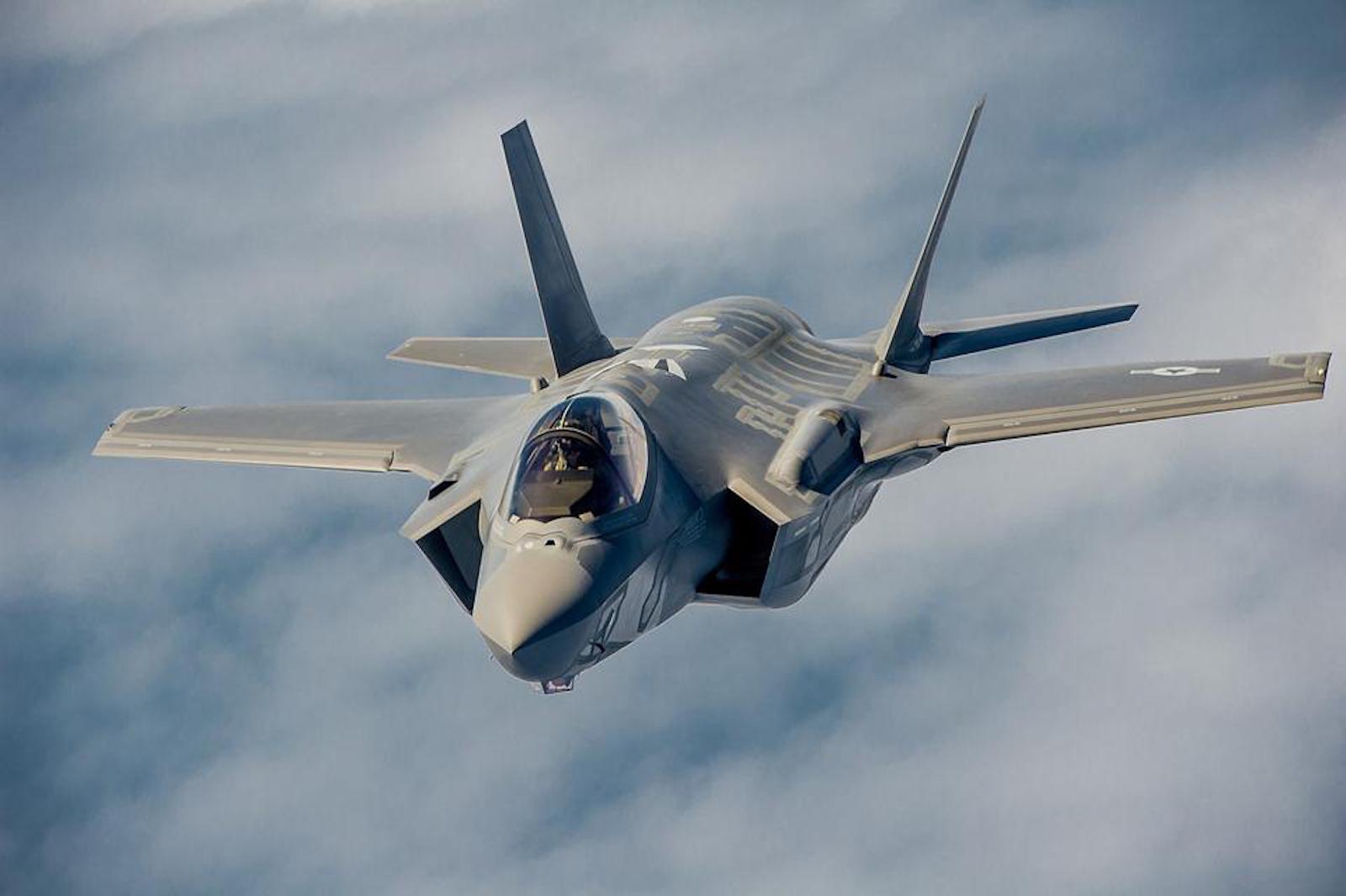
The US military’s fighter fleet is projected to become stealthier but less available, widening the gap between technological sophistication and the combat mass needed for a prolonged war. This month, the US Congressional Budget Office (CBO) released a report showing that a shift toward stealthier fifth- and sixth-generation fighter aircraft will leave the US military with lower fleet availability and fewer operational flying hours over the next decade, despite an overall modernization effort. The nonpartisan agency projects the US Department of Defense’s (DoD) total fighter force will shrink to 3,000 aircraft by 2029 before rebounding to 3,600 by 2040. At the same time, stealth aircraft—including the F-35A, F-35B and F-35C, as well as the planned F-47 and F/A-XX—will rise from 27% of the force in 2025 to more than 50% by 2033. However, CBO projects that the growing share of maintenance-intensive stealth aircraft will reduce fleet availability and annual flying hours. By 2040, CBO estimates US Air Force fighter availability will drop to 45% and US Navy availability to 35%. Meanwhile, aging non-stealth fighters like the F-16C/D will average 48 years of age, further compounding maintenance drag and reducing annual usage rates across the armed service branches. Those pressures are strengthening the case for a phased shift toward a heterogeneous force combining legacy and next-generation fighters with autonomous aircraft, missiles and resilient logistics. The F-35 illustrates the readiness problem. A June 2026 US Government Accountability Office (GAO) report found that its full mission-capable rate had fallen to 25% by fiscal 2025 amid spare-parts shortages and persistent sustainment-management problems. Furthermore, a September 2025 Mitchell Institute report by John Venable and Joshua Baker found that the active fighter force had contracted from 81 squadrons during the Cold War to 31, while divestments and an average airframe age of 26 years left the service with 1,386 fighters and a 59% mission-capable rate. The headline rate masks even deeper shortages among combat-coded aircraft: Venable and Baker estimate that only 56 F-22 air-superiority fighters and 354 F-15E, F-16 and F-35 strike fighters are mission-capable at any given time. Those shortages would become especially consequential in a prolonged conflict with China over Taiwan. Writing in the Air & Space Power Journal in 2026, Peter Layton argues that air forces built around small numbers of highly sophisticated aircraft are vulnerable in major wars because combat losses cannot be replaced quickly. Layton calls this dependence an “Achilles’ heel”: slow production makes modern fleets fragile and unable to regenerate the mass required for prolonged great-power war. Even the F-35’s peak output of about 13 aircraft a month could not offset heavy wartime attrition: at a 2% daily loss rate, Layton calculates, a 100-aircraft force would be halved within 35 days. Simply buying more fighters may not solve the mass problem. Writing in The National Interest (TNI) in November 2025, John Ferrari warns that fleet expansion would place additional pressure on already strained pilot, maintenance, spare-parts and funding pipelines, creating a larger but potentially hollow force. Ferrari argues that sustainable mass instead requires inexpensive networked autonomous systems, long-range munitions, resilient logistics and an industrial base capable of replacing wartime losses. Yet Bradford Lott and Mark Gallagher argue in a 2024 Military Operations Research article that uncrewed systems can provide affordable mass and improve fighter survivability but cannot eliminate the need for crewed aircraft in air superiority, suppression of enemy air defenses (SEAD) and precision-strike missions. Crewed fighters, they argue, still provide tactical judgment, real-time command, sensor fusion and survivability that autonomous or remotely operated aircraft cannot yet match inside sophisticated air-defense networks. In an April 2026 Mitchell Institute for Aerospace Studies report, Mark Gunzinger and Heather Penney propose a phased transition that preserves selected legacy fighters while newer crewed and autonomous systems enter service. Under that model, upgraded F-15Es and F-16s would continue performing homeland-defense, lower-threat and standoff missions, while F-35As and eventually F-47s assume penetrating and air-dominance operations against advanced defenses. F-15EXs would add capacity in less-contested environments. Gunzinger and Penney argue that Collaborative Combat Aircraft (CCA) would supplement rather than replace crewed fighters, adding sensing, electronic warfare and weapons capacity. They emphasize the objective is to preserve near-term capacity while progressively shifting high-risk missions toward more survivable platforms. Layton outlines two possible architectures for such a heterogeneous force. The first is the US Navy’s proposed 40/60 split between crewed fighters and drones, which he argues overlooks missiles, rockets and other unmanned systems. The second adapts the British Army’s 20/40/40 model: 20% of combat power from crewed aircraft, 40% from expendable autonomous weapons, including rockets and cruise or ballistic missiles, and 40% from reusable drones. The exact balance would vary by conflict, but Layton favors inexpensive, simplified systems that can be produced, dispersed and replaced rapidly at scale. However, adopting CCAs to address the problem of fighter mass has its own set of challenges. Gregory Allen and Isaac Goldston warn in an August 2024 Center for Strategic and International Studies (CSIS) report that scaling CCA production will require resisting the US Air Force’s tendency to turn new aircraft into costly, over-specified “exquisite” platforms. Allen and Goldston stress that extra requirements, expensive sensors, low production volumes and legacy procurement practices could drive up costs, delay fielding and destroy the program’s promise of affordable mass. They also note that integration presents a parallel challenge: CCAs must operate alongside crewed fighters, conform to doctrine and training systems, and use interoperable hardware and software standards. Thus, the central test is whether the US Air Force can treat low cost, rapid production and interoperability as operational imperatives rather than allowing CCAs to become another exquisite procurement program. Success will ultimately be measured not by nominal fighter numbers, but by whether the mixed force can sustain sortie generation, absorb attrition and regenerate combat power under attack.
US stealth fighter surge risks a readiness nosedive
Full Article
Original Source
Read the full article at Asiatimes →KhanList aggregates and links to publicly available news content. We do not host full articles from third-party sources. Always verify important information with original sources.