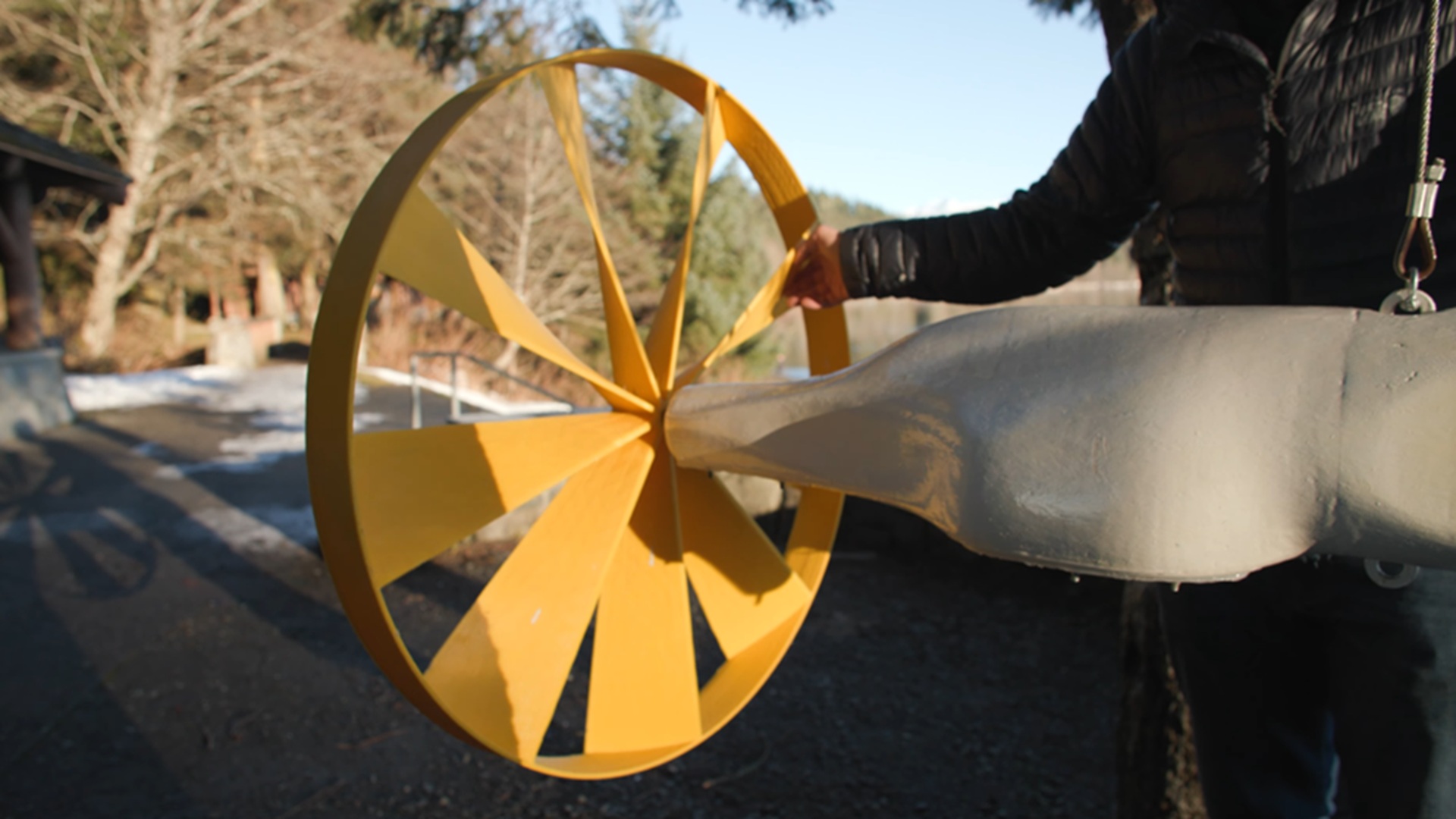
A US marine energy company has begun preparing to test a new modular tidal turbine in Massachusetts to validate the tech and bring it closer to commercial deployment. Alaska-based Sitkana highlighted that its latest prototype will be deployed at the Marine Renewable Energy Collaborative’s (MRECo) Bourne Tidal Test Site (BTTS) in the Cape Cod Canal. This 7.4-mile-long artificial waterway is part of the Atlantic Intracoastal Waterway. The location is known for its strong tidal currents. As a result, it provides an ideal environment to evaluate the turbine’s performance, durability, as well as reliability under real-world operating conditions. The testing campaign is expected to provide engineers with valuable data as the company advances its marine renewable energy technology toward commercial use. “Our goal is to make marine energy easier to build, deploy, and maintain in remote areas,” Lance McMullan, Sitkana founder and CEO, said. Modular turbine tests Conventional tidal energy systems use large, multi-megawatt underwater turbines that are fixed to the seabed to capture fast tidal currents. This requires expensive and specialized offshore installation vessels. In contrast, the company’s design is modular and consists of small units that can be integrated into larger arrays. This makes the technology easier to scale, and cuts the need for major infrastructure and complex deployment equipment. A full-scale prototype of the modular device.Credit: Sitkana The modular concept is also intended to simplify maintenance and make tidal energy more practical for remote coastal communities. “This testing is critical as we move toward commercial deployments,” McMullan explained. Apart from measuring electricity production, the trials will also help the engineers study how the turbine behaves in a real marine environment. They will, moreover, gather info about its interactions with the local wildlife According to the firm, the testing phase is a crucial milestone before commercial rollout. It will determine whether the modular system can deliver the performance and durability needed for future tidal energy projects. Rethinking tidal power The Bourne Tidal Test Site has naturally strong tidal currents. The platform stands on three piles in roughly 23 feet (7 meters) of water, where the tidal flows exceed 4.9 feet per second (1.5 m/s). A central lifting arm lets engineers deploy, retrieve, and access prototype turbines up to 9.8 feet (three meters) in diameter. It is located near the US Army Corps of Engineers’ canal headquarters and it is the only commercial open-water facility in the US available to companies developing and testing tidal energy turbines The site was built for cheap, controlled testing of prototype tidal turbines in real ocean conditions. Located at a narrow section of the canal, the site experiences water speeds of up to four knots. This is powerful enough to expose prototype turbines to demanding real-world conditions. The engineers will use the site to monitor how the modular turbine performs over time. They will also assess its operational reliability and structural durability under continuous exposure to ocean currents. “BTTS is one of the few places where we can evaluate our entire system in one location,” McMullan concluded. “Beyond measuring power performance, we’ll be able to observe operation in a real marine environment and better understand interactions with wildlife.” MRECo recently completed a few upgrades to the BTTS. These were supported by the Massachusetts Clean Energy Center’s (MassCEC) Ocean Innovation Network, and include enhanced data collection systems, expanded testing infrastructure, increased capabilities for prototype deployments, and preparations for future grid-connected tidal turbine testing. Recommended ArticlesGet the latest in engineering, tech, space & science - delivered daily to your inbox.Based in Skopje, North Macedonia. Her work has appeared in Daily Mail, Mirror, Daily Star, Yahoo, NationalWorld, Newsweek, Press Gazette and others. She covers stories on batteries, wind energy, sustainable shipping and new discoveries. When she's not chasing the next big science story, she's traveling, exploring new cultures, or enjoying good food with even better wine.
US startup to test modular tidal turbine in powerful Massachusetts currents
Full Article
Original Source
Read the full article at Interestingengineering →KhanList aggregates and links to publicly available news content. We do not host full articles from third-party sources. Always verify important information with original sources.