
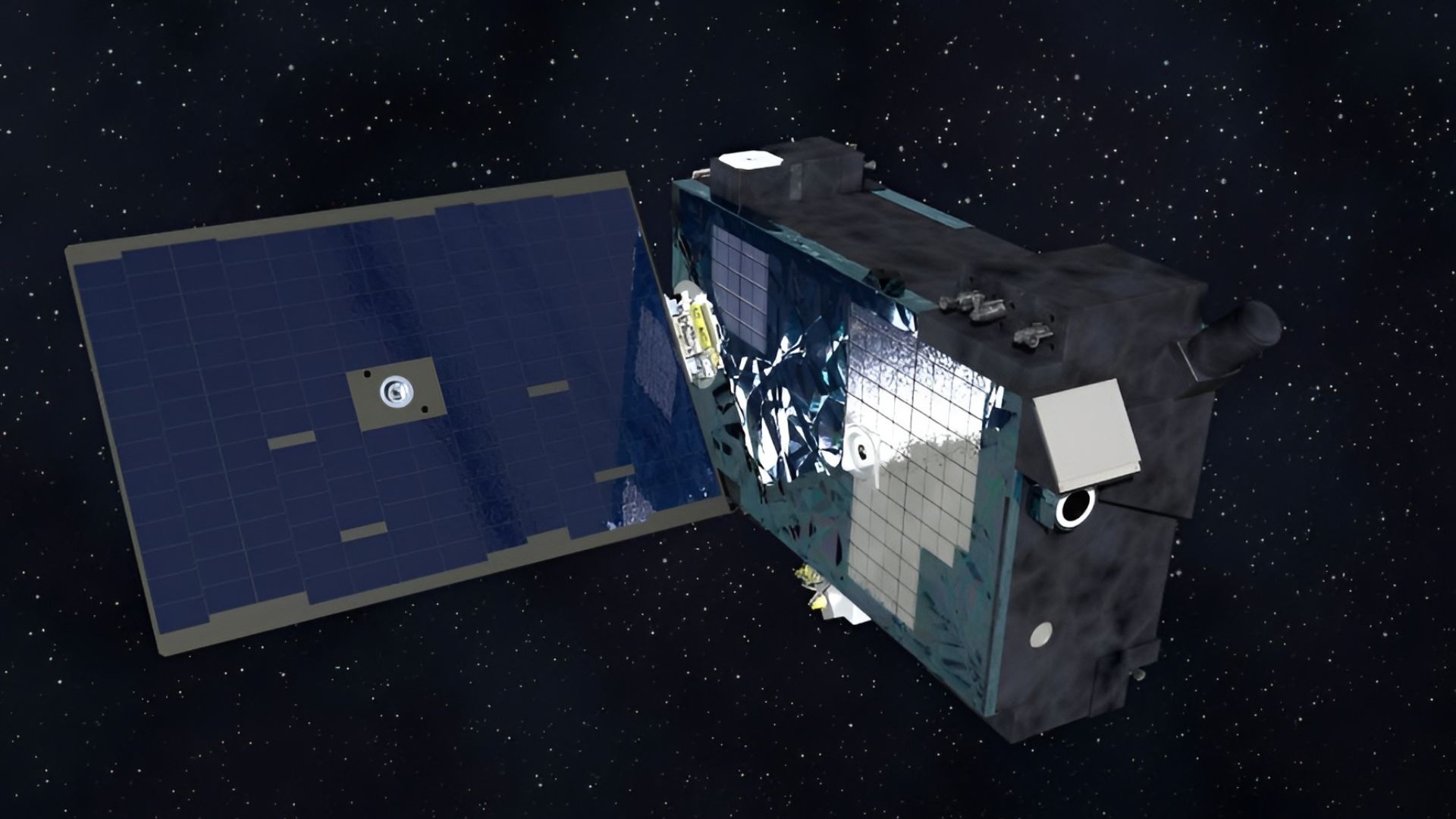
Northrop Grumman has won a U.S. Space Force deal to develop a new reconnaissance satellite for geosynchronous orbit. The spacecraft will serve as a prototype for the Defense Innovation Unit’s GHOST-R program. The effort aims to bring faster and lower-cost surveillance capabilities into one of the most important regions around Earth. Northrop will use its ESPASat-L spacecraft platform for the mission. Irvine, California-based TRL-11 will supply the optical payload for the satellite. Suitcase-sized spy satellite ESPASat-L gives Northrop a compact platform for carrying specialized mission hardware into space. The spacecraft measures roughly the size of a small suitcase. The platform also works with Northrop’s ESPAStar rideshare architecture. Its modular design allows different payloads to support different missions. For GHOST-R, the optical equipment will provide the satellite with its primary observation capability. Northrop will then assemble, integrate, and test the complete spacecraft. Those activities will take place at facilities in Dulles, Virginia, and Gilbert, Arizona. The finished spacecraft will eventually move to the Space Force for operations. GHOST-R targets resident space objects in geosynchronous orbit. Satellites operating there can support military communications and other critical national security functions. 24 months to orbit Northrop faces an accelerated 24-month schedule for the prototype. That timeline covers spacecraft production, payload integration, testing, and delivery. The program reflects growing interest in commercially derived spacecraft for national security missions. Established platforms can provide a foundation without requiring every mission to start with a new satellite design. Ryan Tintner, Northrop Grumman’s vice president and general manager for space superiority, pointed to the growing activity around Earth’s geosynchronous belt. “Space is becoming more congested and contested every day,” Tintner said. He said faster deployment can improve the military’s ability to understand activity around critical spacecraft. GHOST-R also falls within DIU’s “Kill Web” portfolio. The initiative explores space architectures that combine sensing, artificial intelligence and targeting technologies. That connection could allow future systems to process orbital observations more quickly. It also fits the military’s push toward commercially sourced technologies that can reach operational use faster. Tracking threats in GEO GHOST-R will support several forms of space-domain awareness. Its planned missions include characterizing resident space objects and identifying spacecraft. The satellite will also support battle damage assessment. That capability could help determine the condition of a spacecraft after an attack or other damaging event. Northrop’s prototype will augment existing U.S. space surveillance systems. The Space Force plans to use commercial spacecraft alongside government-owned satellites in a hybrid architecture. A proliferated approach could also distribute surveillance functions across more spacecraft. Losing one satellite would not necessarily remove an entire capability from orbit. Northrop already has experience supporting U.S. surveillance operations in geosynchronous orbit. Its GSSAP spacecraft monitor activity around satellites operating in that region. GHOST-R takes a different route toward adding surveillance capacity. It combines a compact spacecraft platform with commercially supplied optical hardware and an accelerated development schedule. The immediate goal is straightforward: deliver a working prototype within two years. If successful, the program could give the Space Force another way to expand its view of activity in geosynchronous orbit. Get the latest in engineering, tech, space & science - delivered daily to your inbox.Aamir is a seasoned tech journalist with experience at Exhibit Magazine, Republic World, and PR Newswire. With a deep love for all things tech and science, he has spent years decoding the latest innovations and exploring how they shape industries, lifestyles, and the future of humanity.
US sets 24-month deadline for new spy satellite prototype built for space warfare
Full Article
Original Source
Read the full article at Interestingengineering →KhanList aggregates and links to publicly available news content. We do not host full articles from third-party sources. Always verify important information with original sources.