
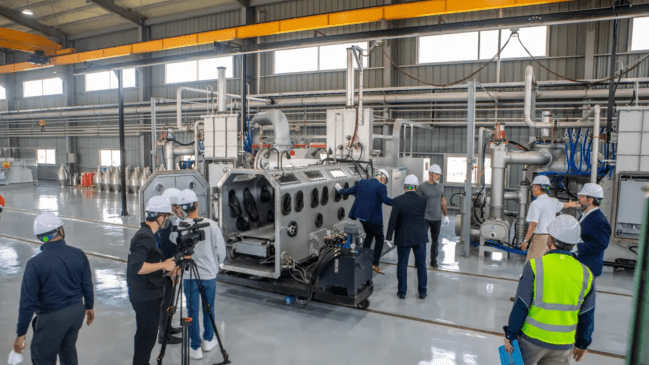
US-based critical materials manufacturer Evolution Metals & Technologies (EM&T) plans to dramatically expand its rare earth magnet manufacturing capacity in Pohang, South Korea, with a major increase in the electrical infrastructure serving its operations. The company has agreed to principal terms with Korea Electric Power Corporation (KEPCO) to increase available power capacity from 130 megawatts to approximately 750 megawatts, a nearly sixfold increase. The additional electricity will support a planned expansion of the company’s manufacturing site, new production equipment and additional processing capacity. EM&T says the combined expansion could allow the facility to produce more than 10,000 metric tons of rare earth permanent magnets annually, up from a current target of about 1,000 tons. The project is also supported by a proposed $20.7 million government grant. More power for a much larger factory The expansion is built around a major increase in both manufacturing space and electricity supply. EM&T plans to acquire approximately 1.3 million square feet of additional land next to its existing Pohang operations. The company’s current magnet manufacturing footprint of about 24,000 square feet would expand to approximately 482,000 square feet. The larger facility is expected to house additional magnet production equipment, processing systems and supporting infrastructure. The increased power capacity is particularly important because rare earth magnet production is energy-intensive. EM&T expects the expanded electricity supply to support the installation of new equipment, including machinery from ULVAC that is scheduled for delivery and installation in November. KEPCO is expected to cover about 90% of the costs associated with the new substation, cabling and civil works required for the expanded power connection. EM&T also says it expects to benefit from competitive electricity rates in Pohang, expecting to improve the economics of operating a much larger manufacturing facility. Building a 10,000-ton magnet operation The expansion is intended to increase EM&T’s magnet production from approximately 1,000 tons to more than 10,000 metric tons annually by the end of 2026, although the company still needs to complete the planned facility expansion, equipment installation and related infrastructure work. The company produces rare earth permanent magnets, including sintered and bonded products used in applications that require high-performance magnetic materials. The Pohang project is also part of a broader strategy to expand magnet manufacturing capacity while reducing dependence on China for critical rare earth magnet supply. Rare earth permanent magnets are essential components in electric motors, industrial machinery, defense systems, robotics and other advanced technologies. “With a combination of DFARS compliant material, commercial operating history, operators, inbound expansion equipment, permits, land, power and two allied countries, we have a recipe to permanently untangle supply chain dependency on China for rare earth permanent magnets,” said David Wilcox, executive chairman of EM&T. The company has also received conditional approval for a roughly $20.7 million grant from Pohang City and Gyeongbuk Province. The company further adds that the expanded Pohang operation will complement its planned US industrial campus and provide additional production capacity across its broader manufacturing platform, as demand for electricity rises from data centers, AI infrastructure and advanced manufacturing. Get the latest in engineering, tech, space & science - delivered daily to your inbox.Bojan Stojkovski is a freelance journalist based in Skopje, North Macedonia, covering foreign policy and technology for more than a decade. His work has appeared in Foreign Policy, ZDNet, and Nature.
US rare earth magnet maker targets 10,000 tons with 750 MW power deal to counter China
Full Article
Original Source
Read the full article at Interestingengineering →KhanList aggregates and links to publicly available news content. We do not host full articles from third-party sources. Always verify important information with original sources.