
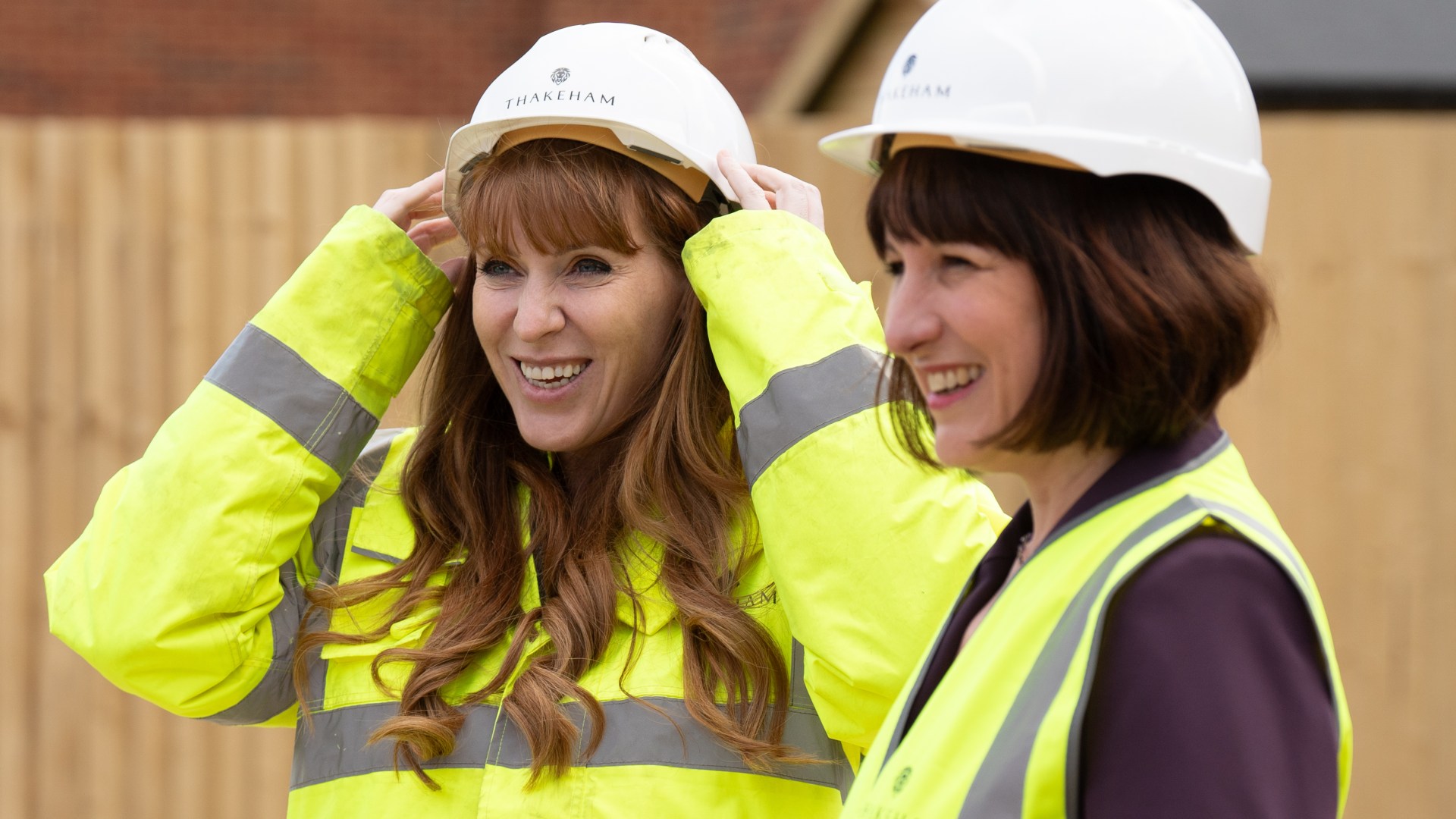
BRICKS made in Britain are so expensive due to energy costs that construction bosses are turning to cheaper imports. Despite the UK having around 50 brickworks in our once-envied industry, building firms are opting to buy from countries including Germany, the Netherlands and even India and Bangladesh. Bricks from the EU are cheaper to produce Credit: Getty Keen bricklayer Winston Churchill restoring his home Chartwell Manor in 1928 Credit: Getty Experts told The Sun on Sunday that crippling energy costs and an unpredictable pipeline of work mean brick-making kilns are continually being switched on and off. This is leading to price increases and a lack of reliability for building firms. Sign up for The Sun newsletter Thank you! The latest government figures show brick imports soared by almost 12 per cent to 352million last year, with imports accounting for around 20 per cent of the UK market. Domestic production was 1.5billion, with 17million exported. Our probe found a British-manufactured Ibstock Alderley Mixture red multi wirecut facing brick is advertised at approximately 95p per brick — £950 per 1,000. Yet an almost identical load from the EU, the ET Clay Tamworth Red Multi, is advertised at £720 per 1,000. That is a saving of £2,300 per 10,000 bricks, roughly the number needed for a three-bed house. Planning expert Nicholas Boys Smith, MBE, who is founder and chairman of Create Streets, said: “Britain’s brick industry is in trouble. High energy costs and increasingly stringent sustainability standards are making bricks more expensive and reducing demand. Some factories have already closed. “This is a catastrophe happening in slow motion which is about to get much worse. We must act now before we murder the British brick industry.” New PM Andy Burnham has pledged to deliver 1.5million new homes by 2029, which would require 15billion bricks — and last month, Chancellor John Healey ordered government departments to “Buy British first” to help kick-start the economy. Most read in The Sun Gareth Snell, Labour MP for Stoke-on-Trent, said: “With the Government’s house-building bonanza, it should be boom time for British brick kilns. “And because a well-made British brick will last 200 years, it’s good for the environment, too. “When compared to the diesel-chugging, tanker-imported bricks made overseas or ‘sustainable’ timber that has a 60-year life span, it’s a no-brainer to use British bricks.” In February, Labour MP Adam Jogee introduced a Private Member’s Bill pushing for the use of British-made bricks in construction projects. He told The Sun on Sunday: “We should focus government spending on backing British businesses to boost jobs and growth.” Today construction leaders have called on the Government to slash energy costs to help keep kilns firing. Construction consultant Ian Hodgkinson said: “We have clay beneath our feet. We have brickworks. We have skilled people. We have the engineering knowledge and we have towns and cities that were built on British brickmaking. “If it is cheaper to transport a heavy brick hundreds of miles than to make it in Britain, the problem is not the brick. It is the system surrounding it. Housing Secretary Angela Rayner and former Chancellor Rachel Reeves Credit: PA Andy Burnham has pledged to deliver 1.5million new homes by 2029, which would require 15billion bricks Credit: Reuters “It is time to put British manufacturing back at the foundation of British housebuilding.” In the late 1960s and early 1970s — driven by the post-war housing boom — the UK was producing 6.5 to seven billion bricks a year. In 2022, that figure stood at two billion and by 2024 it was 1.3billion. The 50 factories around the UK are mainly run by three companies: Ibstock, Forterra and Wienerberger. Despite 12,000 UK workers still making bricks and tiles — and 86,000 working in the wider trade — UK production is severely down. Ian said: “Westminster can’t announce a housing target and expect brick factories to increase production the following morning. “You cannot shut a brickworks down when demand falls and reopen it next weekend. “Modern brickmaking is an energy-intensive process. “The kilns operate at temperatures of around 1,000C or more. They need vast quantities of energy and must run efficiently over long cycles. “If gas and electricity are significantly more expensive in Britain than in competing countries, the British brick begins the race with a hodful of extra cost on its back. “Factories cannot absorb those additional costs indefinitely.” In Germany and the Netherlands, kilns are constantly on, because energy costs are low. Ian added: “You cannot blame a builder for trying to control costs. Chancellor John Healey ordered government departments to ‘Buy British first’ to help kick-start the economy Credit: PA Gareth Snell said: ‘With the Government’s house-building bonanza, it should be boom time for British brick kilns’ Credit: Getty “If somebody is building 100 houses and can save tens of thousands of pounds on one material, they are under commercial pressure to consider it. “The wider question is why British industrial costs and procurement practices sometimes allow a heavy product manufactured hundreds of miles away to undercut one made closer to the building site.” According to Trades Union Congress data, an average-sized industrial brickmaking factory in the UK spends approximately £1.2million to £2.5million a year on energy. Ian, also the on-screen project manager for the BBC show DIY SOS, said: “The Government must address industrial energy costs. “Manufacturers need an affordable and dependable energy strategy while they invest in cleaner kilns, hydrogen trials and lower-carbon production.” A government spokeswoman said: “The vast majority of bricks used in housebuilding are British, which is why we produce over four times as many bricks as we import, and we always encourage housebuilders to use British bricks.” Comment now
Brit brick industry being ‘murdered’ by Labour’s crippling energy costs & housing pledge… as we’re forced to buy from EU
Full Article
Original Source
Read the full article at Thesun →KhanList aggregates and links to publicly available news content. We do not host full articles from third-party sources. Always verify important information with original sources.