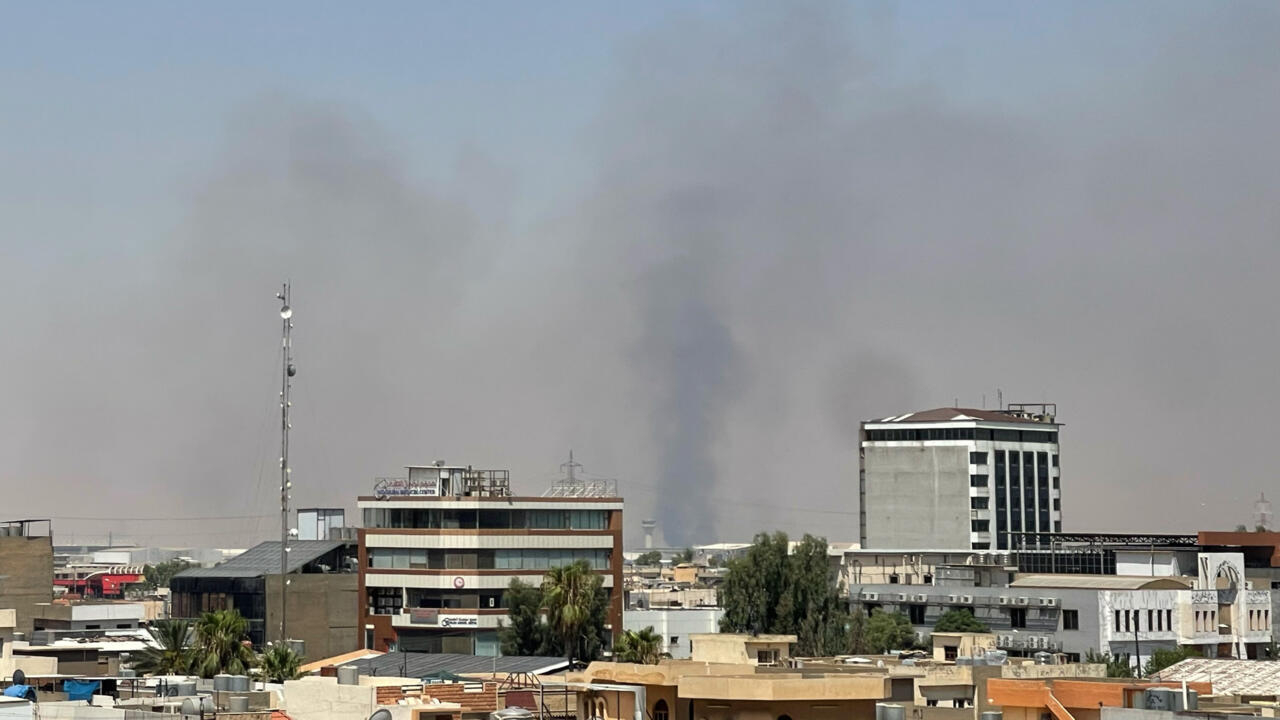
Iran targeted American strongholds around the Persian Gulf on Friday, while the US bombarded Iranian military sites as the rivals showed no sign of backing away from their conflict after a 13th straight night of strikes. Read moreMiddle East live: Trump says US and Iran are talking, but Tehran not yet ready for a deal With fighting flaring again and diplomacy appearing to sputter, both sides made moves suggesting an escalation was possible. US embassies in the Middle East began alerting Americans in the region that options to leave could become more limited, while Iran’s Revolutionary Guard advised residents of neighbouring countries to stay away from bases with US troops. Vowing that Iran “will not bow to US” bullying, Iranian Foreign Minister Abbas Araghchi noted ongoing discussions with two global powers often at odds with Americans – China and Russia – and warned in an interview with the semi-official news outlet Tasnim that the Islamic Republic is “neither intimidated by threats nor will we yield to pressure”. At the center of the fight is the Strait of Hormuz, a crucial passage for world energy supplies that has been effectively shut down by Iranian attacks, sending fuel prices soaring and causing widespread economic turmoil. In the northern Iraqi city of Erbil, which is home to a contingent of American military advisers, security officials said Friday that US-led forces had shot down five explosive-laden drones. Repeated blasts echoed in Erbil, the capital of Iraq’s semiautonomous Kurdish region, and plumes of black smoke were seen near its airport, where US forces are based. US military officials did not respond to a request for comment on the apparent attacks. 'One-way tickets to hell' Iran's military said on Friday that it carried out attacks targeting US military assets in Bahrain, Jordan and Kuwait in retaliation for Washington's latest strikes on the Islamic republic. Iran's Revolutionary Guards, meanwhile, said they had targeted a data centre in Bahrain belonging to Amazon, according to state media, though neither the US tech giant nor Bahrain have commented on the claim. "This morning, the fuel tanks, large equipment warehouses and silos, and the barracks of the US terrorist army forces at the Isa Air Base in Bahrain were targeted by Arash kamikaze drones," the Iranian army said in a statement carried by state TV. An AFP journalist in Bahrain reported an explosion and warning sirens Friday, though it was not immediately clear if the two events were linked. Bahrain later said it intercepted and destroyed "a number of Iranian aerial aggressions", accusing Tehran of targeting civilians. To display this content from YouTube, you must enable advertisement tracking and audience measurement. One of your browser extensions seems to be blocking the video player from loading. To watch this content, you may need to disable it on this site. Cover image: © France 24 03:05 The Iranian army also claimed drone attacks against Jordan, targeting "aircraft hangars, aviation maintenance hangars and a barracks" at Al-Azraq base. Jordan's military said it intercepted seven missiles and six drones launched by Iran on Friday, adding the operation "resulted in no casualties or material damage". In a separate statement, the Iranian army said it had also launched drones at US equipment warehouses at Camp Udairi and the site of American military personnel at Camp Doha and Camp Arifjan in Kuwait. Iran's Guards, the ideological arm of the military, said they had targeted the Ali Al Salem Air Base in Kuwait, claiming to have destroyed an ammunition depot and inflicted casualties among US personnel. They also claimed attacks on equipment storage silos at Camp Udairi in Kuwait, as well as a US Fifth Fleet watchtower in Bahrain. Tehran argues that any facility or base in the Middle East that the US military uses for strikes on Iran is considered a legitimate target for retaliation. The head of its Khatam al-Anbiya central military command, Ali Abdollahi, threatened US military personnel in the region on Friday, saying Iran had "prepared free, one-way tickets to hell for you". "For every proud citizen of the Islamic Republic of Iran who is martyred, one American service member will be sent to hell," he was quoted as saying by the state broadcaster. US strikes across Iran As a barrage of assaults was aimed at bases of the United States and its allies, the US hit a Revolutionary Guard naval base in northern Iran, according to the semiofficial news outlets Fars and ISNA. Blasts from US bombardment were also reported on Iran’s Qeshm Island, a base for naval assets including drone boats that Iran can use to attack vessels in the Strait of Hormuz, as well as in Isfahan province, home to a major Iranian air base and one of Iran’s nuclear sites. Additional strikes reportedly hit Iran’s southwest Khuzestan province and southern Fars province. US Central Command said the latest barrage was designed to “further degrade Iran’s ability to threaten civilian mariners and commercial vessels transiting regional waters” as the Americans push to regain control over the strait, through which one-fifth of the world’s oil and gas transited in peacetime. Houthis say they don't seek to close key Bab al-Mandeb Iran’s ability to effectively close the strait – and cause economic chaos far beyond the Middle East – gives it tremendous leverage in negotiations. Its Houthi allies increased that leverage when they targeted two Saudi oil tankers in the Red Sea on Thursday – increasing the risks of shipping through another vital route for Middle Eastern oil. The attacks made good on the Houthis’ threat to close the Bab el-Mandeb Strait to Saudi-linked shipping. The strait at the southern tip of the Arabian Peninsula connects the Red Sea to the Gulf of Aden, and around 12 percent of the world’s trade, including one-fourth of global container traffic, passes through there. The Yemeni rebels on Friday said they were not seeking to close the key Bab al-Mandeb Strait and maintained that the movement’s naval operations in the Red Sea were solely aimed at longtime foe Saudi Arabia. "There is no closure of Bab al-Mandab as some are suggesting," said Mohammed Abdusalam, a top Houthi negotiator, adding that the rebel position was "limited to a maritime blockade that only affects the Saudi side". Attacks on Saudi tankers by the Iran-backed rebels have sparked fears of the opening of a second front in the Middle East conflict. There have been no public signs of progress in any negotiation efforts. Foreign Minister Ishaq Dar of Pakistan, which has played a significant role in previous negotiations, met his counterpart, Araghchi on Friday. But before the meeting, Araghchi appeared to brush off any attempts at mediation, saying he did not think the conflict needed more mediators, instead insisting the US must change its position. (FRANCE 24 with AFP and AP)
US pummels Iranian sites as Tehran targets regional bases stationing US forces
Full Article
Original Source
Read the full article at France24 →KhanList aggregates and links to publicly available news content. We do not host full articles from third-party sources. Always verify important information with original sources.