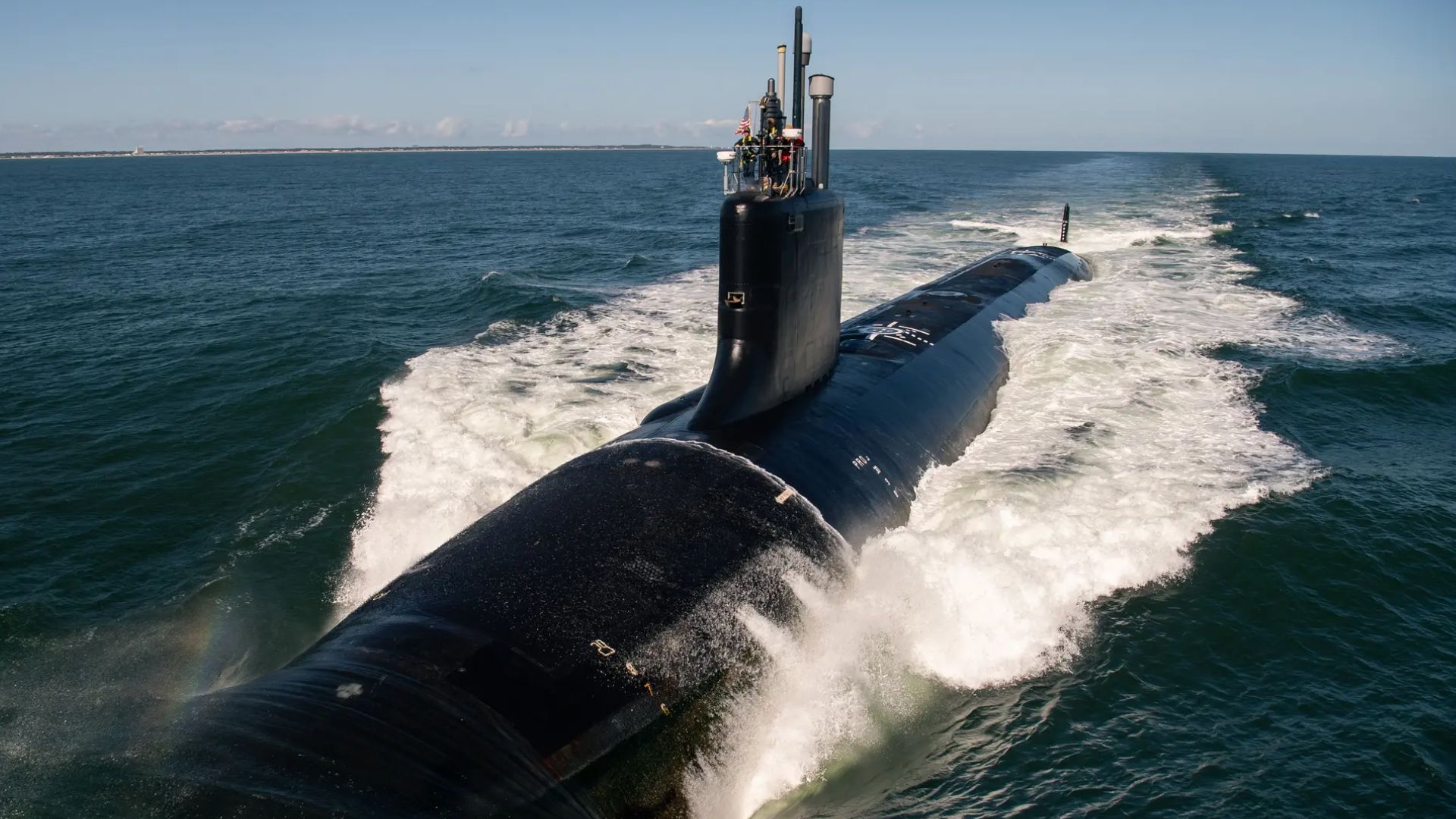
The U.S. Navy on Wednesday awarded $76.6 billion in contracts to General Dynamics and HII for the next generation of Virginia-class attack submarines and Columbia-class ballistic missile submarines, ending nearly three years of negotiations over rising construction costs. The package includes $42.1 billion for nine Block VI Virginia-class attack submarines and materials for a tenth vessel, $29.5 billion for five Build II Columbia-class ballistic missile submarines, and $5 billion to strengthen the workforce and improve shipyard productivity at the two builders. According to the Pentagon’s contract announcement, the Block VI award also covers previously approved purchases of long-lead materials and investments aimed at improving production efficiency. New submarines expand US undersea capabilities General Dynamics Electric Boat and HII’s Newport News Shipbuilding jointly build both submarine classes. HII manufactures the bow, stern, and several major sections, while Electric Boat assembles the central hull that houses the nuclear reactor. For Columbia-class submarines, the central section also contains the missile compartment for Trident II D5 nuclear ballistic missiles. The Block VI Virginia submarines will continue using the Virginia Payload Module, giving them additional capacity to carry Tomahawk Land Attack Missiles and the Navy’s future long-range hypersonic strike missile. “This historic investment underscores the Department’s continued commitment to undersea superiority and the recapitalization of our nuclear triad,” Vice Adm. Robert Gaucher, director of submarine programs, said in a Navy statement. Pandemic costs and labor shortages slowed negotiations The contracts were delayed as the Navy and shipbuilders struggled to agree on higher production costs that emerged after the COVID-19 pandemic. Negotiations first stalled in 2022 over missile indemnification issues involving the final two Block V Virginia submarines. Although those concerns were eventually resolved, the delay affected later contracts. The two sides then spent years negotiating workforce wages as inflation increased labor costs across the industry. A shortage of experienced workers also pushed submarine costs higher. Many skilled employees retired during the pandemic, while shipyards faced competition from other industries offering comparable wages, making hiring and retaining workers more difficult. “These important contract modifications provide Electric Boat and our suppliers with the demand certainty we need to continue investing in capacity and hiring the workforce necessary to ensure we deliver these important national security assets on schedule,” said Mark Rayha, president of General Dynamics Electric Boat. “We are committed to building the nuclear-powered submarines that protect our nation,” Kari Wilkinson, the president of HII’s Newport News Shipbuilding, mentioned in a release “These contracts provide the American shipbuilding industrial base the opportunity to demonstrate that commitment in a meaningful way and we are honored to serve our customer and our country.” Long-term investment supports future fleet After two years of talks, the Navy reached an agreement on the final two Block V submarines. In April 2025, it awarded $18.5 billion for the future attack submarines Baltimore (SSN-812) and Atlanta (SSN-813), along with additional funding to support workforce wages. Congress also approved $3.6 billion in fiscal year 2025 for Potomac (SSN-814) and another $3.7 billion for advance procurement of submarines planned for fiscal years 2026 and 2027. The Build II Columbia program begins with Groton (SSBN-828), the third submarine in a planned fleet of 12 boats estimated to cost about $128 billion. The lead submarine, District of Columbia, is scheduled for delivery by March 2029, followed by Wisconsin (SSBN-827) in April 2030, according to Navy budget estimates.Rep. Joe Courtney called the contracts “the biggest shipbuilding award in modern American history,” saying the long-term funding will support submarine shipyards and thousands of suppliers through the late 2030s while also supporting the AUKUS partnership and the planned sale of three Virginia-class submarines to Australia.Recommended ArticlesGet the latest in engineering, tech, space & science - delivered daily to your inbox.A versatile writer, Sujita has worked with Mashable Middle East and News Daily 24. When she isn't writing, you can find her glued to the latest web series and movies.
US Navy orders 23,000-ton nuclear-armed submarines as part of historic fleet upgrade
Full Article
Original Source
Read the full article at Interestingengineering →KhanList aggregates and links to publicly available news content. We do not host full articles from third-party sources. Always verify important information with original sources.