
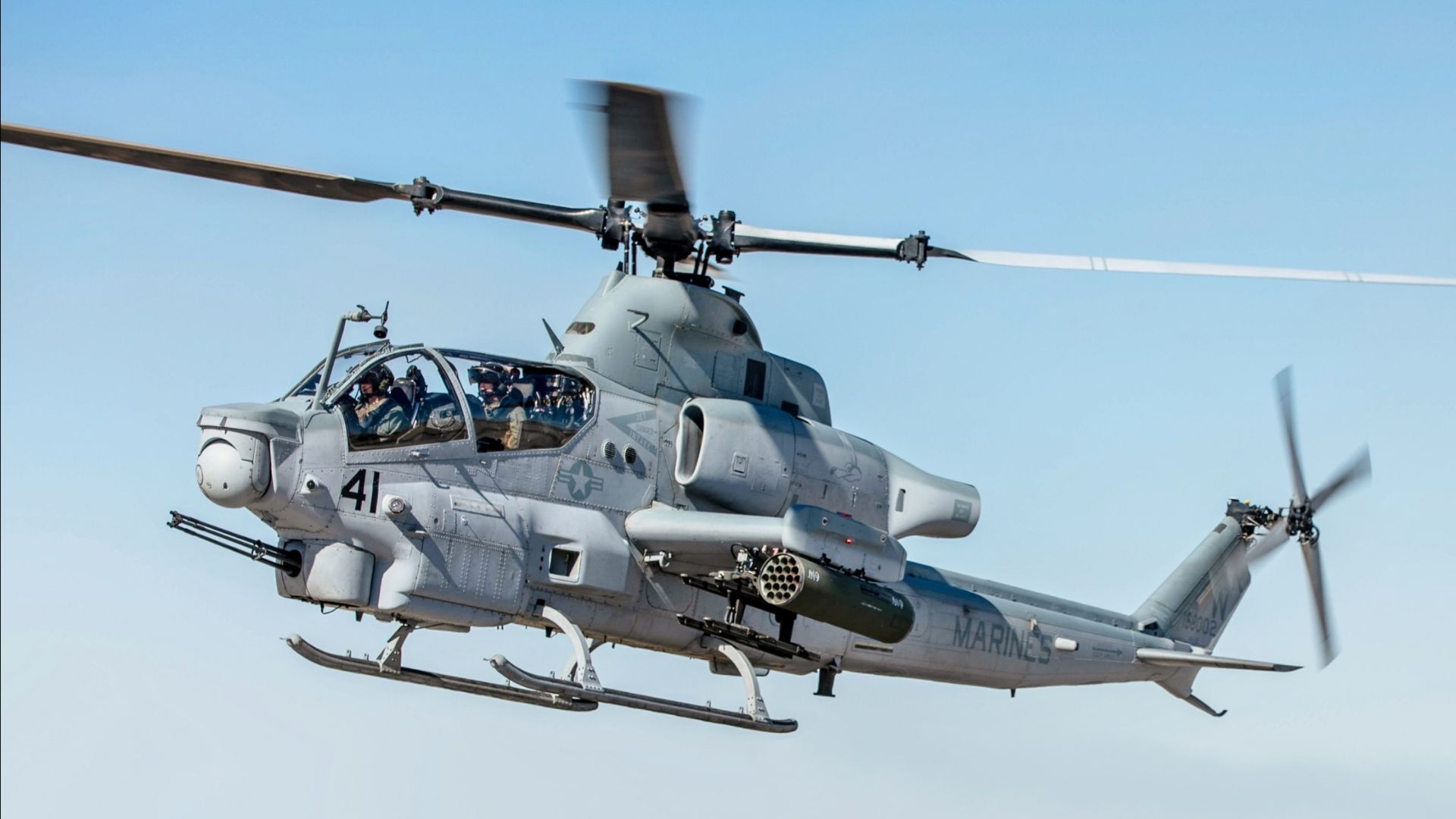
An AH-1Z Viper delivered the Advanced Precision Kill Weapon System (APKWS) during a May 12 live-fire test conducted within a restricted range. The Marine Corps’ Light/Attack Helicopter Program Office and Air Test and Evaluation Squadron 21 conducted the event at the Upper Zion impact area. The firing verified weapons integration parameters, range safety protocols, and ground ordnance handling procedures. Designed to streamline training and reduce the time needed to field the capability across the Marine H-1 helicopter community, the event also brought together 26 observers from across the Naval Aviation Enterprise. Validating precision weapon delivery The Marine Corps said APKWS provides commanders with a scalable strike option against time-critical targets in contested environments while limiting collateral damage. Its integration strengthens close air support and complements emerging manned-unmanned teaming concepts, according to the service. The test examined the delivery parameters needed to employ the weapon from the AH-1Z Viper. Alongside the firing, teams verified the safety and ordnance handling procedures supporting its use. “By validating APKWS delivery parameters in one of the most space-constrained range environments, our H‑1 team demonstrated precise, scalable effects that commanders can employ with confidence,” said Col. Jason Duke, PMA-276 program manager. The event’s objectives extended beyond weapons integration. Streamlining training and reducing the time needed to field APKWS across the Marine H-1 helicopter community were also stated aims of the firing event. Coordinating a restricted firing zone The limited range footprint required close coordination with Fort A.P. Hill’s Directorate of Plans, Training, Mobilization and Security, led by Matt Fleetwood. The directorate worked with Range Control to establish a tailored Weapons Delivery Zone for the firing. Coordination addressed the limited space available at the range and the need to protect surrounding operations during the event. Range Control imposed safety check-holds across adjacent training sectors to clear the zone and protect surrounding operations. These measures supported the firing while addressing the safety requirements of nearby training activity. HX-21 said the range arrangements established repeatable procedures for Marines operating from expeditionary sites. Those procedures linked the coordination at the restricted range with the service’s broader readiness and fielding objectives. “The Weapons Delivery Zone (WDZ) construct and range deconfliction we provided here translate directly into repeatable procedures, improving readiness and expanding warfighting options for Marines operating from expeditionary sites,” said Michael Hunt, HX-21 ordnance officer. Preparing for fleet fielding The 26 observers received a firsthand look at APKWS performance and the requirements associated with future fleet fielding. Representatives attended from PMA-276, the Direct and Time Sensitive Strike Program Office, the Aviation Simulation Center and HX-21. Their participation added hands-on learning to the developmental flight-test work. The event connected weapons integration testing with the practical procedures needed to support Marine helicopter operations. Delivery parameters, ground ordnance handling and range safety were all verified during the same live-fire activity.For the H-1 community, the stated aim was to streamline training and reduce the time required to field the capability. The restricted-range arrangements also provided procedures HX-21 said could be repeated by Marines operating from expeditionary sites.Get the latest in engineering, tech, space & science - delivered daily to your inbox.Atharva is a full-time content writer with a post-graduate degree in media & amp; entertainment and a graduate degree in electronics & telecommunications. He has written in the sports and technology domains respectively. In his leisure time, Atharva loves learning about digital marketing and watching soccer matches. His main goal behind joining Interesting Engineering is to learn more about how the recent technological advancements are helping human beings on both societal and individual levels in their daily lives.
US Marines test Advanced Precision Kill Weapon System precision strikes on AH-1Z Viper
Full Article
Original Source
Read the full article at Interestingengineering →KhanList aggregates and links to publicly available news content. We do not host full articles from third-party sources. Always verify important information with original sources.