
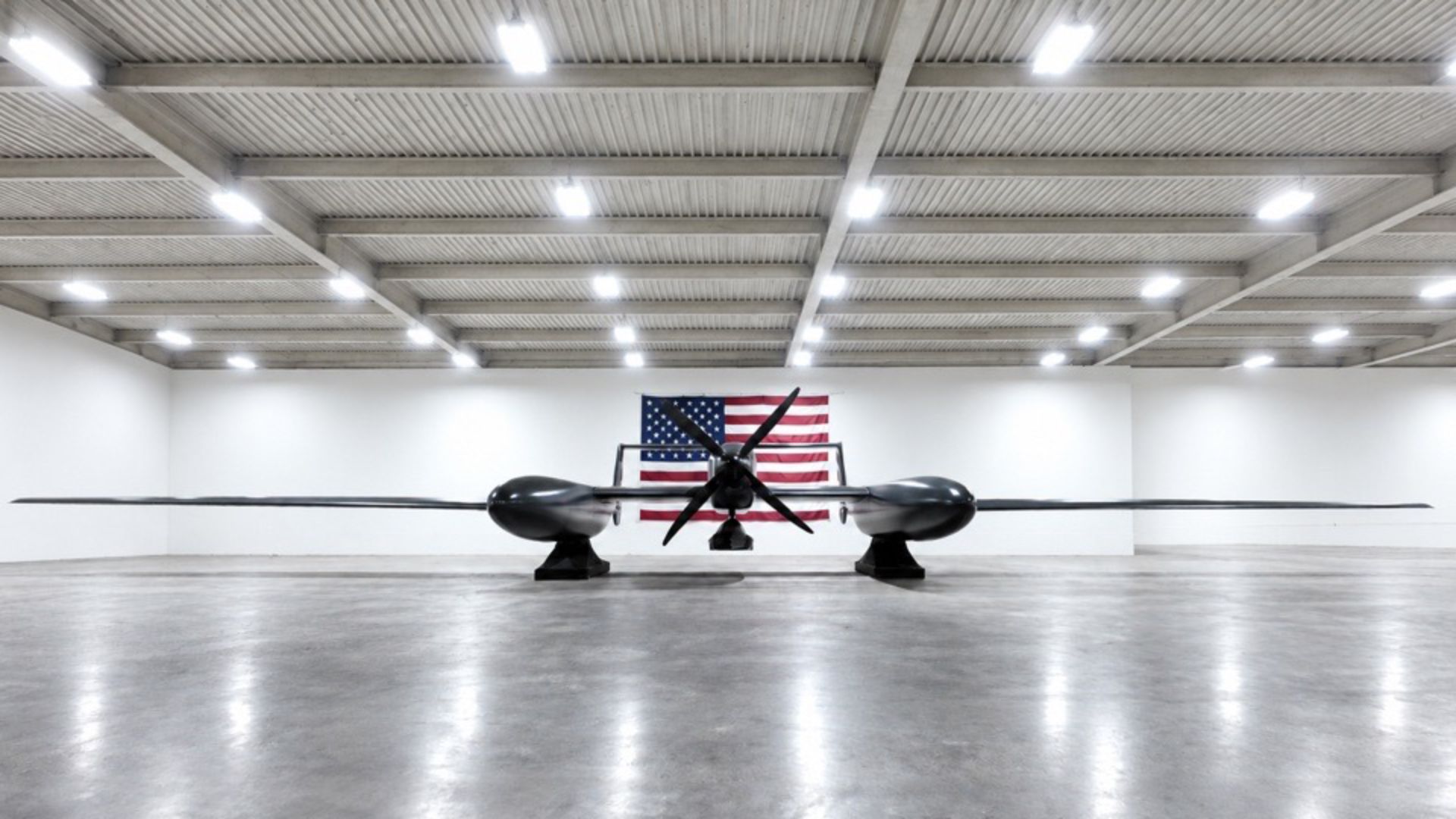
Swarm Aero has unveiled a new long-range uncrewed aircraft designed to compete for the U.S. Air Force’s planned replacement for the MQ-9A Reaper. The company revealed its Gamera aircraft on the opening day of the Air, Space and Cyber conference, presenting a full-scale model of a drone built around long endurance, modular payloads, and swarm operations. The California-based startup says Gamera will have a 72-foot wingspan and an unrefueled range of up to 9,000 nautical miles (about 10,357 miles). The aircraft is being developed for the Pentagon’s Massed Modular Aircraft (MMA) program, which seeks a lower-cost and more attrition-tolerant aircraft for long-range intelligence and strike missions. Twin-fuselage design sets Gamera apart Gamera uses two parallel fuselages instead of the central fuselage found on the MQ-9A. The layout resembles the twin-boom configuration used by Israel Aerospace Industries’ Heron TP, while its connecting tail structure also recalls the North American Rockwell OV-10 Bronco. A major difference is the engine position. Gamera places a Honeywell TPE331 turboprop in a nacelle mounted between the two fuselages above the wing. Its propeller uses a tractor configuration, with the propeller positioned ahead of the engine. The unusual arrangement also affects the landing gear. Gamera uses four landing-gear assemblies positioned inside the two fuselages, allowing weapons to be carried beneath the center section without interfering with the nose gear. Built for range and modular payloads Swarm says Gamera will have seven hardpoints for weapons and other mission equipment. The MMA program calls for an aircraft capable of carrying at least 2,800 pounds of payload, including weapons such as the AGM-158C Long Range Anti-Ship Missile. The aircraft is being designed with modular hardware and avionics so payloads and systems can be changed as missions evolve. Its range and payload can also be adjusted according to mission requirements. Swarm has been developing Gamera since 2022 and has worked on manufacturing methods intended to support high-volume production. The company says automated composite manufacturing and modular avionics could help reduce production costs. One operator could control 35 drones Swarm is also building Gamera around autonomous swarm operations. Its control architecture is designed to allow one operator to manage as many as 35 aircraft simultaneously. The company has developed its own autonomy system, called Legion, and was selected for a Defense Innovation Unit effort focused on command and control for drone swarms under the Replicator initiative. The approach aims is make large numbers of long-range aircraft practical to operate. Swarm has also received Air Force Research Laboratory funding for manufacturing and large-UAS development. Gamera enters Reaper replacement race The MMA program is seeking an aircraft priced far below the MQ-9A, which can cost up to $50 million depending on configuration. Air Force officials have set a target of about $10 million per aircraft and are accelerating efforts to field the new system. Swarm will face competition from established defense companies. General Atomics Aeronautical Systems, which produces the MQ-9 family, has already revealed its own MMA candidate, called Wildfire. The firm plans to fly the first Gamera later next year. The company also sees potential civilian uses for the aircraft, including logistics and firefighting, although the U.S. military remains its primary target market. Get the latest in engineering, tech, space & science - delivered daily to your inbox.A versatile writer, Sujita has worked with Mashable Middle East and News Daily 24. When she isn't writing, you can find her glued to the latest web series and movies.
US firm unveils new 72-foot drone with 10,357-mile range to replace aging Reaper fleet
Full Article
Original Source
Read the full article at Interestingengineering →KhanList aggregates and links to publicly available news content. We do not host full articles from third-party sources. Always verify important information with original sources.