
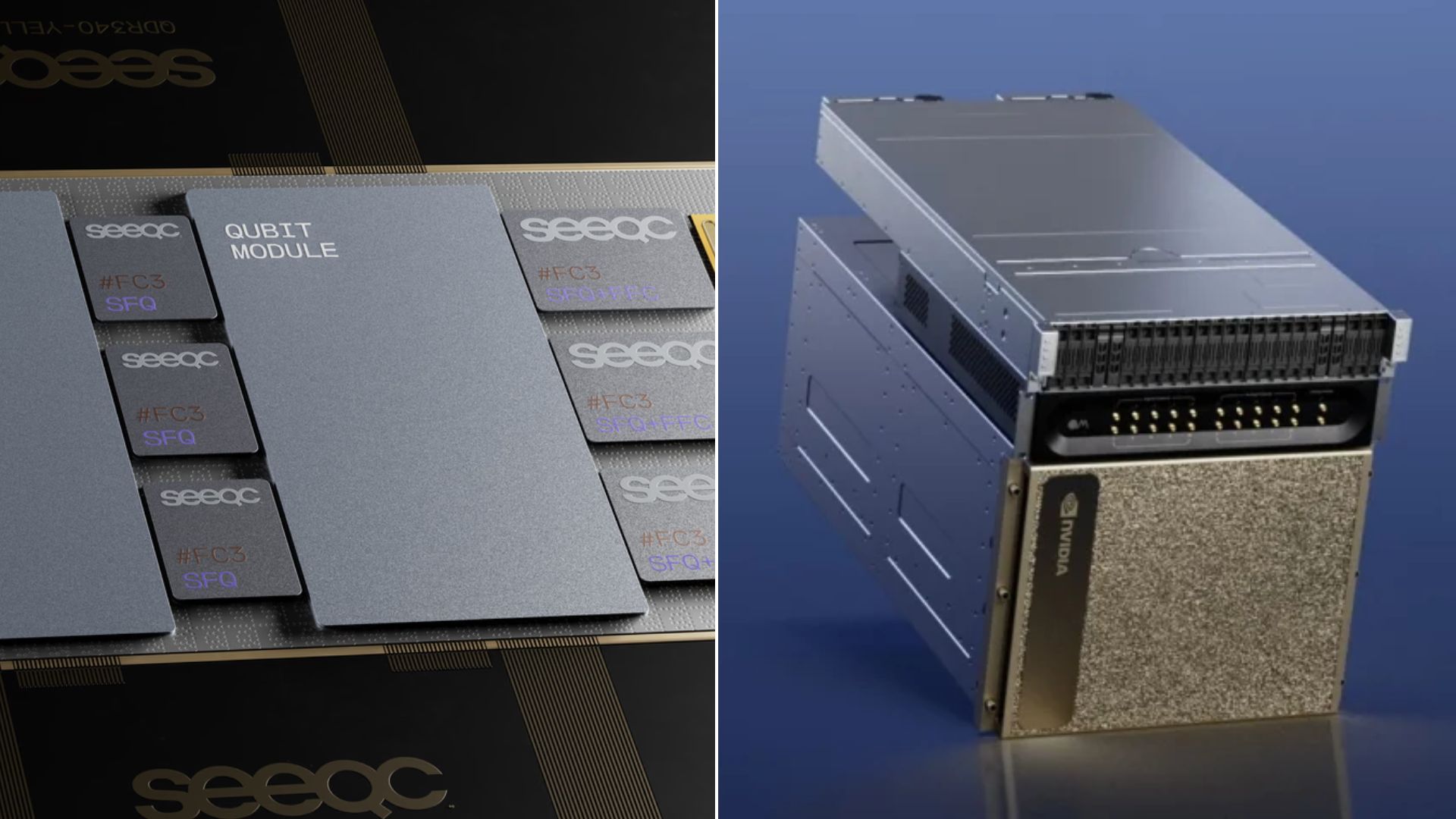
Quantum computers need to correct errors without slowing their calculations to a crawl. Now, quantum computing company SEEQC says it has demonstrated an architecture that improved two key quantum error-correction decoding metrics by approximately 50% by combining specialized chip-based processing with NVIDIA’s quantum computing software and GPU infrastructure. The results combine SEEQC’s chip-based pre-decoder technology with NVIDIA Ising, an open family of AI models that includes tools for quantum error correction, and NVIDIA NVQLink, an interface designed to connect quantum processors with GPU-accelerated computing systems. The demonstration used a simulated quantum processor and system architecture incorporating realistic decoder latency at scale. It compared the combined architecture with NVIDIA Ising operating as a standalone pre-decoder. SEEQC reported an approximately 50% reduction in decoding latency and improved logical error-rate performance. The results could point toward a way to reduce one of the major bottlenecks in building fault-tolerant quantum computers: processing error-correction information quickly enough to keep increasingly complex quantum systems operating reliably. Why quantum computers need faster error correction Quantum computers use qubits, which can represent quantum information in ways that differ from conventional binary bits. However, qubits are highly susceptible to disturbances from their environment and imperfections in control operations. These errors can accumulate and undermine a computation. Quantum error correction addresses this problem by encoding information across multiple physical qubits and using measurements to detect errors without directly measuring and destroying the encoded quantum information. Classical computing systems then process those measurements to determine which corrections are needed. That classical processing stage is known as decoding. As quantum processors grow, the volume of information to be processed can increase substantially, putting pressure on the time and computing resources available for error correction. Two important measures are decoding latency, the time required to process error information, and logical error rate, which describes how often an encoded logical qubit experiences an error. Reducing both could help make fault-tolerant quantum computing more practical. Bringing specialized processing closer to the qubits SEEQC’s approach uses a chip-based pre-decoder to handle part of the decoding workload closer to the quantum processing unit (QPU). The system then uses NVIDIA Ising’s decoding capabilities, leveraging SEEQC’s Digital Link and NVIDIA NVQLink to provide a low-latency communication framework between quantum and GPU-accelerated computing environments. The idea is to process some information locally before sending it to higher-level classical computing resources. This could reduce the amount of data that needs to move between components while accelerating time-sensitive operations. The distinction matters because quantum computers cannot scale simply by adding more qubits. Their supporting electronics, communication links, and classical processing systems must also keep pace. Moving selected processing tasks closer to the QPU could help reduce the time and infrastructure overhead required to correct errors as systems grow. SEEQC CEO John Levy said the results demonstrate how digital chip technology could improve the interface between quantum processors and high-performance computing infrastructure. NVIDIA’s quantum product director, Sam Stanwyck, said the work shows how open models and interfaces can help quantum hardware developers combine specialized processing with AI and GPU computing. What the results mean for fault-tolerant quantum computing The reported 50% improvement is promising, but it needs to be understood in context. The experiment used a simulated quantum processor and architecture stack, rather than demonstrating the same performance gains on a fully operational physical quantum computer. The announcement also does not establish that the improvement will translate directly into a 50% reduction in the total resources required to build a fault-tolerant system. Instead, the results provide evidence that distributing decoding tasks between specialized chip-based processing and GPU-accelerated computing may improve key parts of the error-correction pipeline. SEEQC says its next step is to integrate the system-level components demonstrated so far and work toward chip-to-chip integration of a quantum processor with advanced high-performance computing infrastructure. The company also plans to investigate further opportunities to improve quantum error correction and other hybrid quantum-classical workloads.Ultimately, practical fault-tolerant quantum computing will require advances across the entire system, from qubits and control electronics to communication and decoding. The SEEQC-NVIDIA demonstration addresses one part of that challenge, showing how tighter hardware and software integration could help quantum systems scale more efficiently.Get the latest in engineering, tech, space & science - delivered daily to your inbox.Kaif Shaikh is a journalist and writer passionate about turning complex information into clear, impactful stories. His writing covers technology, sustainability, geopolitics, and occasionally fiction. A graduate in Journalism and Mass Communication, his work has appeared in the Times of India and beyond. After a near-fatal experience, Kaif began seeing both stories and silences differently. Outside work, he juggles far too many projects and passions, but always makes time to read, reflect, and hold onto the thread of wonder.
US firm pairs custom silicon with NVIDIA stacks for 50% gain in quantum error decoding
Full Article
Original Source
Read the full article at Interestingengineering →KhanList aggregates and links to publicly available news content. We do not host full articles from third-party sources. Always verify important information with original sources.