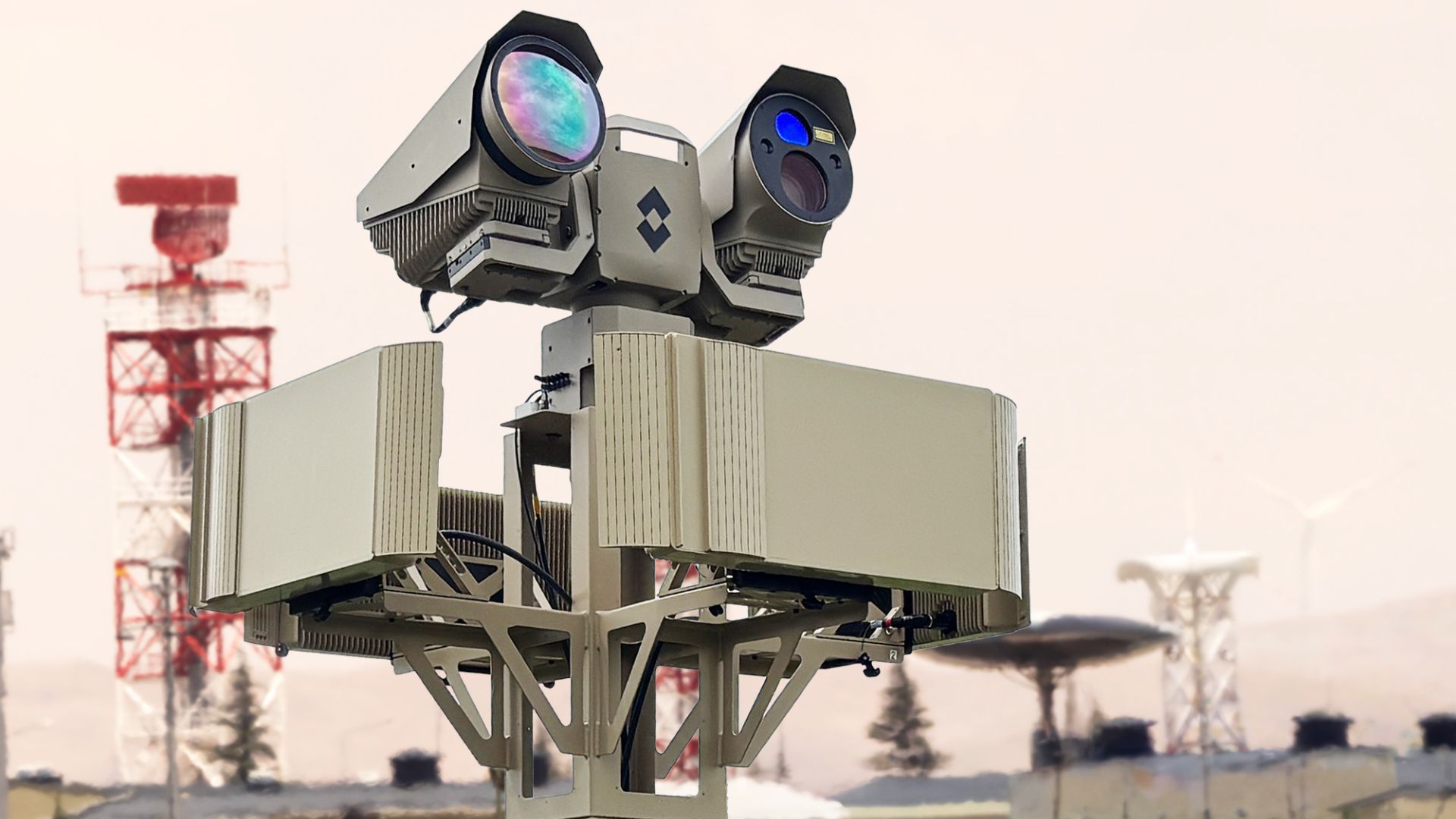
The U.S. Air Force is expanding its counter-drone capabilities through a new delivery order that adds Teledyne FLIR Defense’s Argus XL platform to AeroVironment’s Titan Multi-Sensor counter-unmanned aircraft system. The work falls under a three-year, $500 million Indefinite Delivery, Indefinite Quantity contract supporting Joint Interagency Task Force 401’s Domestic Shield Program, which protects military installations and other critical infrastructure from emerging aerial threats. Argus XL forms the sensing backbone of the Titan Multi-Sensor architecture. It combines radar, electro-optical and infrared imaging with command-and-control software to detect, classify and track unmanned aircraft before they reach protected areas. The platform is intended to improve response times by giving operators a clearer picture of the airspace around sensitive sites. Layered defense network Joint Interagency Task Force 401 selected the Titan Multi-Sensor system to strengthen layered counter-UAS coverage across domestic sites. The platform is designed to identify multiple airborne targets simultaneously and maintain surveillance around the clock, even in demanding weather conditions. Argus XL contributes several core technologies to that mission. Its radar works alongside visible and thermal cameras to provide continuous situational awareness, while integrated command-and-control software fuses sensor data into a single operating picture. The system also archives operational data, allowing operators to review activity after missions. Officials said the platform can integrate third-party radio-frequency sensors and defeat systems, giving military users flexibility to adapt the architecture as new drone threats emerge. That open approach also allows the system to evolve as new sensors and countermeasures enter service without requiring a complete redesign. Teledyne FLIR Defense says the fixed-site platform supports hemispherical detection of aerial targets, including small and micro drones that are often difficult to identify using a single sensor. Combining multiple sensing methods improves detection accuracy and reduces blind spots around protected facilities. “We are proud to collaborate with AV to deliver advanced counter-drone technology that enables the U.S. military to detect, classify, track, and respond to increasingly complex unmanned aerial threats,” said Dr. JihFen Lei, president of Teledyne Defense and Aerospace Group and senior vice president of Teledyne Technologies. Lei said systems such as Argus XL and Cerberus XL provide mission-ready capabilities that serve as key elements of the Titan solution. He added that successful counter-drone operations begin with reliable detection because operators cannot stop threats they fail to locate. Growing drone challenge Small unmanned aircraft have become a growing concern for military bases, government facilities and other sensitive locations because they are inexpensive, widely available and increasingly capable. Detecting those aircraft early remains one of the biggest challenges for base security teams, especially as commercial drones gain longer range and better endurance. The Titan Multi-Sensor architecture addresses that problem by combining several detection technologies instead of relying on a single sensor. Radar extends surveillance over longer distances, electro-optical and infrared cameras help identify targets visually, and commanclod software brings those data streams together for faster decision-making.The latest order expands the technology available under the Domestic Shield Program and reinforces the Air Force’s effort to field persistent, layered protection against evolving unmanned aerial threats.Recommended ArticlesGet the latest in engineering, tech, space & science - delivered daily to your inbox.Aamir is a seasoned tech journalist with experience at Exhibit Magazine, Republic World, and PR Newswire. With a deep love for all things tech and science, he has spent years decoding the latest innovations and exploring how they shape industries, lifestyles, and the future of humanity.
US Air Force expands $500M counter-drone shield with 24/7 multi-sensor threat tracking
Full Article
Original Source
Read the full article at Interestingengineering →KhanList aggregates and links to publicly available news content. We do not host full articles from third-party sources. Always verify important information with original sources.