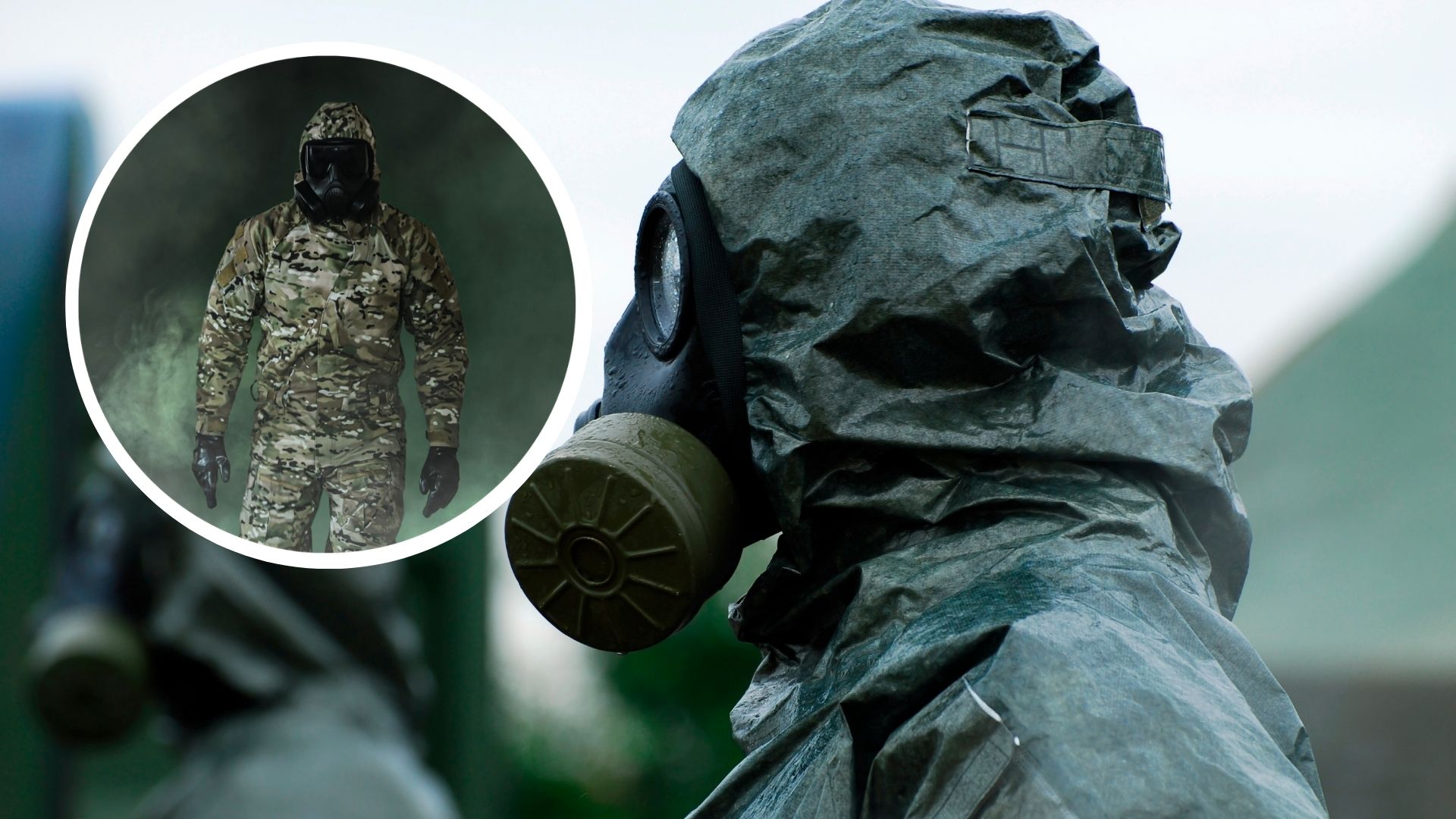
A Chicago-based company has been awarded an initial $23.67 million acquisition contract under the U.S. Department of War’s Accelerate the Procurement and Fielding of Innovative Technologies (APFIT). With this Numat Technologies will accelerate the deployment of next-generation chemical and biological protection suits for U.S. Special Operations Forces. The award is being executed in partnership with the Defense Threat Reduction Agency (DTRA) and is intended to speed the transition of the company’s technology from development into operational use. Numat will deliver field-ready protective suits at scale The APFIT program was established to bridge the gap between promising defense technologies and field deployment by providing procurement funding for mature innovations that are ready for operational use. Since its launch, the program has supported the rapid acquisition of advanced capabilities for the U.S. military, with total awards now exceeding $2 billion, according to a press release.“Over the past 10 years, Numat built the MOF industrial base for this moment, where we can activate an entire supply chain, from material design through high-volume system manufacturing, to protect the Warfighter,” said Ben Hernandez, CEO of Numat Technologies. “This contract award reflects our long-term investment in American innovation. Numat will deliver finished, field-ready protective suits at scale, made completely in the United States.”Numat’s protection suits incorporate metal-organic frameworks (MOFs)—highly porous engineered materials designed to capture and neutralize hazardous chemical and biological agents. Unlike conventional protective garments that primarily act as barriers, the company’s MOF-enabled suits are engineered to self-detoxify by neutralizing harmful substances upon contact, while also improving breathability and wearer mobility.Under the APFIT contract, Numat will supply the MOF-enabled chemical and biological (CB) suits directly to U.S. Special Operations Forces, whose personnel often operate in environments where exposure to chemical and biological threats is a significant concern. According to the company, the suits are designed to offer enhanced protection without compromising comfort or operational effectiveness.The contract also represents a milestone for the domestic manufacturing of metal-organic frameworks, a technology that has gained increasing attention for applications ranging from defense and industrial filtration to energy storage and environmental protection. Numat said it has spent more than a decade building a U.S.-based supply chain capable of designing, producing and integrating MOFs into mission-critical systems.Company Chief Executive Officer Ben Hernandez said the award reflects years of investment in establishing a domestic industrial base for MOF technology and positions the company to deliver field-ready protective equipment manufactured entirely in the United States.The latest award builds on Numat’s long-standing collaboration with several U.S. defense organizations, including the Defense Threat Reduction Agency, the Office of the Assistant Secretary of War for Industrial Base Policy, the Capability Program Executive Office for Chemical, Biological, Radiological and Nuclear Defense, U.S. Special Operations Command, the U.S. Army and the U.S. Navy. These partnerships have helped advance MOF technology from laboratory research to scalable manufacturing, according to the company.Beyond military applications, Numat said its MOF platform has potential uses across industrial, semiconductor and energy sectors, where advanced materials are increasingly being deployed for gas storage, chemical separation and hazardous material filtration.The APFIT award underscores the U.S. government’s broader efforts to accelerate the procurement of innovative defense technologies while strengthening the domestic industrial base and reducing the time required to transition emerging capabilities into operational service.Recommended ArticlesGet the latest in engineering, tech, space & science - delivered daily to your inbox.Prabhat, an alumnus of the Indian Institute of Mass Communication, is a tech and defense journalist. While he enjoys writing on modern weapons and emerging tech, he has also reported on global politics and business. He has been previously associated with well-known media houses, including the International Business Times (Singapore Edition) and ANI.
US accelerates development of next-gen chemical protection suits for fighters with new program
Full Article
📰 Original Source
Read full article at Interestingengineering →KhanList aggregates and links to publicly available news content. We do not host full articles from third-party sources. Always verify important information with original sources.