
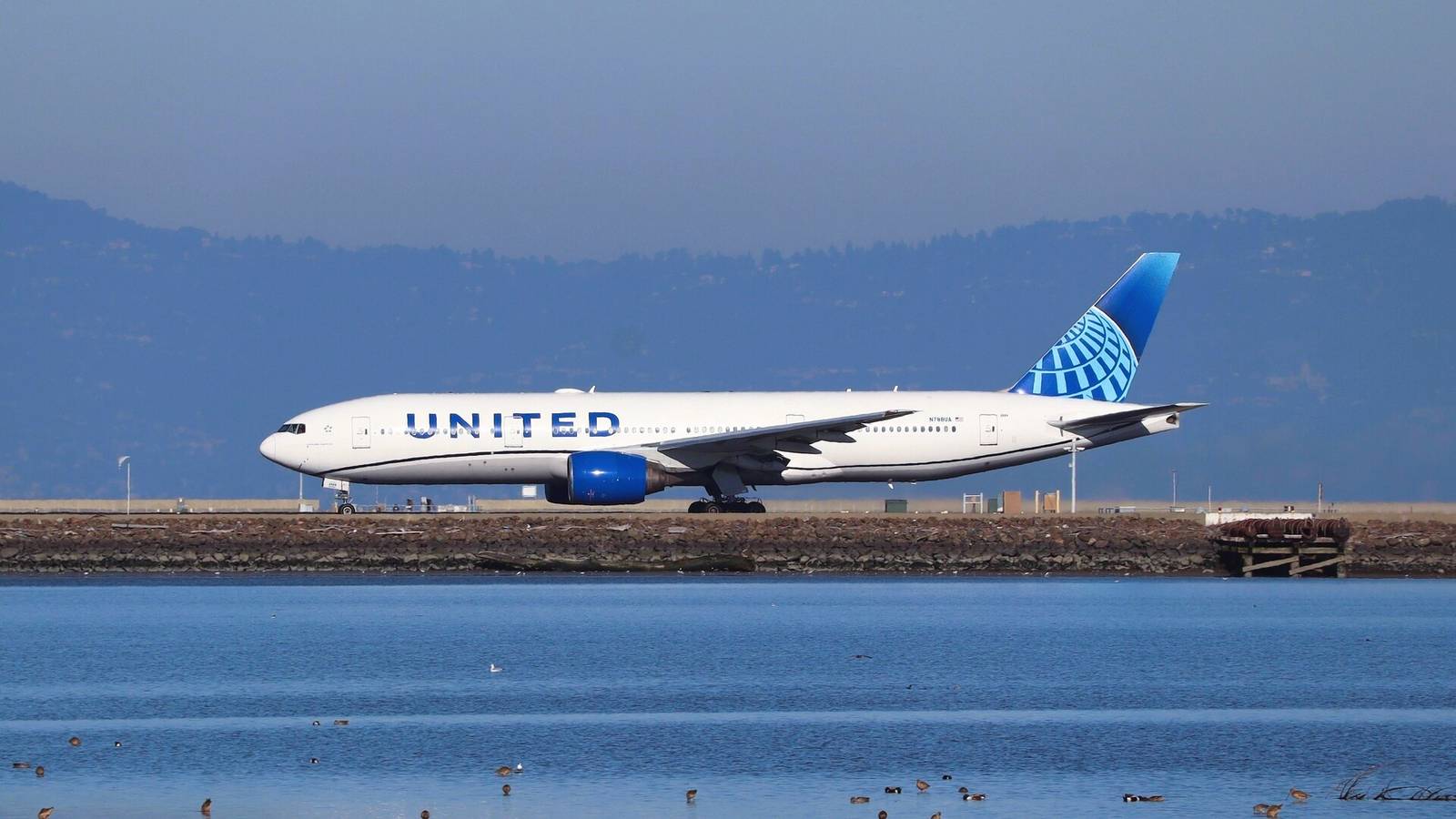
Published Oct 9, 2026, 11:38 AM EDT Paul has had a career of 25+ years focused on the international technology sector, which has taken him to over 100 countries. Along the way, he developed a deep love for aviation, with a travel bucket list measured by aircraft types flown rather than destinations reached. Now he brings that avgeek passion, along with the journalism experience he accumulated early in his career, to write insightful pieces for Simple Flying. A United Airlines Boeing 777 was forced to return to San Francisco International Airport (SFO) on October 6 after its crew shut down one of the aircraft's engines during climb. The near 29-year-old widebody had been operating a scheduled service to Beijing when the problem occurred, prompting an unscheduled return approximately 90 minutes after departure. The incident is the latest in a series of engine-related problems involving United's Boeing 777-200 fleet, including a remarkably similar occurrence at San Francisco just three months earlier. With many first-generation 777s approaching three decades of service, United and other major airlines face increasingly important decisions about how long to retain these aircraft and when to replace them with newer widebodies. United Airlines Boeing 777-200 Suffers Engine Shutdown After Departing San Francisco Credit: Markus Mainka | Shutterstock The Boeing 777-200ER, registered N796UA, was operating flight UA888 from San Francisco to Beijing Capital Airport (PEK) on October 6 when its right-hand Pratt & Whitney PW4090 engine reportedly began making loud noises and experiencing severe vibrations. According to The Aviation Herald, the crew discontinued the climb at approximately 28,000 feet, shut down the affected engine and returned to San Francisco, landing safely on Runway 28R around 90 minutes after departure. The aircraft has since remained grounded, while the cause of the malfunction has not yet been publicly established. The aircraft was delivered new to United in January 1998, making it nearly 29 years old at the time of the incident. It is equipped with two PW4090 engines, part of Pratt & Whitney's PW4000-112 family, which powered many early Boeing 777s. United has operated the type since 1995, and its oldest examples now rank among the longest-serving 777s still flying commercially. N796UA itself has spent its entire operating life with the airline, apart from periods of storage, including during the pandemic. Remarkably, N796UA also experienced a serious engine malfunction shortly after entering service. On July 29, 1998, the aircraft was departing London Heathrow Airport (LHR) for San Francisco when smoke entered its flight deck and cabin, followed by a loud bang and a complete loss of oil pressure in its left engine. The pilots shut down the engine and returned safely to Heathrow. An investigation by the UK's Air Accidents Investigation Branch established that a failed carbon seal had caused rapid oil loss and internal engine damage. Its technical findings included the following description: "As a result of the seal's failure, the engine oil contents were rapidly reduced from 17 US quarts to 0, leading to further damage and heating within the 'No. 1 to 2' compartment and the subsequent heating damage within the nacelle, exterior to the engine." United Airlines Has Experienced Several Boeing 777-200 Engine Failures Credit: Wirestock Creators | Shutterstock This week's incident closely resembles an event earlier this year on July 9, when another United 777-200ER, registered N228UA, was operating flight UA926 from San Francisco to Frankfurt Airport (FRA). While climbing through approximately 29,000 feet, its right-hand PW4090 engine emitted a loud bang, prompting the crew to shut it down and return to San Francisco. The aircraft landed safely on the same runway approximately one hour after departure. In both incidents, the crews shut down the same model of engine at similar altitudes, although no evidence has established a common technical cause. United's Boeing 777-200 fleet has experienced several other significant engine-related incidents over the past eight years. These have involved both Pratt & Whitney PW4000 engines and General Electric GE90s, demonstrating that the problems are not confined to one engine manufacturer. In June 2026, for example, a GE90-powered 777-200 operating from Houston George Bush Intercontinental Airport (IAH) to Munich Airport (MUC) returned to its departure airport after passengers reported repeated bangs and flames from the right-hand engine. All these events ended with safe landings, but they illustrate the range of engine issues that can disrupt operations involving older widebodies. Date Aircraft Engine Incident February 13, 2018 N773UA PW4077 Fan blade failure over the Pacific, damaging the engine nacelle; landed safely in Honolulu. February 20, 2021 N772UA PW4077 Fan blade failure and engine fire after departing Denver; debris fell onto residential areas. June 19, 2026 N78009 GE90 Repeated bangs and visible flames during departure from Houston; engine shut down. July 9, 2026 N228UA PW4090 Loud bang during climb from San Francisco; right engine shut down. October 6, 2026 N796UA PW4090 Severe vibrations and loud noises during climb; right engine shut down. The most notorious incident occurred on February 20, 2021, when United flight UA328 suffered an uncontained engine-related debris event shortly after departing Denver International Airport (DEN) for Honolulu International Airport (HNL). A fractured fan blade damaged the right engine and nacelle, triggering a fire and sending debris falling onto neighborhoods in Broomfield, Colorado. The aircraft returned safely to Denver with no injuries among its 239 occupants. The NTSB subsequently determined that fatigue failure of a fan blade was the probable cause, compounded by inadequate inspections and inspection intervals. The incident triggered widespread grounding and regulatory action affecting PW4000-powered 777s, with United subsequently undertaking modifications to return its aircraft to service. Airlines Face Different Decisions Over Their Aging Boeing 777-200 Fleets Credit: Markus Mainka | Shutterstock Despite these incidents, United has a strong commercial incentive to retain its older widebodies. At the end of 2025, its fleet included 19 Boeing 777-200s averaging 28.5 years old, and 55 777-200ERs averaging 25.8 years, together representing substantial long-haul and high-density domestic capacity. United's July 2026 fleet plan projected that all 96 of its 777s, including 22 newer 777-300ERs, would remain through year-end, even as its 787 fleet expanded from 85 to 100 aircraft. No firm retirement timetable has been announced for the 777-200 fleet, suggesting that the aircraft will continue playing an important role while newer Dreamliners support network growth. Japan Airlinesadopted a very different strategy after experiencing its own serious Boeing 777-200 engine failure on December 4, 2020. Flight JL904 suffered a Pratt & Whitney PW4074 fan-blade failure shortly after departing Okinawa, damaging the engine and aircraft before returning safely. Following United's similar engine failure at Denver two months later, JAL grounded its 13 PW4000-powered 777s and accelerated their retirement to March 2021. The airline cited economic considerations, with reduced pandemic-era demand and the availability of newer Airbus A350-900s making early retirement more practical. Airline 777-200/200ER Fleet Retirement Or Replacement Strategy United Airlines 74 Continuing operations; no firm announced retirement date. Combined 777 fleet projected unchanged through 2026 Japan Airlines Retired PW4000-powered domestic 777s in March 2021; last GE90-powered 777-200ER retired in 2023 American Airlines 47 Continuing operations and exploring cabin improvements; no planned near-term retirements British Airways 43 Phased replacement of Gatwick-based 777-200ER aircraft with 787-10s beginning in 2029 American Airlines has even more reason to hold on to its older 777s. It operates 47 777-200ERs, and generally a smaller widebody fleet compared to United and Delta Air Lines following pandemic-era widebody retirements that it now likely regrets. So it's not in a position to give up scarce capacity for long-haul flying, and instead has plans for future cabin upgrades, indicating the type will be flying with the airline for years to come. British Airways has a clearer replacement pathway, with CEO Sean Doyle confirming that new Boeing 787-10s will begin replacing its Gatwick-based 777-200s in 2029. The British carrier's aging fleet also came under scrutiny this past week when a nearly 30-year-old 777-200ER operating flight BA295 suffered a loss of cabin pressure and descended rapidly over the Irish Sea, before returning safely to Heathrow. Although unrelated to United's engine problems, the event further highlights the continuing operational demands of maintaining first-generation 777s that are approaching their fourth decade of service. Aircraft age alone does not establish declining safety, but the economics of maintaining these increasingly elderly jets will inevitably influence how long they remain in service.
United Airlines Boeing 777 Returns To San Francisco After Engine Troubles
Full Article
Original Source
Read the full article at Simpleflying →KhanList aggregates and links to publicly available news content. We do not host full articles from third-party sources. Always verify important information with original sources.