
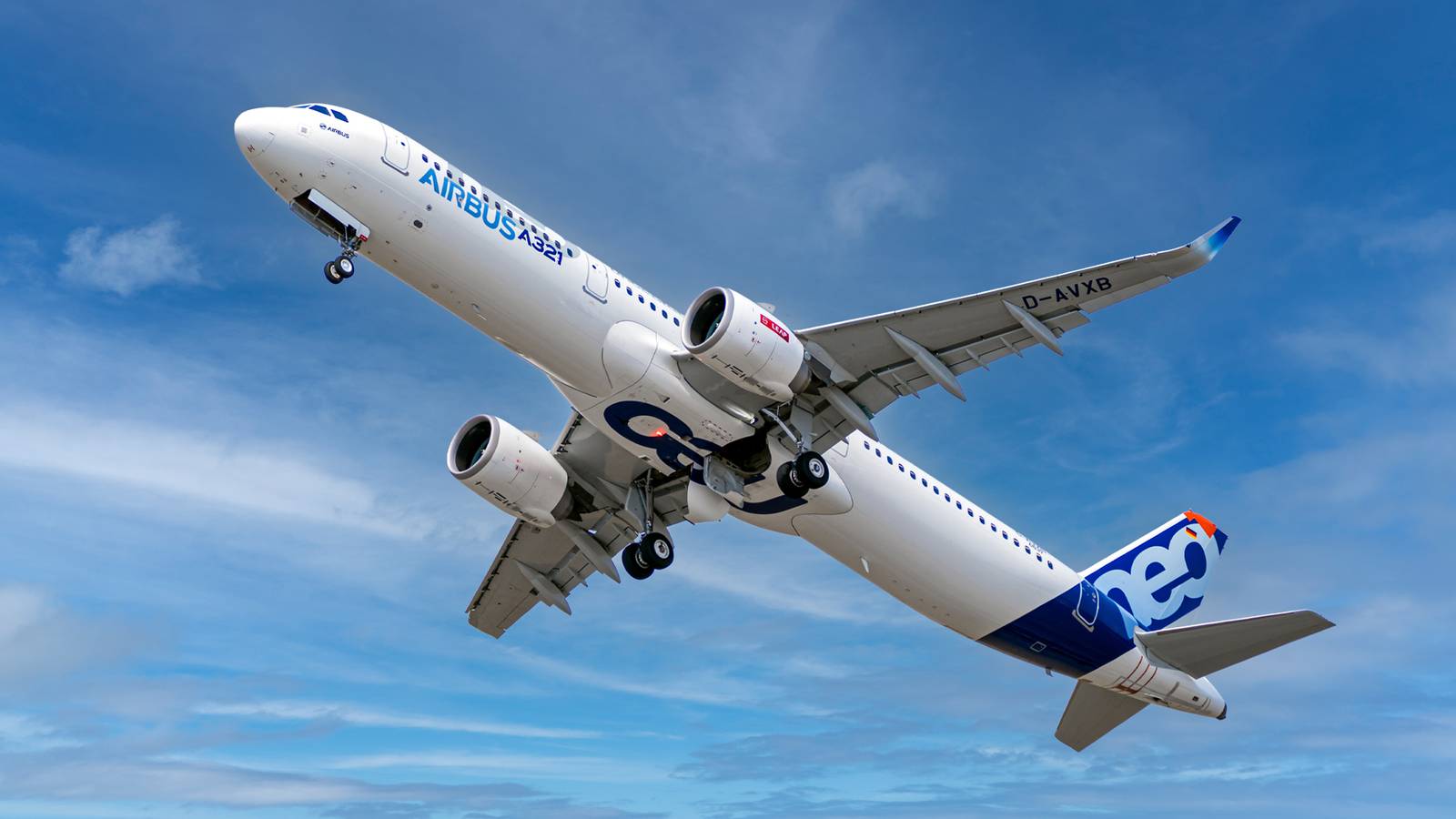
Published Oct 9, 2026, 7:00 PM EDT Airline and Airport Management Graduate, Student Commercial Pilot and Commercial Aviation Writer. Based in London & Nagoya Airlines taking delivery of brand-new Airbus A321neos valued at over $130 million are making a decision that would have been unthinkable a decade ago. Carriers are actively receiving factory-fresh narrowbodies from assembly lines in Toulouse, Hamburg, Mobile, and Tianjin while fully aware that each airframe carries a built-in operational timer. Within two years of entering service, every one of these aircraft will have to be pulled from revenue service and parked inside a hangar for nine days to correct a manufacturing defect embedded deep within the forward fuselage. The willingness to accept imperfect aircraft is quite incredible; after all, aviation is a world that strives for perfection. In an era where Airbus has a massive backlog exceeding 9,200 aircraft and single-aisle delivery slots remain virtually unobtainable through the end of the decade, carrier leverage has become nonexistent. Rather than rejecting affected airframes or demanding immediate factory reworks that would stall delivery schedules, airlines are choosing to take the keys now, get maximum revenue during the initial two-year window, and defer mandatory structural repairs to future maintenance checks. Only A Quality Issue Why then are airlines willing to accept these far from perfect airframes, and what makes them imperfect? During routine post-assembly quality audits, Airbus engineers identified a surface protection deviation involving an inadequate layer of anti-corrosion primer on longitudinal structural stringers. The manufacturing defect has been traced down the supply chain to TESI, an Italian sub-tier supplier operating as a subcontractor for aerostructures partner Leonardo. Stringers act as important structural stiffeners running longitudinally along the inner skin, and so, insufficient primer coverage reduces long-term resistance to moisture accumulation and environmental corrosion in the lower belly. The scale of the quality escape encompasses approximately 500 airframes across the global A321neo program. This inventory is split roughly down the middle, with 250 affected jets already flying for commercial operators and another 250 positioned in various stages of aerostructures assembly or final line integration, according to Reuters. Correcting the defect involves a comprehensive repair protocol totaling nine days of downtime per aircraft. While the core stringer coating restoration itself takes two to three days of technician labor, stripping interior insulation, gaining physical access to the lower forward bilge, and performing regulatory close-outs expand the total hangar time to nearly a full week and a half. Airbus has framed the issue strictly as a long-term quality and durability concern rather than an immediate safety-of-flight risk, reassuring operators that structural integrity remains fully intact during initial operations, as per Aerospace Global News. Consequently, European aviation regulators have not issued emergency directives requiring immediate fleet groundings. Airbus has issued a two-year compliance window, creating an administrative framework that allows final assembly lines to maintain momentum. Just A Part Of High-Rate Production? Commercial leverage in the current narrowbody market heavily favors the airframe. With Airbus holding a firm order backlog of more than 9,200 aircraft, as per UK Aviation News, the only choices available to airlines are to accept an A321neo with a known coating defect or forfeit a delivery slot that cannot be replaced for nearly ten years. Refusing delivery would derail network growth strategies and leave routes unserved. Consequently, airlines agree to receive these factory-fresh aircraft under modified commercial terms. Airbus covers the direct financial cost of the technical repair and provides future maintenance credits or spare parts concessions, and carriers commit to scheduling the nine-day repair downtime within the accelerated two-year window. The willingness of airlines to accept these terms is intensified by a broader capacity shortage across global aviation. Ongoing durability challenges with Pratt & Whitney GTF engines have kept hundreds of Airbus A320neo family aircraft grounded worldwide, leaving carriers struggling to meet passenger demand. With aircraft lease rates rising and alternative narrowbody capacity unavailable, an A321neo capable of flying revenue routes for two years before heading for a nine-day hangar visit is far more valuable than a flawless jet sitting delayed on an assembly ramp in Toulouse or Hamburg. Accepting factory-floor deviations as a condition of high-rate production is also something that comes with complex scheduling logistics for airline engineering departments. In this current case, where sub-tier quality escapes become normalized within delivery streams, maintaining industrial oversight without stalling primary assembly lines becomes an increasingly difficult task. Keeping The Quality As High As Possible Maintaining strict quality containment while accelerating assembly toward 75 narrowbody jets per month is by no means easy to manage. When quality deviations escape sub-tier suppliers and reach active final assembly lines in Toulouse, Hamburg, Mobile, or Tianjin, plant leadership needs to quickly decide whether to halt the line or push the airframe forward with deferred work instructions. In practice, the A321neo stringer primer flaw highlights how modern aerospace supply chains manage quality escapes without triggering total assembly shutdowns. The last thing Airbus would want is to delay completed fuselages at line stations, so the alternative is to isolate the defect, establish a standardized repair procedure to allow airframes to advance through final assembly with a recorded job card attached to the delivery documentation. This quality containment mechanism depends on multi-tiered auditing protocols across the supply chain network. The stringer coating issue originated when a technician scraped surface paint from a forward fuselage panel during routine quality inspections and discovered uneven gaps in the underlying protective primer. Lower forward fuselage sections are manufactured by Leonardo in Italy through its subcontractor TESI before being transported to Airbus final assembly facilities, so the defect had already passed through multiple handoffs. To prevent further non-conforming parts from entering the supply chain, Airbus and Leonardo sent teams of quality engineers directly to TESI facilities, establishing dedicated inspection gates before sub-assemblies are cleared for shipment, as reported by Reuters. Catching and containing sub-tier supplier defects at the factory gate prevents immediate line stops, but it transfers an unprecedented maintenance burden directly to airline MRO (Maintenance, Repair, and Overhaul) networks. It is not as easy as just sending hundreds of aircraft into heavy maintenance hangars within a compressed two-year window with no consequences. Doing so creates incredibly difficult scheduling problems for commercial fleets already operating at max capacity. A Change In Timing For Maintenance Teams Integrating a nine-day structural repair window inside an accelerated two-year timeframe is a major logistical challenge for airline MRO networks. As per Airways Magazine, under normal operational scheduling, airlines would wait for the usual four-year maintenance cycle to perform non-critical structural work, allowing carriers to consolidate cabin removals and corrosion checks into a single planned heavy check. Compressing this timeline to 24 months means operators need to pull aircraft out of revenue service prematurely, compelling engineering departments to schedule standalone modification visits or attempt to complete complex structural work during shorter A-checks. The technical scope of the repair naturally lends itself to specialized structural labor rather than routine line maintenance. Technicians have to gain access to the lower forward bilge area by removing lower cabin carpet, floorboards, sidewall insulation blankets, and galley attachment frames. Applying the specialized anti-corrosion primer coating takes two to three days of labor, but the labor-intensive teardown and close-out procedures expand total grounding time to nine days per aircraft. With roughly 250 affected jets already flying for major operators like Delta Air Lines, IndiGo, and Wizz Air, scheduling these visits consumes approximately 2,250 days of revenue flying time across active commercial fleets for the affected aircraft combined. Normalizing factory-defect concessions shifts structural maintenance risks directly from manufacturer assembly floors to airline hangars. By accepting delivery of jets carrying known non-conformances, airlines are creating an operational model where quality control escapes are managed through post-delivery MRO channels instead of being solved prior to handover. Leaving The Fixing For Later Pressure to scale A320neo family production toward 75 aircraft per month by 2027 leaves Airbus with minimal operational flexibility when supply chain quality escapes occur. Reaffirming a full-year delivery target of roughly 870 aircraft, which was reported in the Airbus Annual Press Conference 2026, means that final assembly lines in Toulouse, Hamburg, Mobile, and Tianjin need to maintain peak throughput without allowing component issues to stall output. Whenever these quality deviations emerge from sub-tier suppliers, halting final assembly lines to perform complex structural reworks on site would trigger a mountain of delivery delays across global airline customers. Normalizing post-delivery defect resolution is a major evolution in aerospace manufacturing strategy. Airframes now increasingly rely on structured commercial concessions that defer these more specific structural fixes to future operator maintenance windows. While this approach keeps delivery lines moving and preserves annual delivery milestones, it increases operational pressure on global sub-tier supply networks. As manufacturing rates increase across the commercial aerospace landscape, preventing minor sub-tier non-conformances from escalating into fleet-wide rework programs remains a critical operational challenge for tier-one aerostructures partners and OEMs alike. The balance between maintaining factory speed and enforcing strict quality standards is really the key to solving this problem once and for all, and is what could be the difference maker for Airbus' operational throughput. Making Do In A Tough Landscape The A321neo stringer coating deviation illustrates how modern commercial aviation manages manufacturing defects within a supply-constrained environment. Fueled by unprecedented market demand, an immense 9,200-aircraft order backlog, and massive narrowbody capacity shortages, airlines are willing to accept brand-new aircraft that carry a mandatory nine-day grounding clock within two years. In exchange for future maintenance support and commercial concessions, operators prioritize immediate fleet capacity over flawless factory handovers. With European and global aviation regulators continuing to evaluate the technical scope of the stringer fix, formal airworthiness directives may yet standardize compliance timelines across international fleets. However, the commercial precedent is already firmly established. In an industrial landscape where delivery slots are prized above all else, managing post-factory quality escapes inside airline hangars has become an accepted cost of keeping the global narrowbody supply chain moving forward.
Airlines Are Accepting Brand-New Airbus A321neos Knowing They'll Be Grounded 9 Days Within 2 Years
Full Article
Original Source
Read the full article at Simpleflying →KhanList aggregates and links to publicly available news content. We do not host full articles from third-party sources. Always verify important information with original sources.