
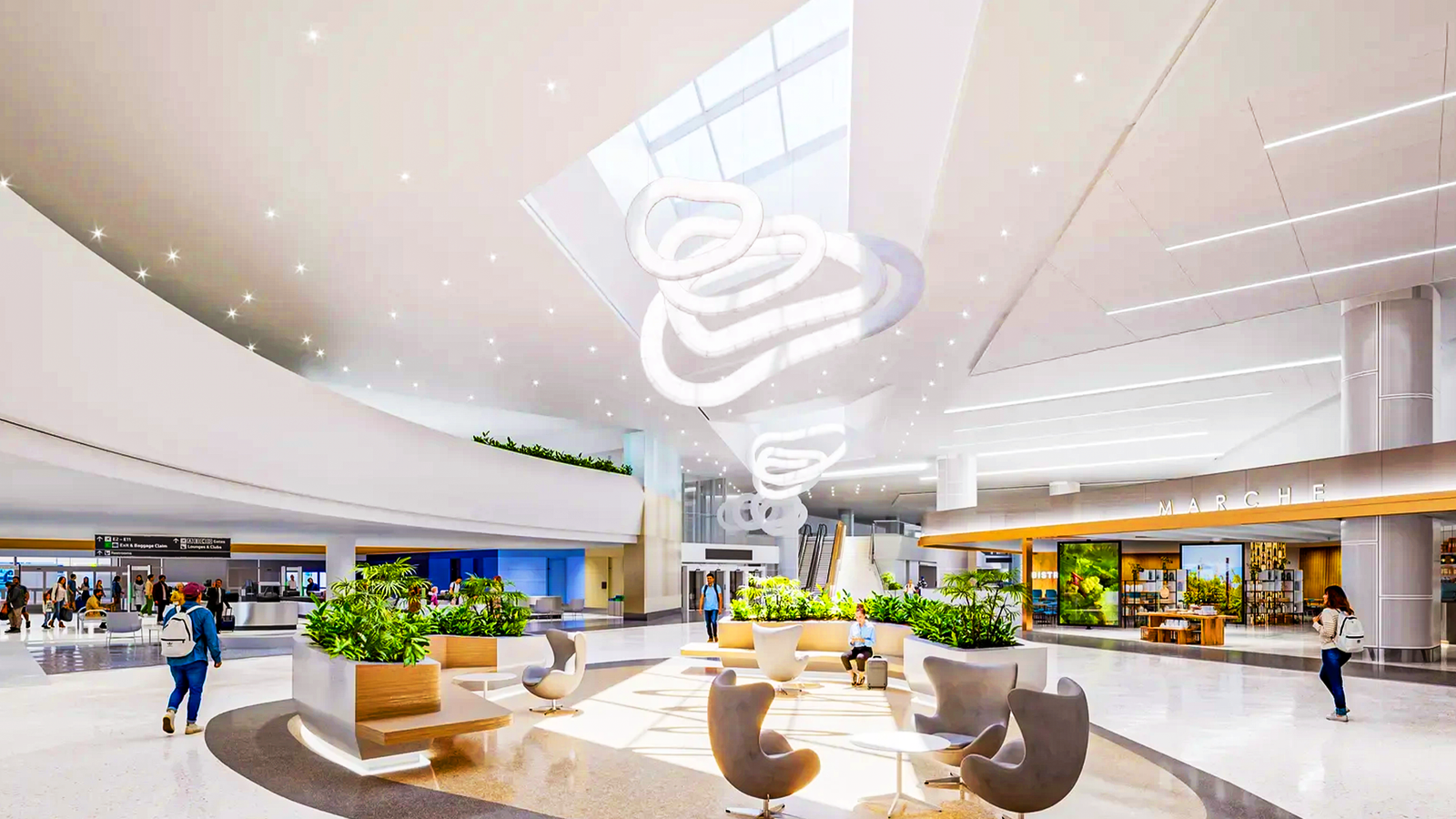
Published Oct 9, 2026, 3:00 PM EDT Ethan is an aviation professional with a degree in Aviation Management with Flight from the Florida Institute of Technology. He previously wrote aviation and tourism features for Florida Tech’s student newspaper, The Crimson, where he developed a clear, reader‑focused reporting style. Aviation journalism has remained a consistent priority throughout his career. He currently holds a Restricted ATP and Commercial Multi‑Engine Pilot certificate and works in aviation supply chain and aircraft component repair. Alongside his industry role, he is pursuing his Certified Flight Instructor rating and actively building flight experience. A lifelong aviation enthusiast, Ethan spent countless hours at Raleigh–Durham International Airport’s observation deck studying air traffic and practicing amateur photography and videography. Pacific hubs have become increasingly important for airlines, not only in the United States but in North America as a whole. Consider Alaska Airlines' Pacific gateway at Seattle-Tacoma International Airport (SEA), Air Canada's West Coast base at Vancouver International Airport (YVR), and even United Airlines' remarkable growth at Los Angeles International Airport (LAX). They all offer a convenient base for flights not only to Asia, but also to destinations in the Pacific islands, Hawaii, and Alaska. United currently operates a fortress hub at San Francisco International Airport(SFO) and has been a significant presence since 1985, when United acquired Pan American World Airways' Pacific Division for $750 million, as archived by the New York Times. United faces veritable competition from Alaska Airlines at SFO, alongside healthy market share from other carriers such as Delta Air Lines, American Airlines, and Southwest Airlines. While United's market share isn't definitively a majority, the Chicago-based company holds roughly 48% of total market share, which is a 42% lead over the next dominant carrier, Delta, at 7.6%, per the official SFO Fact sheet. A New Terminal Slated For 2027 Credit: SFO International Airport According to Turner Construction, the official contractor of the project, SFO embarked on a new terminal renovation and expansion project in 2024. With the project still in progress, they report a completion date sometime in the fall of 2027, although a specific date has not been mentioned. Turner also has ongoing projects at Delhi Indira Gandhi International Airport (DEL) and Des Moines International Airport (DSM), among other airfields, pursuing airside and landside improvements alike. Turner Construction is supported by Magnusson Klemencic Associates (MKA), serving as the primary structural engineer involved. MKA also reports its involvement in the Terminal 3 East Retrofit and Expansion and Harvey Milk Terminal 1 project at SFO, winning five awards for its prestige and success. Per SFO, United is not paying for the overall $2.6 billion Terminal 3 West Modernization project at SFO; the project is being funded and managed directly by the airport itself through airport revenues, bonds, and standard capital funding mechanisms. While these are considered growing pains, SFO has made several functional adjustments during the project. Their main advisories per their website include: Departures curbside closure — Doors 6–13 closed. United check-in changes — West-end T3 counters closed; use T2 counters for D/E gates and T3 east counters for F gates T3 AirTrain station is closed until 2027; combined Terminals 2 and 3 stations remain open AMEX Centurion lounge moved from T3 to Terminal 2 Arrivals baggage claim carousels 1–3 closed. Walking routes to International Terminal/BART shifted outdoors. Passenger pick-up adjustments — Arrival doors 4–12 used for curbside pickup; the least congestion near doors 10–12 Post-security walkway changes — Interim walkways allow movement between all terminals without leaving security International-to-domestic connection rules — While Canada/Ireland pre-cleared arrivals stay airside, others must clear customs and re-check bags The Competitive Edge Of New Terminal 3 West Credit: SFGATE This ambitious terminal renovation and expansion includes several main components outlined by the SFO Airport Authority. The finished terminal will include a seismic retrofit, an expanded security checkpoint, and new passenger amenities. The project will also create 200,000 square feet of additional space, allowing for expanded food, beverage, and retail concessions. SFO is reportedly also constructing a valuable resource for airlines with international service at SFO, but geared primarily toward United. The new terminal will reportedly include three wide‑body‑capable gates designed for long‑haul international aircraft, which United and other carriers could share. While Terminal 3 is currently solely occupied by United and United Express, United may replicate a strategy they deployed at Chicago O'Hare International Airport (ORD) by offering gate space to select Star Alliance partners such as All Nippon Airways (ANA) and Lufthansa. SFO will also add a dedicated walkway that funnels international arrivals straight into the Customs Hall in the International Terminal, as reported by SFist. This will streamline international arrivals and provide extra space, while also helping United consolidate its international service. Other Pacific Gateways, Examined Credit: Tada Images | Shutterstock The specifics of the SFO expansion, and its benefits, make the contrast sharper. San Diego International Airport (SAN) has a single‑runway constraint and terrain‑limited departures that complicate fully‑loaded long‑haul operations, so it operates with a strict ceiling on enplanements. LAX has scale but also brutal slot pressure and competition from every major global carrier, making it expensive to grow without guaranteed yield. SEA is dominated by Alaska’s local feed and Delta’s transpacific ambitions, limiting United’s ability to build a hub‑level presence. YVR, while not necessarily an option for United, is worth mentioning in this category. Geographically, it is a superb transpacific gateway, but it sits outside the US domestic network. United would need to work out a cross-border feed situation and develop a strategy with Air Canada. Similarly, Tijuana International Airport (TIJ), via Cross Border Express (CBX), offers a direct route into the U.S. catchment area, and even has a regularly scheduled flight to Beijing Capital Airport (PEK). However, TIJ lacks the infrastructure and premium demand to support widebody growth. Portland International Airport (PDX) has strong origin and destination (O&D) traffic, but insufficient scale for sustained Pacific expansion. Delta has experimented off and on with transpacific offerings from PDX, but lacks a committed hub infrastructure at the Oregon airfield. Anchorage International Airport(ANC) is a cargo powerhouse but not a passenger hub, and its long‑haul viability is seasonal at best. Northern Pacific Airways, rebranded to New Pacific Airways, once held an ambitious strategy to turn ANC into a premier transatlantic gateway. However, they were ultimately halted due to Russian airspace closures. SFO remains United's most logical West Coast offering to bolster traffic to Asia, Australia, Hawaii, and other Pacific island destinations. Economic Impact For San Francisco Credit: canadastock | Shutterstock The Terminal 3 rebuild is less about gates and glass, and more about how the city of San Francisco positions itself in the Bay Area’s economic hierarchy. By hardening SFO’s role as the primary long‑haul and premium domestic gateway for Northern California, United and the airport authority are effectively anchoring high‑value traffic. Business travel, tech sector mobility, and tourism can coexist under a single, upgraded node. Fortunately for the two, this concentrates on airline investment, airport employment, and visitor spending around SFO rather than dispersing it across secondary aerodromes. For the NorCal metro area, this means the new Terminal 3 is not just an infrastructure project; it’s a bet that the Bay Area’s demand profile will remain strong enough to justify a flagship hub rather than a more fragmented, multi‑airport model. SFO Airport reportedly expects the project to employ 500–600 workers at peak and award over $173M in contracts to Local Business Enterprises (LBE). While Oakland International Airport(OAK) or Norman Y. Mineta San Jose International Airport(SJC) may not directly benefit from the SFO-specific expansion, their cities and surrounding suburbs will reap the economic benefits. Between the two secondary airports of OAK and SJC, they only offer one transpacific route via ZIPAIR Tokyo's seasonal Tokyo service, signaling that SFO is the global primary for not only transpacific traffic, but European traffic as well. Could Denver Or Los Angeles Have Been Better? Credit: Ceri Breeze | Shutterstock United’s choice to focus upgrades on SFO creates a clear implication: the project is optimized for network balance, not just raw demand. Denver International Airport(DEN) and LAX are both significant United hubs with their own gravitational pull, but were never simply alternative candidates; they represent different strategic outcomes. DEN would have stretched the aircraft into higher-frequency, lower-yield domestic patterns because of its inland geography. LAX would have forced it into long‑haul substitution rather than mid‑range optimization. It is worth comparing the outcomes of increased investments and thereby services at DEN or LAX. Denver’s altitude and winter performance penalties would push payload‑restricted departures on key routes, and by the same token, reduce transpacific capability. Los Angeles is currently saturated with transpacific competition where larger widebodies already dominate. In contrast, the current investment and scheduling pattern at SFO allows United to run the aircraft at consistently high load factors without forcing it into missions that dilute its economics. Seattle is also an interesting variable. SEA parallels LAX in that both are already highly competitive markets, with multiple airlines operating hubs in each destination. While United doesn't even label SEA as a focus city, it is a highly lucrative transpacific gateway, with flight times consistently among the lowest between the continental United States and Asia. American even pursued a larger operation at SEA, which it pulled back in the early 2020s. What Will United Focus On In 2027? Credit: Wikimedia Commons | Simple Flying United’s next strategic pivot will hinge on whether its multi‑hub modernization plan can keep pace with the carrier’s network ambitions. The implication is simple: 2027 won’t be about one hub winning attention over another, but about whether United can synchronize SFO’s rebuild, IAD’s long‑promised transformation, IAH’s growth corridor, ORD’s competitive pressure, DEN’s scale, and LAX’s renewed west‑coast relevance into a coherent system. The broader picture is that United is entering a phase where infrastructure, fleet, and schedule density must evolve together. Newark Liberty International Airport (EWR), Boston Logan International Airport (BOS), Guam International Airport (GUM), Tokyo Narita Airport (NRT), and several airports in Florida also remain integral parts of United's operation. The rumor mill has not stopped speculating about the opening of a new southeastern hub for United. However, United CEO Scott Kirby recently went on record expressing interest in a potential Miami hub. This would put United in direct competition with American in a fifth metro area, in addition to New York, Chicago, Los Angeles, and Washington, D.C. Interestingly, rumors began that there could even be a merger between United and American; however, American has since shut down that discussion , expressing "no interest" in such an acquisition. United, as a result, has doubled down on its new partnership with JetBlue and further growth plans at its existing hubs.
United Airlines' $2.6 Billion Bet On San Francisco Solves The 1 Problem LAX & Seattle Can't Fix
Full Article
Original Source
Read the full article at Simpleflying →KhanList aggregates and links to publicly available news content. We do not host full articles from third-party sources. Always verify important information with original sources.