
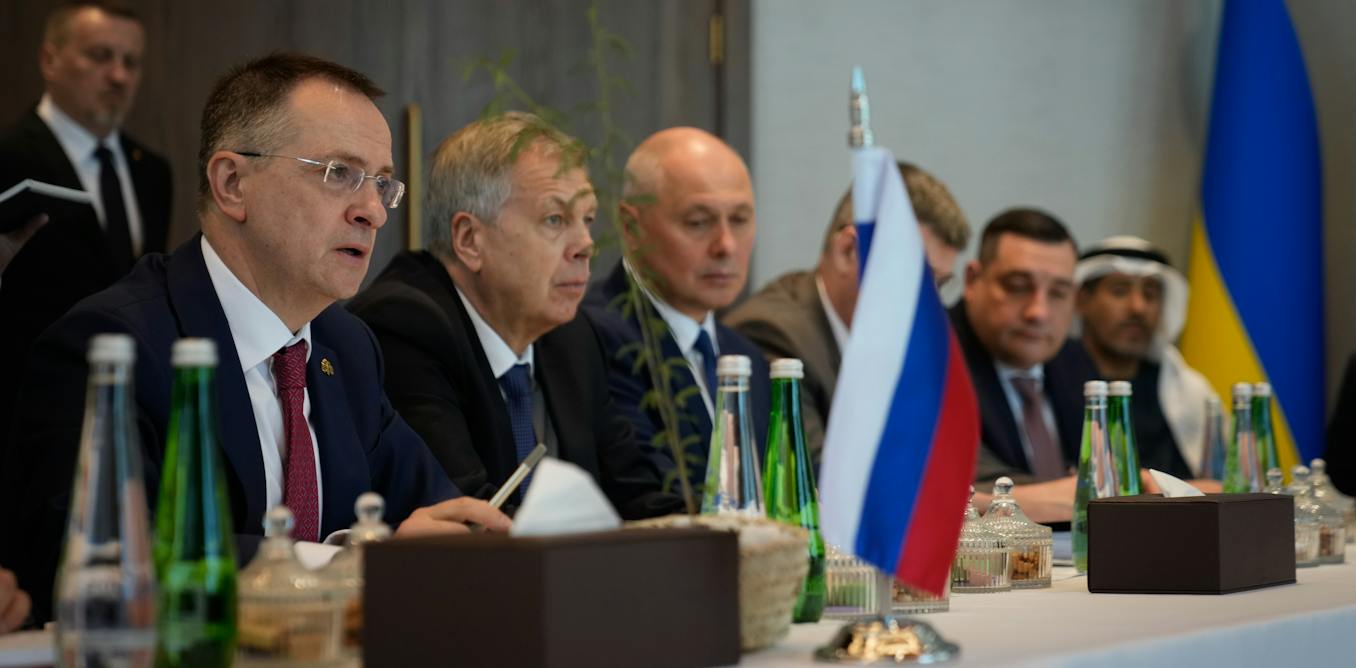
The first talks between Russia and Ukraine in nine months have concluded. The most positive thing that can be said about the US-mediated meeting in Abu Dhabi was that the dialogue did not break down and the parties seemed to agree to further meetings. There was also at least one tangible result. Russia and Ukraine agreed on a large-scale exchange of prisoners of war, the magnitude of which will be clarified over the coming days. Beyond this, however, there were few signs of progress towards a peace agreement. Despite Ukrainian president Volodymyr Zelensky’s claim that all participants in the negotiation process “genuinely want to achieve a result before 2027”, the most important issues remain unresolved. These include ceasefire terms, the future status of occupied regions and long-term security guarantees for Ukraine. The talks took place against the backdrop of continued fighting on the frontline. Russia’s military currently controls about a fifth of Ukraine, but progress on the battlefield has slowed in 2026 – and has even been reversed – due to Ukrainian successes. With the frontline largely static, Moscow keeps striking Ukrainian cities and energy sites with missiles and drones. In turn, Ukraine has attacked Russian oil refineries and other energy infrastructure. The Russian military currently controls a fifth of Ukrainian territory. Institute for the Study War According to reports from Abu Dhabi, Ukraine firmly rejected a proposal for it to surrender the entire Donbas region in the east of the country in return for peace. Whether the Russian demand for the Donbas indicates a softening of its claim to the Kherson and Zaporizhzhia regions remains too early to determine. The deadlock remains on other key issues, too. Russia continues to insist that a restructuring of Europe’s security architecture must be put in place before any ceasefire can take effect, to address what it regards as its legitimate security concerns. On the eve of its full-scale invasion in 2022, Russia demanded the withdrawal of Nato forces from countries that joined the alliance after 1997. These include the Czech Republic, Hungary, Poland and other eastern European states. If this demand still stands, it is difficult to envisage an end to the war anytime soon. Ukraine, for its part, is bracing itself for another harsh winter. It therefore seeks a ceasefire as the starting point for any serious negotiations on peace. This demand, backed by its European supporters, has so far fallen on deaf ears in the Kremlin. This was evidenced by missile strikes that continued even during the peace talks themselves. The coercive nature of Russia’s strategy was further underlined by the fact that six major electricity substations in central Ukraine were reportedly struck during the night between the two days of negotiations. A local resident pushing a bicycle walks past damaged buildings in the frontline city of Sloviansk, in the Donetsk region of eastern Ukraine. Tommaso Fumagalli / EPA Perhaps the most important new point of departure for the Abu Dhabi talks was a new initiative by the Trump administration to tie a peace deal to a broader European security framework. US envoy Jared Kushner, the son-in-law of President Donald Trump, has said this framework would provide security guarantees to Ukraine while also meeting Russian security demands. The details of what such a construction would look like are hidden from the public view. But if the recent stances of the Trump administration are of any guidance, those details are likely to be closer to Russian preferences than Ukrainian ones. In recent weeks, Trump has struck a controversial deal that has allowed Moscow to restore some of its diesel exports, waiving several sanctions in the process. Steve Witkoff, another US presidential envoy, also praised Russian leader Vladimir Putin as a “humanitarian” in late October. Left in the cold So far, the deep irony seems to be that while the issue of a broader European security architecture is on the table, the European countries supporting Ukraine are denied a place at the negotiating table itself. Even though there were representatives of the EU, Nato, France, Germany, Italy and the UK present in Abu Dhabi, they were not given formal voice in the negotiating process. On the first day of the meeting, Russian foreign minister Sergei Lavrov even sarcastically joked about letting them sit there in their hotels. If the US continues to scale down its military presence in Europe, as Trump has repeatedly hinted it will, responsibility for providing the security guarantees Ukraine will so desperately need after the war will fall largely on the EU and European Nato members. This would again call for giving Europe a voice and presence at the negotiating table, which seems to have been recognised at least by Kushner. After the Abu Dhabi talks concluded, he was reported as saying European partners must be at the table in future rounds. He said he would raise the matter with Putin. US envoy Jared Kushner speaks ahead of the Abu Dhabi meeting. Altaf Qadri / EPA Europe’s participation in the talks is not a marginal issue, particularly as the position of the US as an honest broker has become debatable, given the tendency of the Trump administration to side with Russia on essential issues. Trump’s recent remark that Ukraine might “end up with a little bit different shape” after the war suggests this remains the case. The Abu Dhabi meeting has at least revived negotiations between the two warring parties. But it is far from evident that peace has moved any closer. The most contentious issues remain essentially where they were before the parties convened in the Emirates.
Ukraine peace talks end with no breakthrough – but Europe may be set to return from the cold
Full Article
Original Source
Read the full article at Theconversation →KhanList aggregates and links to publicly available news content. We do not host full articles from third-party sources. Always verify important information with original sources.