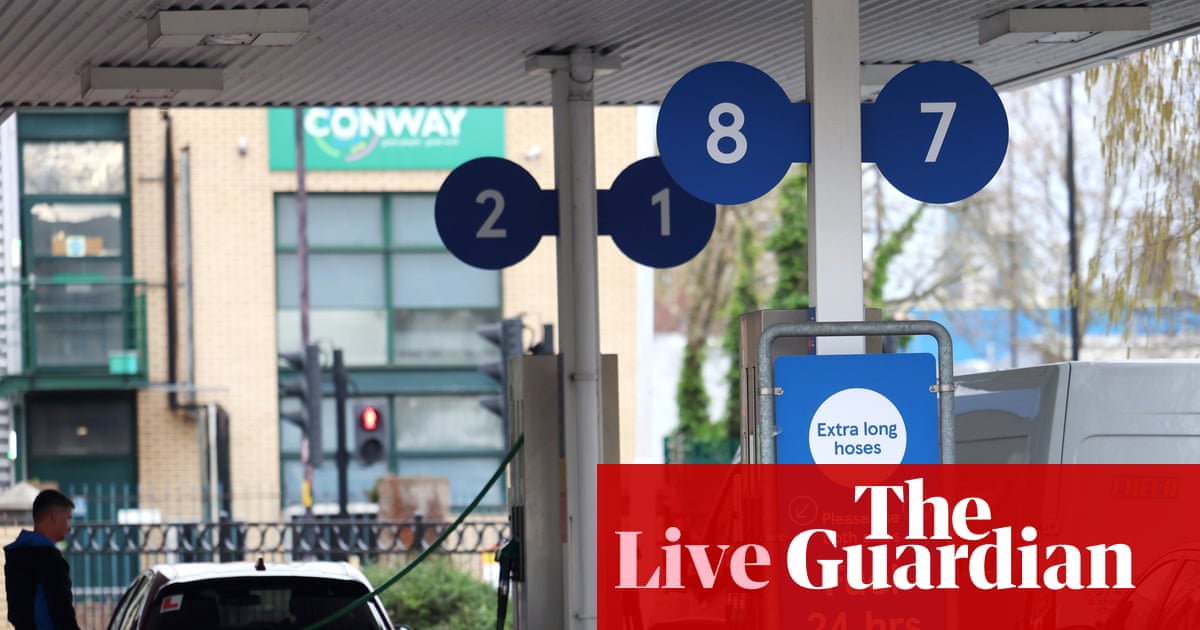
Introduction: UK inflation drops faster than expectedGood morning, and welcome to our rolling coverage of business, the financial markets and the world economy.Some welcome news to kick off the day: inflation in the UK slowed in June to 2.6%.Economists had expected that the consumer price index would fall to 2.7%, down from 2.8% in May. But the rate has fallen more than expected, partly thanks to a drop in motor fuel prices, particularly diesel, according to the Office for National Statistics.Grant Fitzner, chief economist at the ONS, said: double quotation markFood prices fell this month, driven by products including chocolate, margarine and beef. Clothing prices also fell with the start of summer sales, with bigger discounts than last year. The cost of raw materials dipped for the first time since January, mainly due to the lower price of crude oil, while the increase in the costs of goods leaving factories slowed again. But analysts are warning that there is still a risk inflation could ramp up this year, as conflict in the Middle East continues.George Brown, senior economist at Schroders, said: double quotation markLower fuel prices applied the brakes to inflation in June, but this rear-view mirror picture doesn’t tell us much. With oil prices rising again amid renewed tensions in the Middle East, there could be inflation issues further down the road. For the Bank of England, the crucial question is whether this remains an energy shock or becomes a domestic inflation problem. So far, a cooling labour market suggests there is little risk of the sort of second-round effects that would warrant tighter monetary policy. That should allow policymakers to keep a steady hand on the wheel. While markets are pricing more than two rate hikes over the next year, we think the Bank can stay on hold as it gauges whether the latest energy shock is just a temporary bump in the road or something more persistent.” Still, the slowdown in inflation will likely be welcomed by the new team in Downing Street, as Andy Burnham promises to provide more cost f living support.The agenda 7am BST: UK inflation for June 7am BST: Wetherspoon Q4, Reach half-year results 9pm BST: Alphabet Q4 results Key events15m agoFood inflation slows to 1.7%, as sugar, chocolate and fat prices drop30m agoInflation slowdown may be 'false dawn', businesses warn41m agoGovernment has 'much more to do' to help with cost of living, says chancellor46m agoIntroduction: UK inflation drops faster than expectedKallum Pickering, chief economist at the broker Peel Hunt, also argues that the inflation cooldown will not last for long – and that the rate could in fact rise above 3% by the end of this year. double quotation markAny dovish impulse for the Bank of England from the softer UK headline CPI will be more than offset by the firmer core reading. The June data are unlikely to alter money market bets for a hold next week or a hike in September — however, we believe markets will be surprised in September when the BoE continues to hold. Today’s data are unusually backward-looking nature given the recent re-escalation in the Middle East. Looking ahead, the inflation picture becomes more complicated. Commodity prices are climbing again as Middle East tensions intensify, and July’s energy-price-cap increase will lift household bills. Inflation therefore looks set to rise above 3% in H2. However, as UK underlying fundamentals remain disinflationary, there is scope, in our view, for further positive surprises even as price momentum picks up. Rob Booth, chief UK economist at the consultancy Pantheon Macroeonomics, also predicts that inflation is likely to ramp up to more than 3% this year. double quotation markLooking ahead, previous Chancellor Rachel Reeves’ temporary summer VAT cuts on meals and recreation will slow services inflation further in July before we see a sharp rebound to 4.0% in September as those tax cuts expire. We have to take seriously the possibility that business surveys that had previously provided an excellent steer to underlying services inflation have now gone awry. But for now, underlying services inflation slowing well below the survey steer shown in our chart below points to some upward correction ahead. We look for inflation to peak at 3.3% in November, after taking account of new PM Mr Burnham’s VAT cut on energy utilities. The biggest downward effect for inflation came from motor fuels, particularly diesel, the ONS found.The average price of diesel fell by 10.7p per litre between May and June, compared with a a fall of just 0.6p in the same period last year. The average price stood at 176.4p per litre last month.Meanwhile petrol prices fell by 2.1p per litre in June – the first time it has dropped since the start of the conflict in the Middle East in February. Its June average was 155.3p per litre.Food inflation slows to 1.7%, as sugar, chocolate and fat prices dropA woman holds a basket of goods in a supermarket in Cardiff, Wales Photograph: Matthew Horwood/Getty ImagesA slowdown in food prices will be particularly welcome news for shoppers.The ONS says food and non-alcohol drink prices rose by 1.7% in June, down from an annual rate of 2.2% in the May. On a monthly basis, it slipped 0.2%.The biggest falls were in sugar, gams, syrups, chocolate and confectionery.There are also some drops in the price of oils and fats (particularly margarine and other vegetable oils), meat (particularly beef), dairy, and vegetables.Harvir Dhillon, an economist at the British Retail Consortium, an industry body, said the fall in food prices drop had also been enabled by strong competition between supermarkets. double quotation markFood inflation had a particularly notable drop, its lowest in almost two years, with prices falling on the month. This was driven largely by intense competition between supermarkets, trying to entice their customers during a warm spell of weather, despite supply chain pressures. Dr Liliana Danila, chief economist at The Food and Drink Federation (FDF), adds: double quotation markWe continue to anticipate rising food price inflation as the year goes on, however this is likely to be lower, come later and plateau for longer than the previous inflationary cycle. With disruption the new norm for the food system, it’s critical that the new prime minister takes food security seriously and is ready to work in partnership with industry to ensure our food system is investing for growth and resilience, from vital tech adoption to future-facing skills. Inflation slowdown may be 'false dawn', businesses warnBusinesses are not optimistic that a slowdown in inflation will last. Martin Sartorius, lead economist at the Confederation of British Industry (CBI), predicts that inflation will ramp up over the coming months. double quotation markWe expect this easing will prove temporary. Inflationary pressures are likely to firm over the next few months, reflecting the ongoing impact of the Iran conflict on energy bills and some passthrough to domestic prices. Renewed tensions in the Middle East mean that households and businesses will continue to face an uncertain and volatile outlook as we head towards autumn. We anticipate the Bank of England’s Monetary Policy Committee to keep interest rates unchanged when it meets next week, as it maintains a ‘wait and see’ approach to the economy. Although risks remain elevated, a loosening labour market, soft domestic activity, and tighter financial conditions mean that the Committee is unlikely to raise rates in the near term. Suren Thiru, chief economist at the accounting body ICAEW describes the inflation slowdown as a “false dawn”. double quotation markJune’s slowdown is a false dawn as it may have already been reversed this month with higher energy bills, following Ofgem’s energy price cap rise, likely to have lifted inflation above 3%. Though stubborn services and core inflation suggest that the UK remains exposed to the inflationary fallout from the Iran war, weaker wage growth and a sluggish economy will help blunt any second‑round effects. Renewed US–Iran hostilities have reignited inflation fears, with rising oil prices and supply chain pressures putting the prospect of inflation touching 4% later this year back on the table, despite October’s VAT cut on electricity bills. Elevated inflation will likely become a more notable economic headache for the new chancellor in the coming months by deepening the cost‑of‑living crunch, while also squeezing his fiscal headroom, raising borrowing costs, and increasing financial market volatility. These benign figures quash any lingering prospect of a July rate rise, particularly as rate-setters may want to assess the impact of any measures announced by the new Prime minister before deciding whether to tighten policy again. Government has 'much more to do' to help with cost of living, says chancellorThe new chancellor John Healey has said that while a falling rate of inflation is welcome news, there is still much more the government should do to help.He said in a statement this morning: double quotation markFalling inflation is news families want to hear but there is much more to do to give people the breathing space they need. That is why yesterday we cut VAT on electricity bills and today we’re announcing a £2 cap on bus fares from January. We have chosen to focus on the cost of living in our first week, signalling that concern for working people will be at the heart of everything we do. Both these changes are a win-win. They help keep inflation down, while helping people afford the essentials. Burnham’s government announced the cut on VAT on electricity bills yesterday, in a move that is expected to reduce bills by an average of £45 a year from October.And this morning, Burnham announced that single bus fares across England will be capped at £2 from January.The nationwide cap is currently set at £3 until the end of March 2027 although some areas – including London and Greater Manchester, where Burnham set a £2 limit as mayor – have lower top rates for single tickets.Introduction: UK inflation drops faster than expectedGood morning, and welcome to our rolling coverage of business, the financial markets and the world economy.Some welcome news to kick off the day: inflation in the UK slowed in June to 2.6%.Economists had expected that the consumer price index would fall to 2.7%, down from 2.8% in May. But the rate has fallen more than expected, partly thanks to a drop in motor fuel prices, particularly diesel, according to the Office for National Statistics.Grant Fitzner, chief economist at the ONS, said: double quotation markFood prices fell this month, driven by products including chocolate, margarine and beef. Clothing prices also fell with the start of summer sales, with bigger discounts than last year. The cost of raw materials dipped for the first time since January, mainly due to the lower price of crude oil, while the increase in the costs of goods leaving factories slowed again. But analysts are warning that there is still a risk inflation could ramp up this year, as conflict in the Middle East continues.George Brown, senior economist at Schroders, said: double quotation markLower fuel prices applied the brakes to inflation in June, but this rear-view mirror picture doesn’t tell us much. With oil prices rising again amid renewed tensions in the Middle East, there could be inflation issues further down the road. For the Bank of England, the crucial question is whether this remains an energy shock or becomes a domestic inflation problem. So far, a cooling labour market suggests there is little risk of the sort of second-round effects that would warrant tighter monetary policy. That should allow policymakers to keep a steady hand on the wheel. While markets are pricing more than two rate hikes over the next year, we think the Bank can stay on hold as it gauges whether the latest energy shock is just a temporary bump in the road or something more persistent.” Still, the slowdown in inflation will likely be welcomed by the new team in Downing Street, as Andy Burnham promises to provide more cost f living support.The agenda 7am BST: UK inflation for June 7am BST: Wetherspoon Q4, Reach half-year results 9pm BST: Alphabet Q4 results
UK inflation cools faster than expected to 2.6% in June as food and fuel prices drop – business live
Full Article
Original Source
Read the full article at Theguardian →KhanList aggregates and links to publicly available news content. We do not host full articles from third-party sources. Always verify important information with original sources.