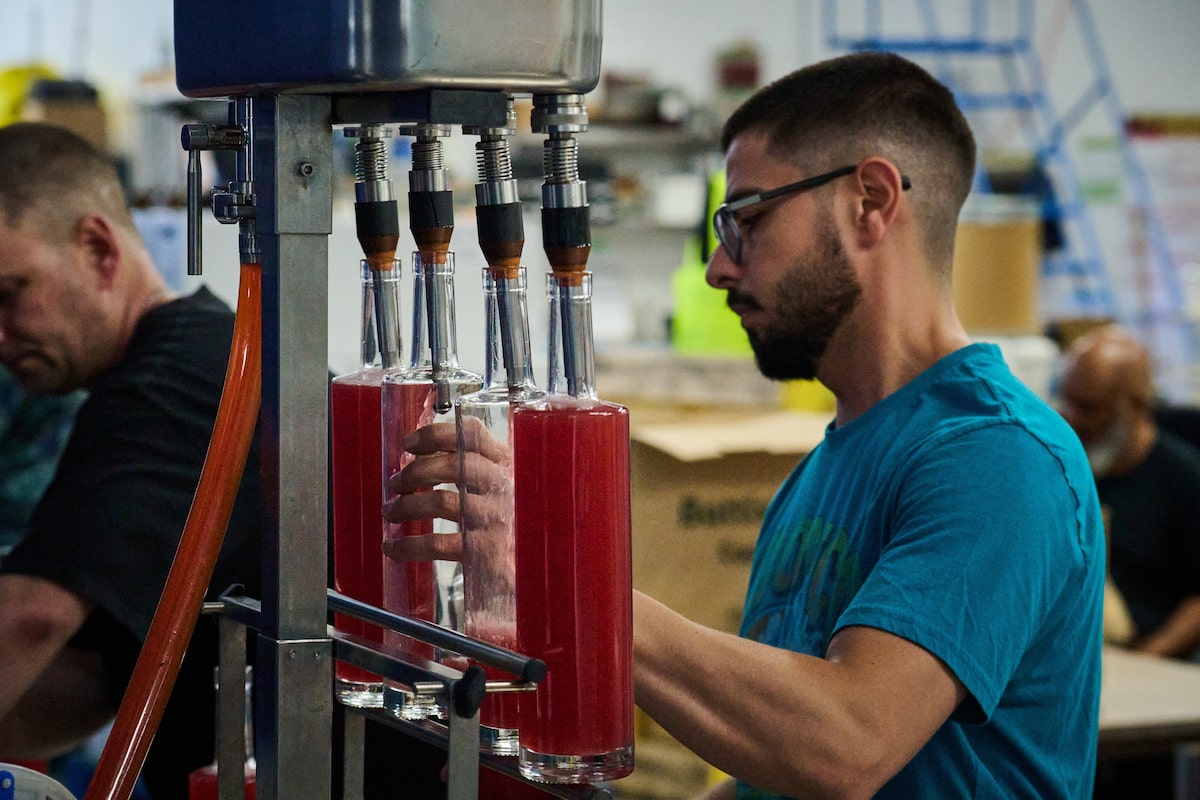
Open this photo in gallery:Workers bottle a gin-based cocktail at Reid’s Distillery in Toronto on Tuesday.Sammy Kogan/The Globe and MailThe stools didn’t make the list − but the mint did, as did the cordial, the gin, the whisky, the citrus oils, the bitters and the vermouth.Until now, Canada’s deepening trade war with the U.S. had concerned itself with the bulk components of modern life: aluminum, steel, softwood, car parts. The new list of Canadian exports subject to U.S. tariffs, hundreds of goods subject to 50-per-cent levies starting Aug. 19, is aimed directly at the ingredients of the fashionable cocktail.Liqueurs and vodka, syrups and wine of all types are on the list, as are wooden mixers, skewers − even lights, flasks and display fridges.“It does feel weirdly mixology-centric,” said Nick Peach, the founder of Toronto’s BareBones Bartending, which runs workshops. “You could open a pretty awesome cocktail bar with this.”From wine to whey to wigs, here are the Canadian goods targeted by Trump’s new 50% tariffsOver the past year and a half, Canadians have found little to laugh about as the Trump administration threatened annexation, openly discussed the immolation of core Canadian industries and declared Canadian metals a threat to U.S. national security.But the latest tariff threat has, for some, stretched comprehension and credulity. In matters of alcohol alone, the Trump administration is now pledging sky-high tariffs on mescal, tequila, Scotch and Irish whiskies, pisco, singani and Tokay wine − all products whose names are jealously guarded by their countries of origin, none of which is Canada. Others are alcoholic beverages that few would associate with this country: prune wine, sake and Slivovitz brandy, among them.What the list does include, though, are the kinds of things a bartender would recognize. Mint has pride of place in juleps and mojitos. Bitters lend complexity to all manner of drinks. Essential citrus oils can give added life to a whisky sour or old-fashioned. Open this photo in gallery:Reid’s Distillery owner Calvin Reid next to distillery equipment used for gin production.Sammy Kogan/The Globe and MailAgar-agar is made from algae and used as a clarifying agent, to create cocktail caviar or turn a cloudy drink clear − picture a piña colada the colour of water rather than milk. “These would be used in advanced mixology,” said Calvin Reid, whose family owns and operates Reid’s Distillery in Toronto.Were anyone to assemble all the products on the list, Mr. Reid said, “you would have a stocked bar. There’s a lot of stuff here that a bar wouldn’t even need but would be nice to have.”Seeing them assembled on a tariff list is “a little surreal.” But the booze battle has become the most visible front in the trade war. Eight Canadian provinces continue to shun U.S. products from beer and liquor sales, producing real pain for U.S. suppliers. American wine exports to Canada have fallen by more than US$357-million. Bourbon exports have slowed to a trickle.Carney says he and Trump agreed to ‘intensify’ trade talks in phone call after latest tariff threatSome of it has been to the benefit of Canadian alcohol makers. A year ago, Reid’s Distillery had four products in Ontario’s LCBO stores. Today it has 12. “We’ve been able to grow, in the Ontario market at least,” Mr. Reid said.But he understands why the U.S. would direct reprisals toward similar products. “When you’re talking about raw materials − aluminum getting taxed or whatever it is − that’s a little far from people’s minds” he said. With alcohol, “they’re targeting something most people touch multiple times a week. It’s an easy thing for people to wrap their minds and heads around.”What’s not clear is how much, exactly, the U.S. action will hurt Canada. Dillon’s Small Batch Distillers in Beamsville, Ont., is one of many Canadian producers that sell very little in the U.S.Open this photo in gallery:A year ago, Reid’s Distillery had four products in Ontario’s LCBO stores. Today it has 12.Sammy Kogan/The Globe and Mail“We’re so Canadian-focused, it doesn’t make any difference to us,” founder Geoff Dillon said. “A few years ago, we decided to focus on our backyard − and make sure we own this country.” Winemakers, meanwhile, said they have little cause for concern.Canadian vintners export just $8.3-million a year in wine to the U.S., a fraction of the amount that previously came north. Having U.S. product off shelves has lifted Canadian sales by 20 to 30 per cent, said Wine Growers Canada president Dan Paszkowski. New Zealand sales in Canada are up 28 per cent; Chilean, 21 per cent. “When the premiers decided that was going to be their focus, there was a reason for it,” Mr. Paszkowski said. He held out hope that trade talks could find a resolution to U.S. tariffs on major Canadian exports so the alcohol-related dispute could also be resolved.Open this photo in gallery:Liqueurs, vodka, syrups and wine of all types are on the latest U.S. tariff list.Sammy Kogan/The Globe and MailBut it would be foolish for Canadian premiers to return U.S. product to provincial liquor store shelves until a broader North American trade deal can be worked out, said Paul Sawler, vice-president and general manager of Dirty Laundry, a winery in Summerland, B.C.“If we give that up before we negotiate CUSMA, we’re giving up a trade chip,” he said.The negotiators might even try bringing along some of the products they’ve unfortunately made into ammunition. “Why don’t they bring a bottle of California wine. We’ll bring a bottle of B.C. wine and have a logical conversation,” said Jeff Guignard, CEO of Wine Growers British Columbia.“Far more of the world’s problems have been solved by sitting down over a wine.”
Trump’s latest tariff list reads like a perfectly stocked bar
Full Article
Original Source
Read the full article at Theglobeandmail →KhanList aggregates and links to publicly available news content. We do not host full articles from third-party sources. Always verify important information with original sources.