
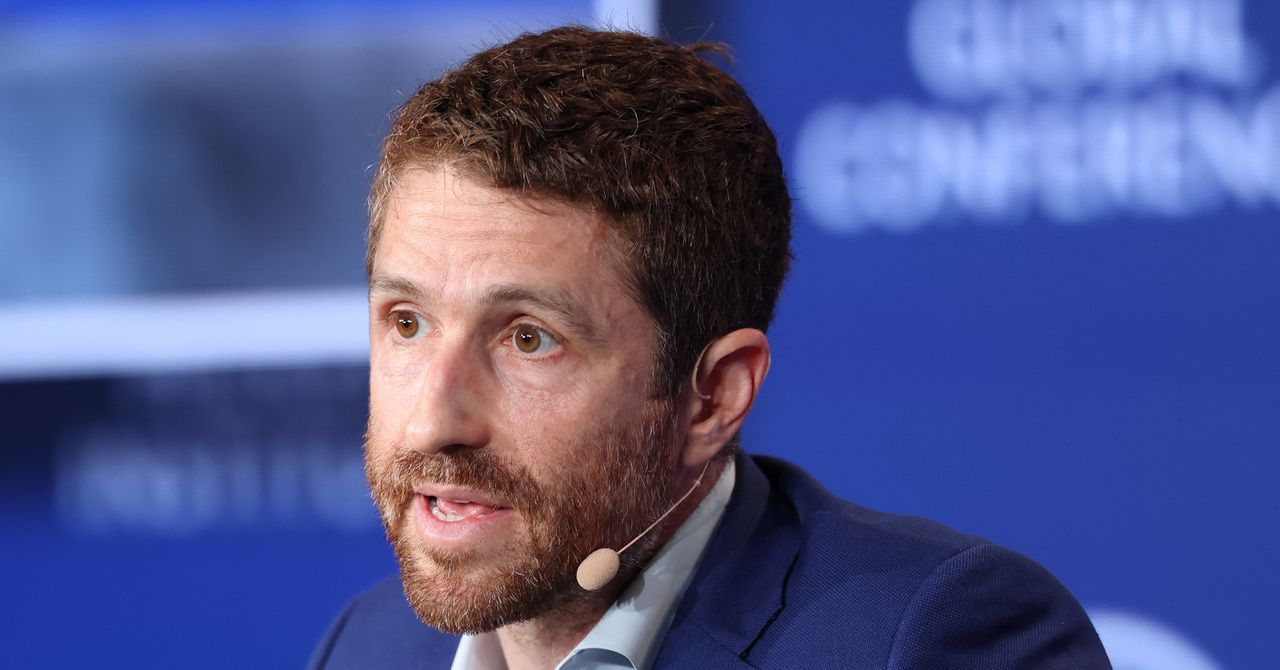
The Center for Humane Technology helped spark a movement against excessive screen time, but internal tensions over its direction and strategy have simmered for years, sources tell WIRED.Photograph: Patrick T. Fallon/Getty ImagesThe Center for Humane Technology, the online safety group cofounded by former Google product manager Tristan Harris and featured in the hit documentary The Social Dilemma, is laying off about half of its 16 non-founder employees, ex-staffers tell WIRED. The organization is ending its policy research and litigation work to focus instead on what it calls “founder-led” projects.The nine departures, which include executive director Julie Guirado and senior director of strategy Camille Carlton, arrive shortly after the center scored a series of major courtroom victories against social media companies. The lawsuits drew on its research alleging that the platforms were deliberately designed to keep kids glued to their screens.But amid that success, internal debates had been brewing for years over the organization’s direction, according to 16 former workers, most of whom spoke with WIRED earlier this year on the condition of anonymity because they feared professional repercussions.CHT’s board ultimately determined that trying to operate both as an advocacy group fronted by Harris and a think tank producing policy papers had stretched it too thin. Moving forward, the organization will focus on initiatives with its founders at the forefront, including “public education, targeted briefings, and private coordination,” building upon their success “reaching broad audiences and engaging influential decisionmakers,” the board announced last week.Functions such as assisting in litigation and evaluating AI tools would be eliminated, the board added, without specifying an exact number of layoffs.“This moment of accelerated AI risk demands we focus on one strategy, and we have chosen to focus on what we have always done best so that we can meet the moment,” board chair Premal Shah said in a statement to WIRED.In recent years, Harris has joined a growing chorus of voices sounding the alarm about the risks posed by advanced artificial intelligence, warning of a potential “AI takeover” if the software evades control. “We have to act right now before it’s too late,” he told NBC News last month.The center encouraged people to sign a major petition to pause AI development and helped organize a hearing in Congress about the dangers of chatbots. It also advised on lawsuits and investigations probing AI labs for their design choices, including an ongoing case filed against OpenAI by parents of a teenager who died by suicide after interacting with ChatGPT. Harris also starred in a documentary released on Netflix last month, The AI Doc, which urges viewers to demand that Congress intervene to protect the public from the technology’s risks.Founded in 2017, the Center for Humane Technology competes with well-established nonprofits and numerous newer entrants for funding and attention to shape AI policy. Cyberattacks by AI agents from OpenAI and other labs have renewed calls to hold tech developers liable for design and engineering failures.With an annual budget of roughly $6 million and a similar amount in reserves, the center has been funded by wealthy families and foundations. But as it doubles down on Harris, former employees fear resources might be diverted away from addressing what they believe are more pressing concerns about AI’s impact on democracy and civil liberties.Gail Barnes, who advised the center on social media strategy in its early days, says the board is dropping work that was supposed to convert Harris’ fame “into durable pressure” that could help facilitate real change inside companies.“Whether that is wisdom or a retreat depends on whether you think the binding constraint on AI right now is still ‘people haven’t heard the argument’ or ‘the argument has no institutional teeth.’ CHT is picking the first,” Barnes says.Big StarHarris excels at producing compelling sound bites, and he has long been a fixture in the media, at conferences, and on Capitol Hill. “He’s brilliant. He’s articulate,” a former CHT colleague says. “He could have easily spent his entire career on the dark side. For whatever reason, he came to appreciate that this was messed up.”Harris cofounded the center with Aza Raskin, the self-proclaimed inventor of the infinite scroll, and Randy Fernando, who once worked in developer education at Nvidia. The goal was to push tech companies to take more responsibility for the social consequences of their products, which in the early days meant examining issues like whether they were fomenting political radicalization or harming the mental health of teenagers. The language Harris used to describe these problems was quickly adopted across Silicon Valley.Internal documents from Meta released in court this year show company researchers discussed reaching out to Harris as early as 2018, when his warnings that apps were intentionally designed to be addictive entered the mainstream. His national profile grew further with the release of The Social Dilemma on Netflix in 2020.“It’s hard to understate how helpful The Social Dilemma was for launching tech accountability” as an advocacy field, says a leader at another nonprofit, who also sought anonymity to protect their relationship with CHT.But inside the organization, Harris sometimes clashed with his team about whether to focus their efforts on consumers, tech companies, or lawmakers, former staffers say. Some colleagues grew frustrated with Harris’ frequently shifting whims, describing the organization’s culture as needlessly “frenetic” and “insanity-inducing.” Shah disputed the characterization, but acknowledged the center’s culture is fast-paced given the urgency of its mission.The center developed an online course at one point for tech workers who wanted to learn how to build humane systems, and while it drew thousands of participants, CHT decided to retire it as Harris’ focus shifted to concerns about AI, according to people familiar with the project. Another initiative to create resources for educators to make sense of issues around screen time fell by the wayside, the people say. Harris kept coming back to the center being “a vehicle for him to speak to the world,” according to one ex-employee.The center’s podcasts and videos featuring Harris and Raskin have attracted large audiences, former workers say. Harris also landed private meetings with US lawmakers and executives at top tech companies. Former employees describe the group’s strategy as putting more emphasis on “grasstops” activism over the more familiar “grassroots,” which some viewed as misguided.Shah says CHT believes “mass communications creates grassroots pressure, which unlocks action from the grasstops” and that Harris “is one of the very few people in the world who is invited and can communicate effectively to mass media audiences across the political spectrum.”Some former employees allege that CHT’s founders were eager to remain Silicon Valley insiders, and thus were more reluctant to criticize companies where they previously worked or where close personal contacts have worked. (Shah disputes the characterizations and says CHT “has always been tough on companies.”)Some ex-employees described Harris’ management style as taxing, which they allege led to high turnover. In 2023, employees returned from a staff retreat feeling upset after being asked to participate in trust-building exercises they felt were overly personal, according to several former workers. CHT’s independent board members got involved, and Harris later stepped down as executive director to become the organization’s president, according to the former employees.Shah says that employee turnover "stemmed from differences in problem analysis and approaches to achieving the organization’s core mission.” He also denied that Harris’ role change was related to what happened at the retreat.Whatever turmoil may have been happening inside CHT, the broader strategy Harris used to go after tech companies was paying off. In 2021, state attorneys general across the US opened investigations into Meta and later sued the company for allegedly misleading teens and parents. This year, Meta agreed to settle some of the lawsuits for billions of dollars. Juries, including one that heard testimony from Raskin, put the company on the hook for additional penalties in separate cases. Other social media platforms agreed to settle similar litigation this year.In an interview with WIRED earlier this year, the leader of the other tech nonprofit praised CHT’s less flashy work in statehouses and courtrooms. The shift away from it is “disappointing,” the person says now. “Change comes from movements and democracy, not celebrities and backrooms.”Some former employees say they expect that CHT will increasingly resemble what they jokingly refer to as the “Center of Helping Tristan.” Shah says the organization’s sole goal is ensuring “today’s most consequential technologies serve humanity.”The Big Interview: Patti Harrison had dreams of a tech utopiaIn your inbox: Go inside the world of digital security with Kernel PanicParesh Dave is a senior writer for WIRED, covering the inner workings of Big Tech companies. He writes about how apps and gadgets are built and about their impacts while giving voice to the stories of the underappreciated and disadvantaged. He was previously a reporter for Reuters and the Los Angeles Times, ... Read More
Tristan Harris’ Tech Nonprofit Is Laying Off Most Staff and Going ‘Founder-Led’
Full Article
Original Source
Read the full article at Wired →KhanList aggregates and links to publicly available news content. We do not host full articles from third-party sources. Always verify important information with original sources.