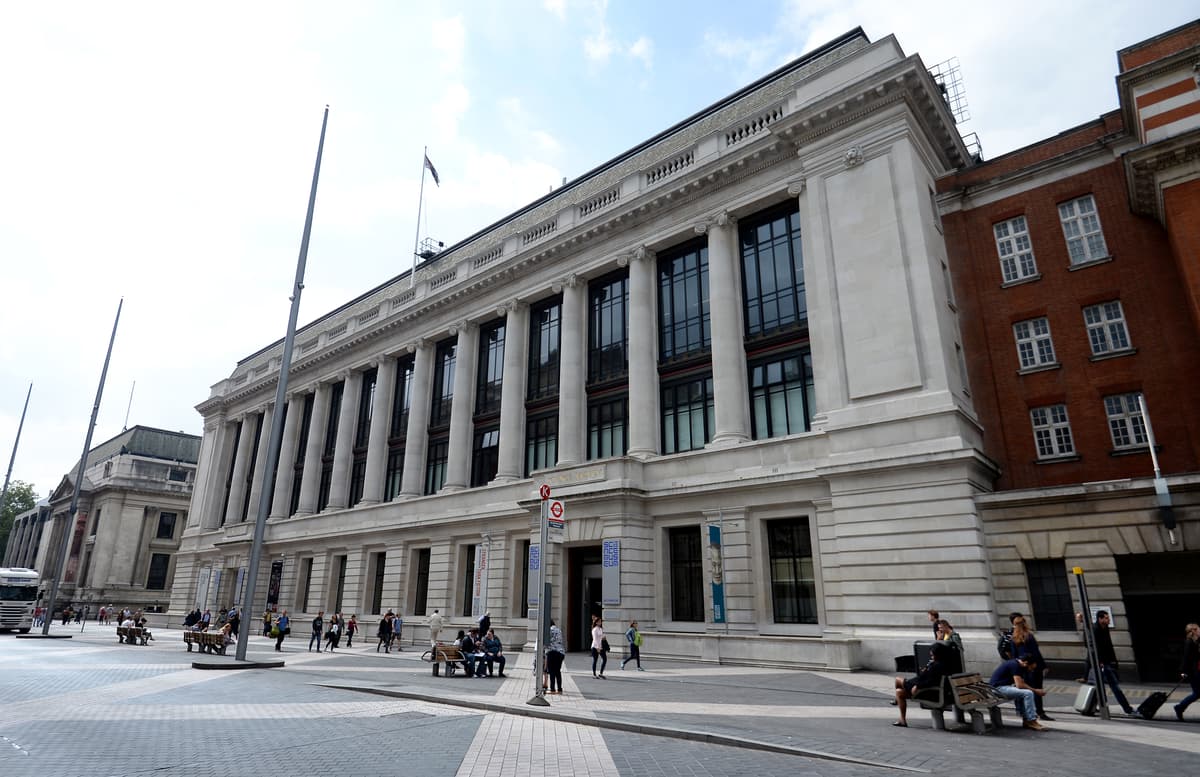
Millions of us visit London’s great museums and galleries, but what’s remarkable is what we manage to overlook — entire sections of the collections, things we would queue to see if they had arrived for a temporary exhibition. We are simply blasé about the permanent collections of the great London institutions.The other problem is the Ground Floor Phenomenon. Most people visit only the ground floor of museums or galleries, ignoring the marvels on the upper or lower floors.It’s time to rediscover the treasures under our noses. Here are a few places to start.The clock gallery at the Science MuseumForget the Space section, which all the school tours make for. How about a detour upstairs to the quiet of the second floor where you can find the history of the world told through the most marvellous clocks, from sundials to the maritime clocks that enabled sailors to find their bearings at sea? It turns out that London was the centre of the craft from the 17th century until the 19th century when the makers’ unrivalled skill was undermined by mechanically produced pieces. Among the treasures is the clock that won the prize for measuring longitude at sea… a world-changing piece.In the medicine section among the mementos mori, there is a jolly coffin clock, with a recumbent skeleton and skulls for feet. Beats digital phone displays, no?Science Museum Group CollectionThe early parts of the medicine gallery have some fabulous elements, including inescapably funny prosthetics, but the prize item must be the patent resuscitator for victims of drowning which involved pumping smoke into the rectum with a kind of bellows. It would do it for me.The Natural History Museum This place is hardly under-visited, but it’s striking what lots of visitors miss, not least the Aladdin’s cave of the Treasures Gallery. Go up the stairs from the Darwin statue to find a door leading to an assortment of strange and rare objects. It’s a kind of cabinet of curiosities, some natural, some man-made and small enough to look round easily. One is the terrifying skull of a Barbary lion (now extinct) unearthed from the Tower of London, where it was an inmate of the royal menagerie 700 years ago. Or there are pigeons Darwin observed in his garden which helped establish the principle of evolution without the bother of leaving home.Another terrific gallery is The Vault, a collection of fascinating minerals which calls to mind the Pink Panther film featuring a diamond heist. Among its treasures is a huge topaz and my favourite, The Accursed Amethyst, which defied every attempt by its Victorian owner to get rid of it (it was returned to him after he threw it in Regent’s Canal) until finally he enclosed it in seven boxes, from which it emerged to go on display here.The Paintings Galleries of The Victoria and Albert Museum The South Kensington museum includes any number of wonders. Too few visitors realise it has a first-class picture collection scattered across various parts of the museum. The paintings galleries on the second floor are particularly fine, approached through the Silver Gallery with its wonderful ceiling. The Sheepshanks Collection of mostly British art has splendid William Blakes and some fine and whimsical Landseers, and lots of charming narrative pictures. The Ionides gallery includes an exciting Delacroix shipwreck, GF Watts portraits, Rosetti’s hallucinatory The Day Dream and a completely filthy Ingres Odalisque. Next door is a wonderful room where Constable (The Hay Wain) meets Turner. Glorious.An absolute must-see is the Devonshire Tapestries, a collection of huge 15th-century Flemish tapestries once owned by the Dukes of Devonshire.The Devonshire Hunting TapestryVictoria and Albert Museum, LondonEven in their diminished state (colours fade) the hunting and allegorical scenes are wonderful.The National Gallery pastelsYou might have thought that there isn’t much in the National Gallery that escapes notice but have you ever visited the pastels collection in Room 42? I hadn’t realised it was there either until a friend pointed it out. But it has some lovely examples of the medium in its moments of glory. The first, unexpectedly, was the early 18th century, when artists discovered the wonderful soft, velvety finish that pastel sticks could give to portraits. The Venetian Rosalba Carriera was a master of the medium; her lovely Portrait of a Man is here. So too is the charming Lavergne Family Breakfast by Jean-Etienne Liotard, showing a mother and her mini-me daughter, complete with curling papers. Pastels returned to fashion with the Impressionists and the advent of chemical-based colours, and we find here spirited pastel sketches by Degas.Lavergne Family Breakfast by Jean-Etienne LiotardThe National Gallery, LondonThe National Portrait GalleryThe National Portrait Gallery has any number of surprises, but I bet you haven’t registered a miniature double portrait of two men on the way into the Tudor Gallery. It is, in fact, the first self-portrait in oils done in Britain, painted in prison, probably the Tower. Gerlach Flicke was a German painter; he may have been put away for Protestantism under Queen Mary. His fellow inmate was Henry Strangwich (Strangeways), known as the Gentleman Pirate, who made an inglorious living robbing Spanish ships. Flicke said he painted himself using a looking glass; it was a kind gesture to add a portrait of Strangwich.On the same floor is a fascinating decoupage screen made for Lord Byron by his boxing coach, Henry Angelo. It’s decorated with cut-outs of boxers on one side — Byron was a terrific fan — and actors on the reverse. It was the celebrity culture of the day, expressed in popular prints, and it says a lot about Byron.
Treasure hunt: the secret marvels of London’s museums
Full Article
Original Source
Read the full article at Standard →KhanList aggregates and links to publicly available news content. We do not host full articles from third-party sources. Always verify important information with original sources.