
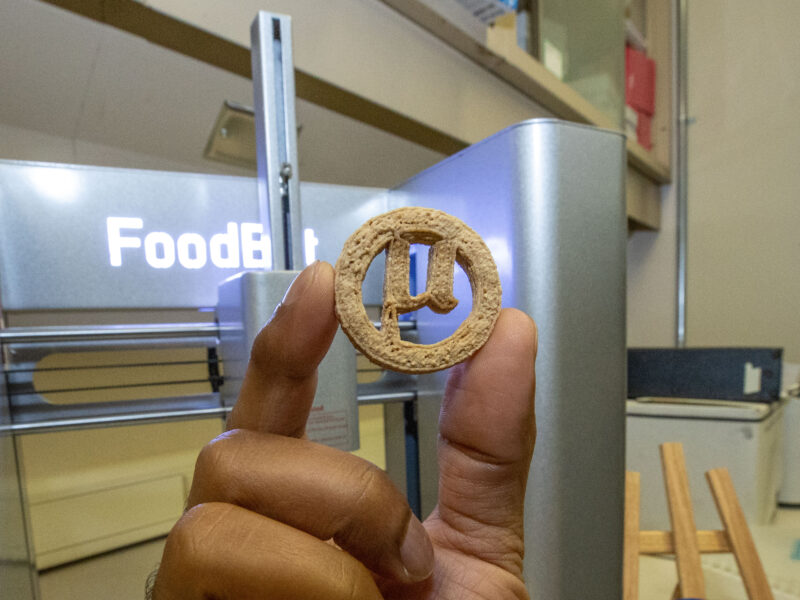
Researchers at Southern Illinois University Carbondale have developed a process that uses engineered yeast to transform plastic pollution and agricultural waste into ingredients for edible, protein-rich cookies.(CN) — Would you eat a cookie made from the world’s plastic pollution?Researchers from Southern Illinois University of Carbondale claim to have found a process by which plastic pollution and agricultural waste transform via yeast into edible, protein-rich foods and flavoring molecules.The researchers presented this strange process Monday at the fall meeting of the American Chemical Society in Chicago.The researchers say that this new development will help reduce plastic pollution around the world while also addressing food security challenges of the future.“Global food demand is expected to rise 35–56% by the year 2050, and about 30% of the world population will be at risk of hunger in the future,” Southern Illinois University Professor Lahiru Jayakody said in a statement. “The way to address that, I believe, is by using microbes.”One of the most common forms of plastic used for drinking bottles, polyethylene terephthalate, or PET, also contains molecules with lots of carbon that can be rebuilt into something similar to a protein through the use of microbes, the researchers say. The result is a simpler, more eco-friendly solution than using a chemical reaction in a lab.“We were trying to develop technologies for plastic upcycling to make more valuable products,” Jayakody said. “We thought, why not focus on making food? Because plastic is carbon and food is carbon. Microbes are very clever — so we are using their traits to solve the problems we created.”The researchers note that microbes have long-been used as miniature factories that can make a variety of different types of molecules. Yeast, for example, can be used to create insulin. Similarly, scientists in this project programmed yeast to convert the plastic molecules into proteins, vitamins and flavorings.“We’re using microbes to develop the cookie into a more attractive, consumer-friendly product,” says Sandhya Jayasekara, a graduate student at Southern Illinois University who programmed the yeast.For this project, the researchers used PET, discarded corn stalks, leaves and other biomass and put it through a process known as oxidative hydrothermal dissolution, created by another Southern Illinois University professor, Ken Anderson, that uses water and oxygen at high temperature and pressure to break down tough material into small pieces, researchers say.Those pieces are then fed to the yeasts, which are programmed to reform them into different food ingredients, like proteins, fats and acids. The researchers also added fiber, starch and sweetener and put everything into a 3D printer.The result is µBites, or “microbites,” the researchers say.Technically, they are safe to eat, but researchers are waiting for further approval before they can do a taste test. Participants in the study say that the cookies smell good and, if they were in a resource-limited situation, they would eat one.Admittedly, there is some caution around cookies made from plastic, Jayakody said in a phone conversation with Courthouse News.“You are eating micro- and nano-plastics everyday,” he said. “But of course with this, we are making it into a protein that you need.”The study was part of a project led by NASA Deep Space Food Challenge. The challenge, which ended in 2024, aimed to develop food that could be eaten by astronauts during space exploration missions.The researchers hope the µBites will be ready for consumption within a few years and could be used in resource-limited environments, such as in space or undersea.One of the main benefits of the microbial transformation process is microbes’ flexibility — the process can be used on a large scale to feed the masses, or used in confined areas, like a spacecraft or submarine, Jayakody said.In theory, other biomasses could also be used in the process, though that has not been tried yet, he said.The United Nations estimates that the world population is expected to reach nearly 10 billion by 2050. The United Nations also estimates that the 11 million tons of plastic pollution that enters the ocean each year will triple in the next two decades.For now, the cookies are only in their proof of concept stage, Jayakody said.Subscribe to our free newslettersOur weekly newsletter Closing Arguments offers the latest about ongoing trials, major litigation and rulings in courthouses around the U.S. and the world, while the monthly Under the Lights dishes the legal dirt from Hollywood, sports, Big Tech and the arts.Additional Reads
Trash to treat: Scientists are baking with plastic waste
Full Article
Original Source
Read the full article at Courthousenews →KhanList aggregates and links to publicly available news content. We do not host full articles from third-party sources. Always verify important information with original sources.