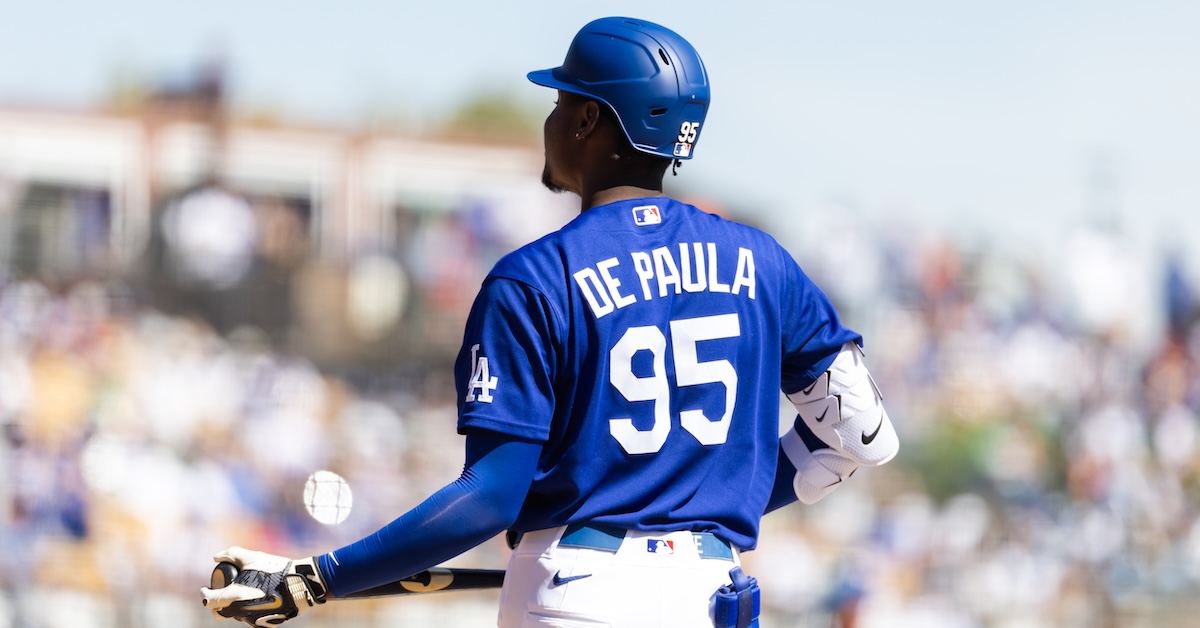
Mark J. Rebilas-Imagn Images As we approach August, now is a good time to take a fresh look at the farm systems of some of the clubs we expect to be buyers at the trade deadline. These teams are both contending for a playoff berth and in position to make a buyer’s style trade for a star big leaguer, the kind that will likely require parting with a top farmhand or two. We kicked things off with the Atlanta Braves, and we’ll continue today with the Los Angeles Dodgers. In tandem with an evaluation of the team’s needs and deadline posture, I’ve updated Los Angeles’ prospect list to account for graduations, incorporate the team’s new draftees, and reflect developments on the farm. The Dodgers have a great farm system, heavy on outfield prospects and pitchers who throw hard but who might just be relievers. The Situation The Dodgers have a comfortable 12.5-game lead in the NL West. They’ve successfully weathered injuries to several key cogs on offense (Tommy Edman, Teoscar Hernández, and Will Smith) through a combination of their older stars remaining productive, and Andy Pages and Dalton Rushing improving. On the pitching side, their younger hurlers, especially Justin Wrobleski and several of the sophomore relievers, have stepped up after many of their other arms went down (including Edwin Díaz, Tyler Glasnow, and Blake Snell), and despite a full injury ward, Los Angeles has a top six pitching staff in most statistical categories. More reinforcements are on the way from within, as a few of the injured Dodgers (Díaz, Snell, and Enrique Hernández) are on rehab assignments as the trade deadline approaches, creating a bubble that will force some action on the margins of the big league roster. They may have to play musical chairs a bit as they decide how aggressively to pursue star-caliber improvements to their few weak spots. Needs: Backup Catcher, High-End Pitching Even with their injuries, the Dodgers have enviable depth and are backstopped by a number of internal options at most positions. “Need” is a relative term here. They’ll have to decide if they like the market for their fringe big league active roster guys enough to trade any of them, or if they’d rather stand pat and potentially lose some of the players from the bottom of their 40-man for nothing as a result of remaining static. Eric Lauer, Alex Call, and Ryan Ward could play meaningful roles on other teams, but they’re being boxed out of playing time as Los Angeles’ roster gets healthy, and another club might like to take a post-hype flier on Alex Freeland. Most of these guys have several years of control remaining, making them desirable for teams with a variety of competitive timelines, and each would probably have several potential suitors. You Aren't a FanGraphs Member It looks like you aren't yet a FanGraphs Member (or aren't logged in). We aren't mad, just disappointed. We get it. You want to read this article. But before we let you get back to it, we'd like to point out a few of the good reasons why you should become a Member. 1. Ad Free viewing! We won't bug you with this ad, or any other. 2. Unlimited articles! Non-Members only get to read 10 free articles a month. Members never get cut off. 3. Dark mode and Classic mode! 4. Custom player page dashboards! Choose the player cards you want, in the order you want them. 5. One-click data exports! Export our projections and leaderboards for your personal projects. 6. Remove the photos on the home page! (Honestly, this doesn't sound so great to us, but some people wanted it, and we like to give our Members what they want.) 7. Even more Steamer projections! We have handedness, percentile, and context neutral projections available for Members only. 8. Get FanGraphs Walk-Off, a customized year end review! Find out exactly how you used FanGraphs this year, and how that compares to other Members. Don't be a victim of FOMO. 9. A weekly mailbag column, exclusively for Members. 10. Help support FanGraphs and our entire staff! Our Members provide us with critical resources to improve the site and deliver new features! We hope you'll consider a Membership today, for yourself or as a gift! And we realize this has been an awfully long sales pitch, so we've also removed all the other ads in this article. We didn't want to overdo it. There is a scenario where the injured players come off the 60-day IL and the Dodgers don’t trade anyone; they simply choose to option a position player (Freeland or Call) and/or shift Lauer to the bullpen, then designate fringe 40-man pitchers to make room for Snell, Díaz, and whichever other pitchers get healthy between now and the playoffs. But if the market for any of their fringe guys is strong enough to entice the Dodgers to make a deal, they’ll need to decide if they want to trade those players for younger, developmental prospects (like they did when they traded Caleb Ferguson to the Yankees for Christian Zazueta), or if they’re going to be part of a multi-player package for a bigger fish. What kind of big fish are we talking about? Every team, no matter how good, has room for an elite pitcher upgrade, and Tarik Skubal is the obvious top target. More surgically, a sensible veteran backup catcher and Dalton Rushing whisperer, who ends up cheering in a hoodie all October when Will Smith is (hopefully) back from injury, makes a lot of sense. State of the Farm The Dodgers have one of the best farm systems in baseball, lead by a glut of outfielders at or near the top of the system who project to play a valuable platoon role or better, and all relatively soon. Josue De Paula, Zyhir Hope, James Tibbs III, Zach Ehrhard, Mike Sirota and Kendall George are all in the upper levels of the minors now, with Charles Davalan and Eduardo Quintero right behind them. The Dodgers certainly can’t roster all of these guys over the long haul, but they also aren’t under any real pressure to trade any of them right now because only De Paula needs to be added to the 40-man roster after this season. Next year, however, they’ll have a huge crunch. There are a couple of must-add guys on the pitching side this offseason (Zazueta and Adam Serwinowski), and a few more who I’d classify as probable adds for most teams (Jackson Ferris, Patrick Copen and Luke Fox) but who might end up more on the Dodgers’ fringe. These are the clusters of prospects I think they’re most likely to deal from, and between the outfielders and the quality of these pitchers, they can be competitive for basically any available player without decimating any part of their system or their near-term depth. Here are the players with grades of 40 FV and above on the updated list: Dodgers Updated Top 40 Prospects Rank Name Pos Age FV Trend Variance ETA 1 Josue De Paula RF 21.2 55 Med 2027 2 River Ryan SP 27.9 55 Med 2026 3 Mike Sirota CF 23.1 55 ↑ High 2027 4 Eduardo Quintero CF 20.9 50 Med 2028 5 Christian Zazueta SP 21.8 50 ↑ Med 2027 6 Zachary Root SP 22.5 50 ↑ Low 2028 7 Zyhir Hope RF 21.5 50 Med 2028 8 Emil Morales SS 19.8 50 High 2030 9 Charles Davalan LF 22.6 45+ ↑ Med 2028 10 Adam Serwinowski SP 22.1 45+ Med 2027 11 Bo Lowrance 3B 18.9 45+ NEW High 2031 12 James Tibbs III RF 23.8 45 Med 2027 13 Chase Harlan 1B 20.1 45 ↑ High 2030 14 Jackson Ferris SP 22.5 45 Low 2027 15 Brooks Auger SP 24.8 45 ↑ Low 2028 16 Cam Leiter SP 22.5 40+ ↑ High 2029 17 Zach Ehrhard CF 23.5 40+ Med 2028 18 Kendall George CF 21.7 40+ Low 2028 19 Elijah Hainline SS 23.6 40+ ↑ Med 2028 20 Kyle Nevin 3B 24.9 40+ NEW Med 2027 21 Moises Acacio SS 18.5 40+ NEW Med 2030 22 Eduardo Rojas C 19.5 40+ ↑ High 2030 23 Brady Smith MIRP 21.5 40+ ↑ High 2028 24 Marlon Nieves SP 21.1 40+ ↓ High 2029 25 Ezequiel Melburne SS 17.2 40 NEW High 2031 26 Rubel Arias CF 17.6 40 High 2032 27 Patrick Copen SIRP 24.5 40 High 2027 28 Hyun-Seok Jang SIRP 22.4 40 High 2029 29 Aidan West 2B 19.4 40 ↑ Med 2031 30 Ryan Ward LF 28.4 40 Low 2026 31 Noah Miller SS 23.7 40 Low 2026 32 Joendry Vargas SS 20.7 40 High 2029 33 Luke Fox SIRP 24.6 40 NEW Med 2027 34 Sterling Patick MIRP 21.1 40 Med 2028 35 Jacob Frost SIRP 23.2 40 NEW Med 2029 36 Jaron Elkins CF 21.7 40 NEW High 2030 37 Logan Wagner 3B 22.4 40 Med 2028 38 Ching-Hsien Ko RF 20.0 40 High 2030 39 Luis Carias SIRP 21.8 40 ↓ High 2028 40 Oliver Gonzalez SP 19.8 40 🩹 High 2030 The team’s full list, complete with scouting reports and tool grades, can be found on The Board. Notes on the Many Good Outfielders De Paula has been an upper-echelon prospect in this system since 2023, and continues to track as an impact, heart-of-the-order bat with plus contact and on-base skills, as well as average present power that could still improve. He’s also a bad defender who is going to cede some overall value because of this. Sirota is toolsier, with rare power and speed, but he’s more of a fringe fit in center field due to poor reads and routes, and he has a hole versus fastballs around his belt. The consistency of Sirota’s hard contact (he had a 58% hard-hit rate at the All-Star Break) was a separator for him when we updated the Top 100 last week. Quintero is a center field fit with well-rounded contact/power performance through High-A. His body is in the Jackson Chourio mold, a bit smaller than most impact big leaguers, but verve-y. His inside-out style of contact makes me a little less confident that he’ll get to power consistently, which was the lone thing keeping him out of the 55 FV tier on this update. Hope has big all-fields power and short levers. He’s going to swing over top of lots of changeups with his style of hitting, but he should still get to special power. You could argue he belongs down with Tibbs if you’re more skeptical of his hit tool; he’s the hitter I’m most worried about overrating here. Tibbs has incredible numbers and indeed has an exciting power/launch combo, but his style of hitting is so eager for power that his contact rate has slipped under 70%, even against fastballs (for comparison, Hope’s contact rate is 72%). I think Tibbs is more clearly a good platoon guy than he is a true everyday option. Little Charles Davalan just needs to maintain his plus contact rate (84% overall, 91% in-zone) against Double-A pitching. This is an SEC performer we’re talking about; it’s sensible to want him to perform above A-ball if a big part of his prospect case is data-based. He’s older than the other outfielders in this system except for Tibbs. Notes on the Top Pitchers River Ryan is likely to make a big league impact right away, be it in a shorter-outing starter capacity or a relief role. The latter might be his best short-term fit because injuries have made it tough for him to get stretched out and his secondary pitch command is rusty, but the former might be necessary for a period before all of the Dodgers’ big-named starters come off the IL down the stretch. Zazueta is sitting 95 and missing bats with his fastball at a plus-plus rate while pounding the zone with his heater and a plus changeup. He is like a normal-sized version of Eury Pérez; they are built similarly and are mechanically alike, and both have sliders that don’t turn the corner as consistently as you want them to. Zazueta is a postseason 40-man add who might spend 2027, his age-22 season, entirely in the minors. Zachary Root is throwing a few ticks harder and has added a really effective cutter. His delivery and body aren’t typical of a workhorse starting pitcher, but he suddenly has two more above-average pitches than he did when he was drafted. Serwinowski, 22, has added a cutter that is being under-classified by TruMedia, and it’s nasty. He hasn’t improved as a strike-thrower this year, but he still has multiple plus pitches in his fastball and slider, and he might have a third one on the way in this cutter. Serwinowski is still going to be a meaningfully good part of a pitching staff pretty soon, and he’s graded aggressively here even though he hasn’t had the best season. He’s walking a concerning number of guys for the second year in a row and remains on the starter/reliever line. The three standout pitchers from last year’s complex group – Marlon Nieves, Brady Smith, and Luis Carias – are all struggling to throw strikes to varying degrees, but all still have such nasty stuff that they need to be in a higher-value FV tier. Nieves, 21, is sitting 96 and has nearly elite breaking ball spin. Smith is striking out 14 per nine thanks to a great changeup. He spent most of the last two years either hurt or too wild for affiliated ball, but he’s pitching deeper into games the last month or so, and was just promoted to High-A. Both of those guys have mid-rotation upside, but carry a ton of relief risk, and they’re still just in the low minors. Carias slid because he looks more like a pure reliever than the others due to a lack of repertoire depth. He’s sitting 95 and flashing a hammer breaking ball, and his spot on the rubber changed in the middle of year, which he’s still adjusting to. Cam Leiter is being brought back carefully after missing all of last year with a shoulder injury, and the context of his usage is important to consider, as he’s frequently working fewer than three innings, but boy, is he pumping easy upper-90s gas with an uphill angle. His secondary stuff has late projection because he missed so much time in college, and he has the most prototypical big league body and delivery of this entire group. He might be the one non-Top 100 Dodgers pitcher who is most likely to be in the echelon 12 months from now. Players To Target as Secondary or Tertiary Pieces in a Trade The young guys in the Dodgers system who look like they have a shot to one day be everyday players are ACL hitters Eduardo Rojas and Moises Acacio, and DSL hitters Ezequiel Melburne and Rubel Arias. Rojas is a switch-hitting catcher with physical projection and a great early-career contact track record. He’s also generated two years of great framing data, though readers should take it with a healthy grain of salt due to rookie-level umpire tendencies — he looks fine back there, but he’s no savant. Acacio is a skilled hitter with great hand-eye coordination and a compact swing. He’s a crafty, versatile defender who isn’t as athletic as the typical big league shortstop, but he can really hit. Melburne (toolsy, projectable 6-foot-3 shortstop with strikeout risk) and Arias (center field fit on defense, balanced offensive skill set, modest projection) are even further away. A well-rounded trade package from Los Angeles includes one of these guys. If you’re looking for a more mature role player, Elijah Hainline and Kyle Nevin have both entered the conversation among the George/Ehrhard tier of this system because they play great defense at multiple positions and they each do one thing on offense. Nevin is a better contact hitter, with untapped raw power due to a lack of launch. Hainline is a patient mistake hitter who is going to walk and get to good power for his size. These guys would be nice throw-ins for rebuilding clubs trying to leverage the quality of the Dodgers’ roster against them. Is Hainline going to hold up a trade when the Dodgers’ big league roster has Mookie Betts and Freeland on it? No. Twist their arm and get an extra one of these guys who can play a part-time role for you, like either of these two, or George or Erhard. Which of the Dodgers’ many hard throwers can improve their strike-throwing? The very bottom of their prospect list is full of upper-level guys who throw hard but can’t throw strikes, and there are many more in the lower levels of their system (like Low-A righty Will Gagnon) who have interesting traits (in Gagnon’s case, everything to do with his 93-96 uphill fastball and seven feet of extension) but can’t throw strikes (he’s walking seven per nine in A-ball). There are several of this type of player who are in the upper crust of the Dodgers’ 2027 40-man/Rule 5 Draft contingent (Brady Smith, Hyun-Seok Jang, Nieves, and many others) and will need to be culled at some point during the next 16 months.
Trade Deadline Prospect Guide: Los Angeles Dodgers
Full Article
Original Source
Read the full article at Blogs →KhanList aggregates and links to publicly available news content. We do not host full articles from third-party sources. Always verify important information with original sources.