
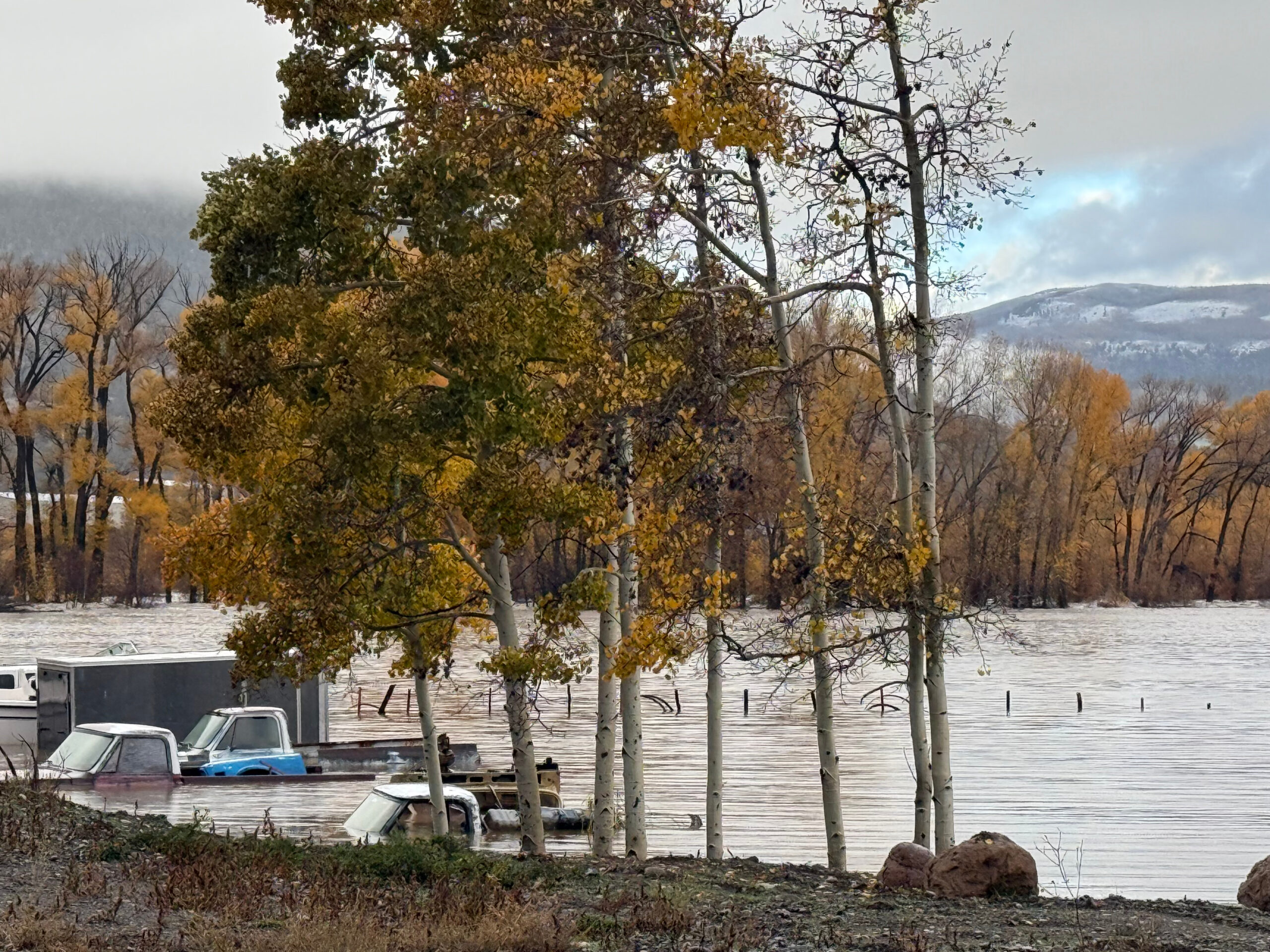
The increased rainfall could improve drought conditions, but a Colorado climate expert says the winter runoff will play a larger role.PHOENIX (CN) — Communities across the Southwest are still underwater as the region comes out of one of wettest weekends on record.Torrential storms fueled by global climate change and the strongest El Niño on record dumped more than six inches of rain across the high country of Arizona, in some places accounting for more than half the annual rainfall in just three days. From Friday to Sunday, Arizona received more rain by total volume than any other state in the country.The storms battered the entire Four Corners region, prompting Colorado Governor Jared Polis to request an emergency declaration through the Federal Emergency Management Agency for the southwestern counties of Archuleta and Rio Grande.“Devastating flooding has damaged homes and businesses, washed away roads, and disrupted the basic services Southwestern Colorado families depend on,” Polis said Saturday. “The damage documented so far exceeds what state and local resources can address alone.”The San Luis Valley, straddling Colorado and New Mexico, receivedfour times its typical October precipitation in just four days, according to Colorado state climatologist Russ Schumacher.“Much of southern Colorado had their wettest September to October period on record, and now November is off to a very wet start as well,” Schumacher told Courthouse News. “The flooding on some rivers was worse than what was experienced just 10 days ago.”President Donald Trump already partially granted an emergency declaration in New Mexico for flooding that began last week.While recent storms exacerbated existing effects in Colorado and New Mexico, Arizona was hit the hardest just in the last three days.In eastern Arizona at the foothills of the White Mountains, the small town of Pinetop-Lakeside recorded 6.2 inches of rain over the three-day period, resulting in powerful floods that washed out streets and even collapsed a bridge.Indigenous communities, including the Navajo and Hopi communities, have been particularly hard hit and warned not to return due to the risks of contaminated water, downed power lines and potential gas leaksIn central Arizona, the city of Prescott declared a state of emergency Monday morning, activating its Emergency Operations Center. Yavapai County’s emergency management service opened a shelter in conjunction with the Red Cross for those displaced by flooding.“It’s been such a large area that’s been devastated by the water its gonna take a while to get under control,” a county representative said on the phone.Verde Valley Fire Chief Danny Johnson told 12News that first responders conducted at least a dozen swift water rescues on Sunday alone.The county announced evacuation orders for multiple communities including Winslow, Cottonwood, Camp Verde and Sedona, and both the White Mountain and San Carlos Apache tribes.To the south, law enforcement rescued eight people from Sabino Canyon near Tucson on Sunday, according to the Coronado National Forest. Two others were rescued just outside that area. A National Forest representative said there were no injuries.On Friday, Arizona Governor Katie Hobbs declared a state of emergency in Navajo and Coconino Counties after high winds, hail and tornadoes struck the region the week prior. She has not yet requested FEMA assistance for the most recent rounds of flooding, and has not replied to a request for comment.According to the weather forecasting tool Weather City, Arizona has received 103% of its average annual rainfall to data. The southernmost county of Cochise has recorded 136%. This October was the second wettest on record for the city of Phoenix.The storms are expected to subside across the four corners region this week, providing some immediate relief from the surging floodwaters. While the damage has been devastating, long-term effects could mean good news for regional drought conditions.“The drought situation has turned around in a big way in southern Colorado, but at the expense of the communities that have been affected by multiple rounds of flooding,” Schumacher said.An Instagram user recorded footage of waterfalls cascading into the partially empty Canyon Lake, one of the main surface water reservoirs for Arizona’s Salt River Project. But reservoir storage across the region is still low.“Reservoir storage within Colorado hasn’t really improved that much,” Schumacher said. “It’s the downstream reservoirs that have seen most of the increases in storage. The level of Lake Powell is up almost 14 feet over the last month, but that’s still 13 feet lower than it was at this time last year.”He said it will take a few more days for the most recent rain in Colorado and New Mexico to reach Lake Powell.Thanks to above-average rainfall in September and October, high soil moisture in Arizona means the land is primed for winter runoff that could help refill aquifers. While the recent rainfall helps, the winter snowpack will prove more indicative of future conditions.“There have been some short-term benefits in terms of drought, but we will still need an above-average mountain snow year to have a more lasting improvement,” Schumacher said.The rainy season has been fueled in part by what experts have referred to as a “Super El Niño” that carried moisture from warming Pacific waters through the American Southwest.Rainfall also received a boost from tropical storms like Hurricanes Polo and Trudy, the former being the longest-lasting Category 5 storm to ever stir the Pacific. Still, the research group World Weather Attribution estimated global climate change did more to fuel the historic storm than the El Niño.“El Niño is a big part of the story,” Schumacher said. “The precise role of climate change will be a topic of research going forward, but the fact that the Pacific water temperatures are so warm right now is a result of the combination of El Niño and overall warming.”Categories / Regional, WeatherSubscribe to our free newslettersOur weekly newsletter Closing Arguments offers the latest about ongoing trials, major litigation and rulings in courthouses around the U.S. and the world, while the monthly Under the Lights dishes the legal dirt from Hollywood, sports, Big Tech and the arts.Additional Reads
Torrential rains spell disaster across Southwest
Full Article
Original Source
Read the full article at Courthousenews →KhanList aggregates and links to publicly available news content. We do not host full articles from third-party sources. Always verify important information with original sources.