
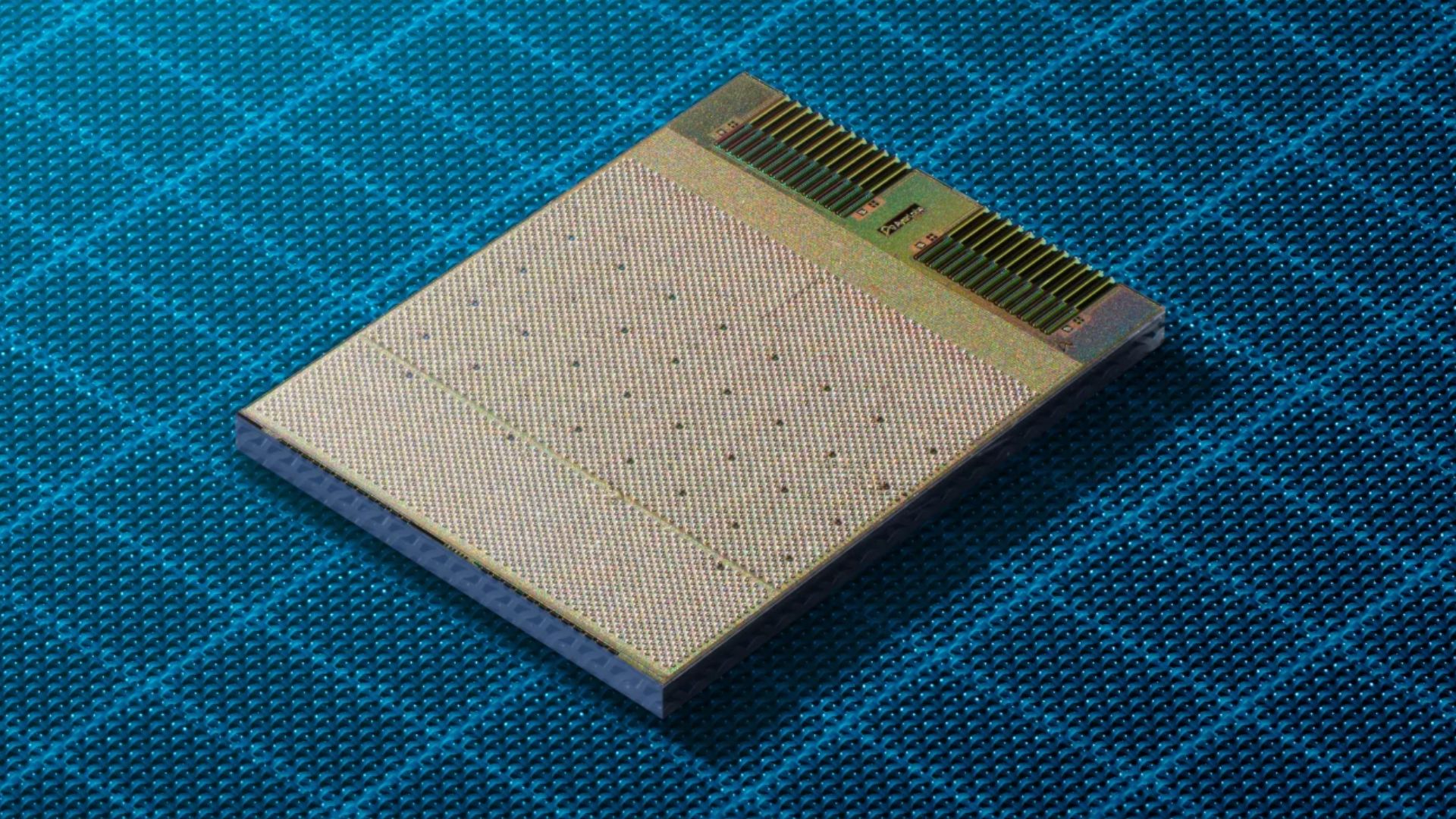
Researchers at the National Institute of Standards and Technology (NIST) have demonstrated a chip-based optical frequency comb that uses two lasers to generate precise light signals without the bulky stabilization equipment required by some earlier designs. The development could help make optical atomic clocks smaller and more suitable for use outside laboratories. Such clocks could eventually support navigation systems in drones, submarines and other vehicles when GPS signals are unavailable or jammed. The device relies on a tiny ring-shaped structure called a microresonator. Light from two lasers circulates through the ring, producing a series of evenly spaced optical frequencies that can be used as highly precise measurement references. The researchers, working with colleagues at the Joint Quantum Institute (JQI), a partnership between NIST and the University of Maryland, say the approach addresses a key obstacle in developing compact frequency combs: generating stable, high-quality signals without additional power-hungry equipment. Two lasers replace hardware Optical frequency combs work much like rulers for light. Instead of measuring distance with evenly spaced marks, they produce a series of precisely separated frequencies that allow scientists to measure light with exceptional accuracy. These devices are important components of optical atomic clocks, which use the vibrations of atoms at optical frequencies to measure time. Conventional optical frequency comb systems can require multiple components to stabilize their signals. Although researchers have already developed miniature versions using microresonators, maintaining the required signal quality can still demand additional equipment. NIST’s approach sends light from two lasers into the same microresonator. Their interaction generates the evenly spaced frequencies needed for optical measurements while avoiding the extra stabilization hardware associated with earlier single-laser methods. The researchers fabricated chips containing as many as 300 tiny ring-shaped resonators. These structures provide the optical environment needed to generate the comb signals. According to NIST, the two-laser technique produces high-quality frequency combs without relying on the bulky laboratory setup that has limited some previous designs. The demonstration concerns the frequency-comb component rather than a complete portable atomic clock. NIST has not reported a finished navigation system using the new device. Precision timing beyond GPS Optical atomic clocks could provide accurate timing references for navigation systems that cannot depend entirely on satellite signals. GPS works by using precisely timed signals from satellites to determine location. When those signals are blocked, disrupted or deliberately jammed, vehicles may need other methods to maintain reliable navigation. Compact optical clocks could eventually contribute to such systems by providing stable timing references onboard vehicles, reducing dependence on external signals. Potential applications include autonomous drones, submarines and other vehicles operating in environments where satellite navigation is unreliable. NIST also identifies mineral exploration and oil and gas surveying as possible uses for portable optical clocks. However, the research does not establish that the new microcomb can independently provide GPS-free navigation. Additional clock components and navigation technologies would be required. The next challenge is translating the demonstrated optical performance into practical instruments that meet the size, power and reliability requirements of mobile platforms. By reducing the supporting hardware needed to produce stable optical frequencies, the researchers have demonstrated one component that could help make precision timing equipment more portable. Get the latest in engineering, tech, space & science - delivered daily to your inbox.With over a decade-long career in journalism, Neetika Walter has worked with The Economic Times, ANI, and Hindustan Times, covering politics, business, technology, and the clean energy sector. Passionate about contemporary culture, books, poetry, and storytelling, she brings depth and insight to her writing. When she isn’t chasing stories, she’s likely lost in a book or enjoying the company of her dogs.
Tiny optical chip uses two lasers to generate precise signals for future atomic clocks
Full Article
Original Source
Read the full article at Interestingengineering →KhanList aggregates and links to publicly available news content. We do not host full articles from third-party sources. Always verify important information with original sources.