
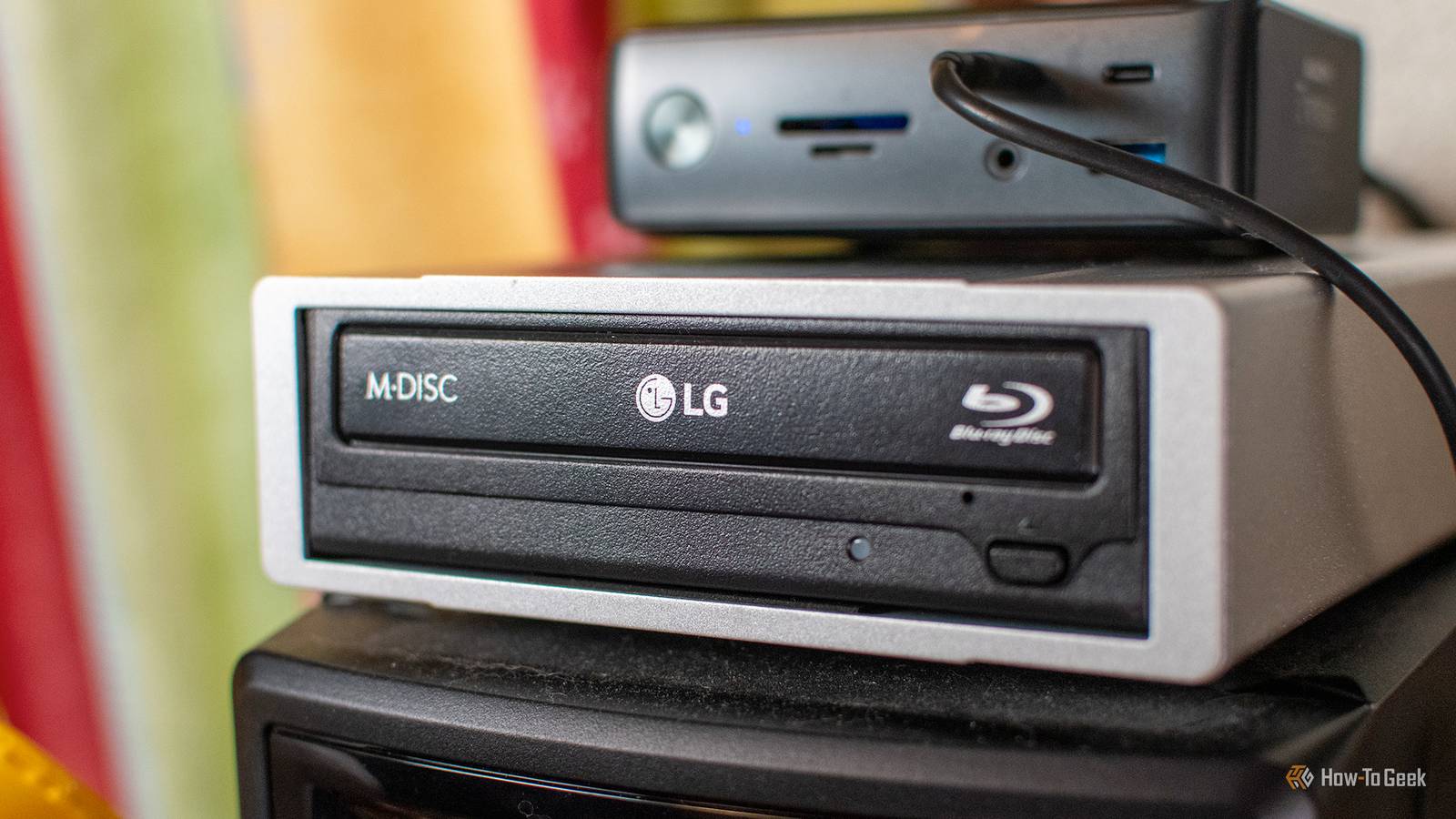
Published Nov 1, 2026, 7:30 AM EST Sydney Butler is a technology writer with over 20 years of experience as a freelance PC technician and system builder and over a decade as a professional writer. He's worked for more than a decade in user education. On How-To Geek, he writes commerce content, guides, opinions, and specializes in editing hardware and cutting edge technology articles. Sydney started working as a freelance computer technician around the age of 13, before which he was in charge of running the computer center for his school. (He also ran LAN gaming tournaments when the teachers weren't looking!) His interests include VR, PC, Mac, gaming, 3D printing, consumer electronics, the web, and privacy. He holds a Master of Arts degree in Research Psychology with a minor in media and technology studies. His masters dissertation examined the potential for social media to spread misinformation. Outside of How-To Geek, he hosts the Online Tech Tips YouTube Channel, and writes for Online Tech Tips, Switching to Mac, and Helpdesk Geek. Sydney also writes for Expert Reviews UK. He also has bylines at 9to5Mac, 9to5Google, 9to5Toys, Tom's Hardware, MakeTechEasier, and Laptop Mag. The preservation of information has always been a problem throughout history. The burning of the Library of Alexandria caused the permanent loss of so much history and knowledge, that the event itself will, ironically, never be forgotten. But what if someone offered you a backup medium that would last 1,000 years? My first reaction would be to say "prove it," but that's exactly the key selling point of "millennium discs" or M-DISCs, which aim to blow the few decades a factory-pressed CD is rated to last completely out of the water. However, the more perceptive of you have probably realized that no one is being buried with a bunch of fancy burned discs, and indeed it took less than a decade for the company that originated the technology to fold. Yet, M-DISCs are interesting in their own right, and the problem of truly long-term storage still needs a solution. A disc that promised to outlive your descendants What would they need your memes for anyway? Disc rot is a real problem. For factory-pressed optical discs, there comes a point where the seal that prevents contaminants and air from coming into contact with the metal reflective layer breaks down. The polymer itself can become cloudy and prevent the laser from passing through as well. For writable discs using dye rather than physical pits and lands pressed into the plastic, things are even more dire. The dye might hold up for a decade, but anything past that would be pushing it. So, a writable disc that would outlast any pressed factory disc by centuries? How would that work? It all comes down to that recording dye layer in typical recordable discs. The dyes are organic, which means they are subject to (relatively) rapid decay. M-DISCs replace that dye with an inorganic mineral layer. When using a compatible writer, you were etching a robust, permanent record into that data layer. The "1000 year" marketing comes from stress testing using accelerated aging. Obviously, it's just a projection based on the results of accelerated aging, but there's no doubt M-DISCs will last much longer than conventional ones. A thousand years of storage, 4.7GB at a time "Insert disc 50 now" When the M-DISC launched in 2011, it would cost about three bucks for a disc, you had to buy a special writer, and the capacity was the same as any single-layer DVD—4.7GB. Even then, 4.7GB was becoming pretty tight. Sure, you could store an enormous number of documents or images in there. However, hard drives were already measured in hundreds of gigabytes, if not terabytes. So it wasn't a practical computer backup solution. Later, the M-DISC technology would come to Blu-ray, yielding 25GB, 50GB, and 100GB discs, but this was not much of a leap from a backup perspective. It arrived as computers were losing their disc drives Drawing a blank? The 2010s are known for a few things when it comes to computer technology, and one of them is the phasing out of optical drives. Skyrim released in 2011, and it also happens to be the last PC game I ever bought on optical disc. My very next computer I built in 2016 wouldn't even have anywhere to put an internal optical drive, and the same thing was happening everywhere. This meant that Millenniata, the company behind M-DISC technology, had invented a revolutionary new data storage medium just as the market was about to leave optical drives behind seemingly for good. This decade saw the rise of cheap broadband and reliable cloud services. So who needed a writable disc when you could just back up your data to Google? Millenniata went bankrupt by 2016, and today you can still buy M-DISC products online made by companies like Verbatim, but for all intents and purposes the technology is dead. M-DISC survived, but the dream needed more than durability Just because you can still technically buy M-DISCs and use them, doesn't mean the actual problem has been solved. Even if these discs really do last hundreds or more than a thousand years, how would you even read them? The drives certainly don't last that long, and why would a future society have the means to figure out how to read these discs, even if the data was technically still readable? Other solutions, like Microsoft's Project Silica, where data is laser-etched into glass that will last indefinitely, hold more promise for data preservation through disasters and over time. The reading device to recover the information might also be easier for a future society to reproduce. The biggest problem with M-DISCs is that most of us don't need these long lifespans for our data. We need data that lasts one or two human lifespans, but otherwise it's important to keep porting information forward to new media, so it will remain readable by contemporary devices and keep pace with changes in software.
This disc promised 1,000 years. Its maker didn’t last a decade
Full Article
Original Source
Read the full article at Howtogeek →KhanList aggregates and links to publicly available news content. We do not host full articles from third-party sources. Always verify important information with original sources.