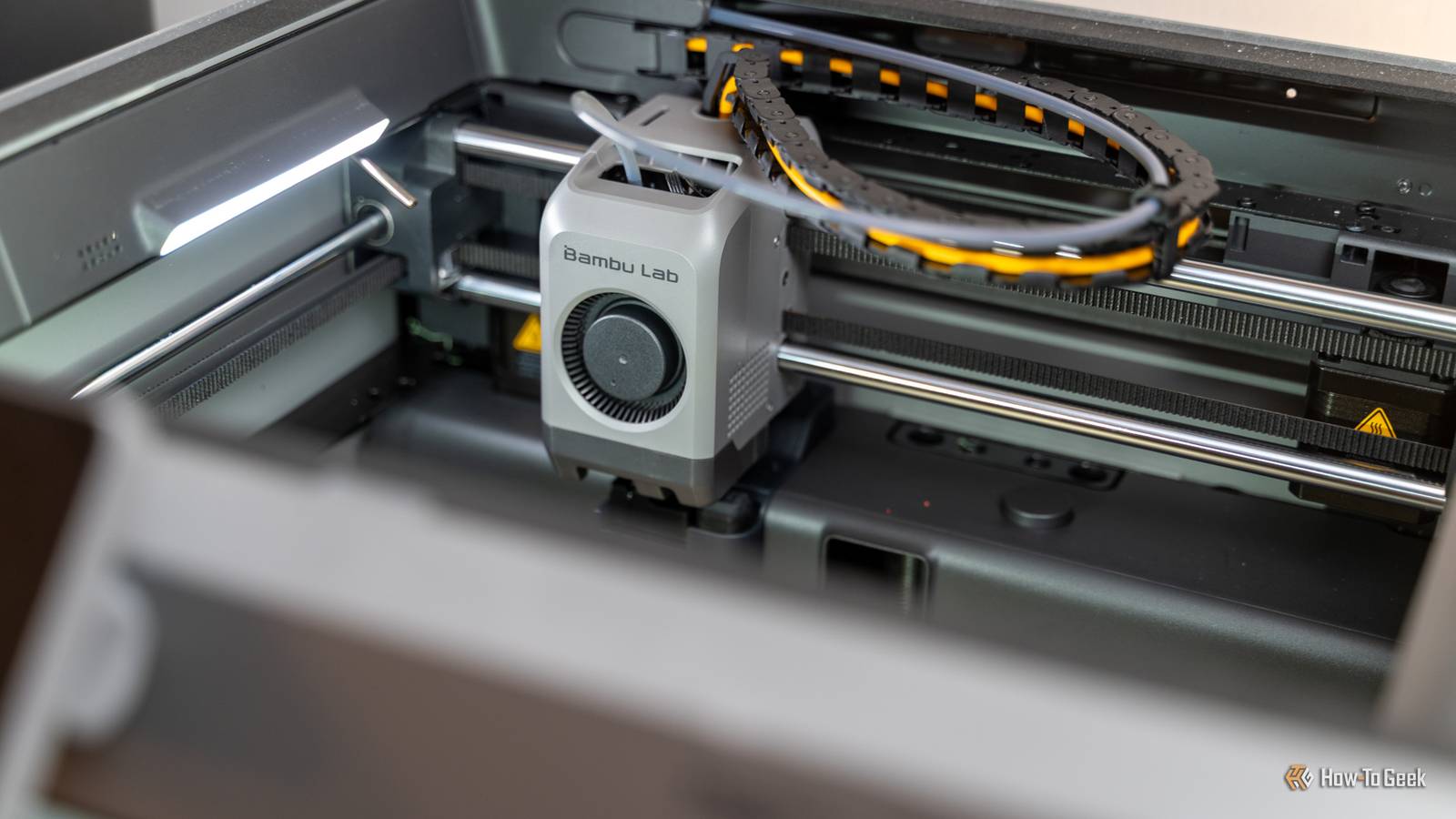
Published Jul 27, 2026, 2:46 PM EDT Patrick Campanale has been in the tech space for well over a decade, specializing in PC/gaming news and reviews, as well as maker-focused products to build small businesses. With a start in technology back in 2010 surrounding the Palm/webOS ecosystem, Patrick spent his formative years developing mobile applications as well as blogging for various publications, eventually leading to starting his own website in 2014. After running a technology blog for a few years, he stepped out of that role and into the world of high-end custom PC manufacturing and building, with a focus on YouTube video production and overclocking. Then, six years ago, Patrick joined the 9to5Toys team as an editor/writer/reviewer with over 14,000 articles being published there there, ranging from deals and roundups to in-depth reviews on the latest technology, video games, 3D printers, and more. In his free time, Patrick loves to create projects from wood using various robots and methods, including leveraging the technologies of CNCs and lasers. If Patrick isn't working on a computer or playing video games, he's likely in his 2-car garage workshop creating something unique. In addition to all this, Patrick is also a youth pastor at his local church where he feels God has called him to serve, and he loves every minute of it. Are you still using Thingiverse to find models for your 3D printer? It’s time to upgrade your 3D model search engine with these three sites that are better in just about every way. MakerWorld is the main 3D printing hub now Bambu Lab took over the 3D printing world in more ways than one Credit: Tim Brookes / How-To Geek Before Bambu Lab entered the 3D printing chat, Printables (run by Prusa) was the go-to hub for many when it came to 3D printing models. Thingiverse hasn’t been all that relevant for years, with Printables definitely holding first place for many—but Bambu Lab changed that with MakerWorld. MakerWorld quickly took the 3D printing world by storm, much like Bambu Lab printers took over the 3D printing space once they were released. These days, MakerWorld is often a 3D printer’s first stop when looking for a model—at least, for all of the 3D printing people I know. Quiz 8 Questions · Test Your Knowledge3D Printing TechnologyFrom garage prototypes to printed organs — test how much you really know about the layer-by-layer revolution reshaping our world.HistoryMaterialsMedicineIndustryFuture TechBegin Who is widely credited with inventing stereolithography (SLA), the first commercially viable 3D printing technology?AScott CrumpBHans LangerCChuck HullDCarl DeckardCorrect! Chuck Hull invented stereolithography in 1983 and co-founded 3D Systems to commercialize it. He filed the patent in 1984, laying the groundwork for the entire 3D printing industry as we know it today.Not quite — the answer is Chuck Hull. While Scott Crump invented FDM (fused deposition modeling) and Carl Deckard developed SLS (selective laser sintering), it was Hull who pioneered stereolithography and effectively launched the commercial 3D printing era.Continue In what decade was the term 'additive manufacturing' first officially standardized by ASTM International?A1990sB2000sC2010sD1980sCorrect! ASTM International formally standardized the term 'additive manufacturing' in 2009 and published comprehensive standards in the early 2010s. This helped unify the industry under a single technical definition covering all layer-based fabrication methods.Not quite — the standardization happened in the 2010s. Although additive manufacturing processes existed since the 1980s, ASTM International didn't formalize the terminology and technical standards until around 2009–2012, giving the industry a common language for the first time.Continue Which material is most commonly used in consumer-grade FDM (Fused Deposition Modeling) 3D printers?AABS (Acrylonitrile Butadiene Styrene)BPLA (Polylactic Acid)CPETG (Polyethylene Terephthalate Glycol)DNylonCorrect! PLA is the most popular material for hobbyist and consumer FDM printers because it's easy to print, biodegradable, and derived from renewable sources like cornstarch. Its low warping tendency makes it beginner-friendly compared to alternatives like ABS.Not quite — PLA is the correct answer. While ABS was once dominant, PLA has overtaken it in the consumer space due to its ease of use, lower print temperature, and eco-friendly origins. ABS remains popular in industrial settings where heat resistance matters more.Continue Which aerospace company famously used 3D printing to manufacture the fuel nozzle for its LEAP jet engine, reducing part count dramatically?ARolls-RoyceBPratt & WhitneyCGE AviationDHoneywell AerospaceCorrect! GE Aviation used metal 3D printing to produce the LEAP engine's fuel nozzle, consolidating what was previously 20 separate parts into a single printed component. The nozzle is five times more durable and 25% lighter than its predecessor, making it a landmark industrial achievement.Not quite — it was GE Aviation. Their 3D-printed LEAP fuel nozzle became one of the most celebrated examples of additive manufacturing in industry. By collapsing 20 parts into one, GE demonstrated that 3D printing could deliver real performance advantages, not just prototypes.Continue What is the term for the 3D printing process used to fabricate living tissue and organ structures using biological materials?ABiofabricationBBioprintingCBioformingDOrganogenesis printingCorrect! Bioprinting uses modified 3D printers loaded with bioinks — mixtures of living cells and hydrogels — to construct tissue structures layer by layer. Researchers have already bioprinted skin, cartilage, and simple vascular structures, with full organ printing remaining an ambitious frontier goal.Not quite — the correct term is bioprinting. While biofabrication is a broader field that includes bioprinting, the specific process of layer-by-layer fabrication using cell-laden bioinks is called bioprinting. It's one of the most exciting medical frontiers, with potential to one day eliminate organ transplant waiting lists.Continue What major limitation of most consumer FDM 3D printers makes them unsuitable for printing functional metal parts directly?AThey cannot achieve the temperatures needed to melt most metalsBMetal filament clogs the extruder permanentlyCMetal objects printed with FDM have no structural integrityDConsumer printers lack the resolution for metal detailCorrect! Most metals require temperatures well above 1000°C to melt, far beyond the 200–300°C range of standard FDM hot ends. Industrial metal 3D printing uses processes like DMLS (Direct Metal Laser Sintering) or EBM (Electron Beam Melting), which use high-powered lasers or electron beams to fuse metal powder.Not quite — the core issue is temperature. Consumer FDM printers top out around 300°C, while most structural metals melt well above 1000°C. Metal-infused filaments exist but they contain metal powder in a plastic binder, producing decorative rather than truly functional metal parts.Continue Which emerging 3D printing technology can fabricate objects in seconds by projecting light into a resin vat, rather than printing layer by layer?AContinuous Liquid Interface Production (CLIP)BVolumetric printingCMulti-jet fusionDBinder jettingCorrect! Volumetric printing, pioneered by researchers at UC Berkeley and Lawrence Livermore, projects computed tomography-style light patterns into a rotating resin vat to solidify an entire 3D object simultaneously. It's dramatically faster than layer-based methods and can even print around pre-existing objects.Not quite — the answer is volumetric printing. While CLIP (developed by Carbon3D) does eliminate discrete layers using oxygen-permeable membranes for speed, it still builds objects progressively. Volumetric printing is the technology that truly breaks the layer-by-layer paradigm by solidifying an entire shape at once.Continue The RepRap project, launched in 2005, was significant to 3D printing history primarily because of what key innovation?AIt introduced the first color 3D printerBIt created the first open-source, self-replicating 3D printerCIt developed the first metal-compatible consumer printerDIt was the first printer to use PLA filamentCorrect! The RepRap (Replicating Rapid Prototyper) project, led by Dr. Adrian Bowyer at the University of Bath, aimed to create an open-source printer that could print most of its own parts. This philosophy sparked the DIY 3D printing revolution and directly led to affordable consumer printers like the early Makerbot and Prusa machines.Not quite — RepRap's big contribution was being open-source and self-replicating. By releasing designs freely and building a machine that could reproduce itself, Adrian Bowyer's project democratized 3D printing. It seeded an entire ecosystem of affordable printers and passionate maker communities that transformed the technology from industrial to personal.See My Score Challenge CompleteYour Score/ 8Thanks for playing!Try Again The popularity of MakerWorld is due in part to how many people have Bambu Lab printers these days. The files on MakerWorld offer one-click printing for all Bambu Lab printers, making it a simple solution for those who are already in the ecosystem. For those who don’t have a Bambu printer, 3MF and STL files can be opened in any mainstream slicing software, like PrusaSlicer or Orca Slicer, and be sliced for just about any machine. MakerWorld offers a lot of bonuses for posting models there. For instance, I gained enough points for $120 in Bambu Lab gift cards just by posting some simple models I made. MakerWorld also now offers full monetization systems for designers, and it all integrates with the Bambu Handy app to make starting a print easier than ever. If you’re just wanting to find a 3D print model for your favorite board game or DIY tool, MakerWorld is a fantastic place to start. Cults3D is the perfect place to fill your niche 3D printing desires Just don’t expect everything to be free While MakerWorld offers primarily free downloads and a wide range of models with a library that’s growing daily, Cults3D is a bit more niche in the best ways possible. Cults3D is a place where the more premium and high-end 3D modeling artists publish their work. This is because Cults3D offers native monetization options where a designer can require payment up front for a model. Because many models on Cults3D cost money—some as low as $0.99—you can expect the library to be a bit more curated and of a higher quality. Typically speaking, the designers who are posting on Cults3D have a bit more design experience and CAD knowledge than the average person on MakerWorld or other 3D printing sites. Let’s take this MBV Super Trac 2000 1:14 RC model as an example. It’s a $70 3D model, which seems like a lot—and it is. But, when you consider that this model is a 1:1 replica at a 1/14 scale of a Super Trac 2000 tractor that’s designed to be turned into an RC car, it starts to make a bit more sense. Or, take this Mazda Miata MX-5 Rocket Bunny model that’s $15 as another example. The model is a 1/24 scale of the Mazda Miata MX-5 car, down to the interior seats, steering wheel, and even radio. Some manual painting will definitely be needed, and it works best with a resin printer, but the model is extremely detailed. All that to say, if you’re looking for a niche 3D print file that isn’t on MakerWorld, check Cults3D, it might have it so long as you’re willing to pay for it. If you can’t find a model on Thangs, it probably doesn’t exist Thangs has a massive selection of free and premium models Credit: af_inventions | Thangs Thangs is a site very similar to Cults3D, though it’s definitely built around communities rather than individual designers. For instance, the MultiBuild (formerly MultiBoard) community lives on Thangs. Thangs is where all of the official MultiBuild downloads are located. Then you have models like this desk organizer that looks sleek and modern, which is free to download. Or this two-handed sword, which requires a monthly subscription or single purchase to download. In the past, Thangs had a unique feature in that it let you search multiple websites from one place, which was a big draw for many to use it. That changed in early 2026, but Thangs is still a great place to dive deeper into design communities or support designers directly. Thangs is probably my least-used 3D printing site, but it’s still one that I like to keep in my back pocket. Like Cults3D, the models are often higher-quality than MakerWorld and there’s a larger selection of more eclectic or niche prints available on Thangs than anywhere else. Bambu Lab P2S Build Volume 256x256x256mm Printing Speed 600mm/s The Bambu Labs P2S 3D printer is ready to go out of the box and can have you printing within 15 minutes. It features up to 20-color printing with the AMS unit, has an upgraded built-in camera for remote monitoring and time lapses, and has an enclosed body for printing even high-temperature filament. There are more ways to download 3D prints than there are movies At the end of the day, you can get 3D models from just about anywhere. Thingiverse, Printables, MakerWorld, Cults3D, Thangs, even Yeggi—there’s a near infinite number of sites to download from. However, I typically choose one of these three sites because they’re tried and true when it comes to quality and usability of the 3D print models, and that’s what matters to me.
Thingiverse used to be the gold standard for 3D printing models, but these 3 sites beat it now
Full Article
Original Source
Read the full article at Howtogeek →KhanList aggregates and links to publicly available news content. We do not host full articles from third-party sources. Always verify important information with original sources.