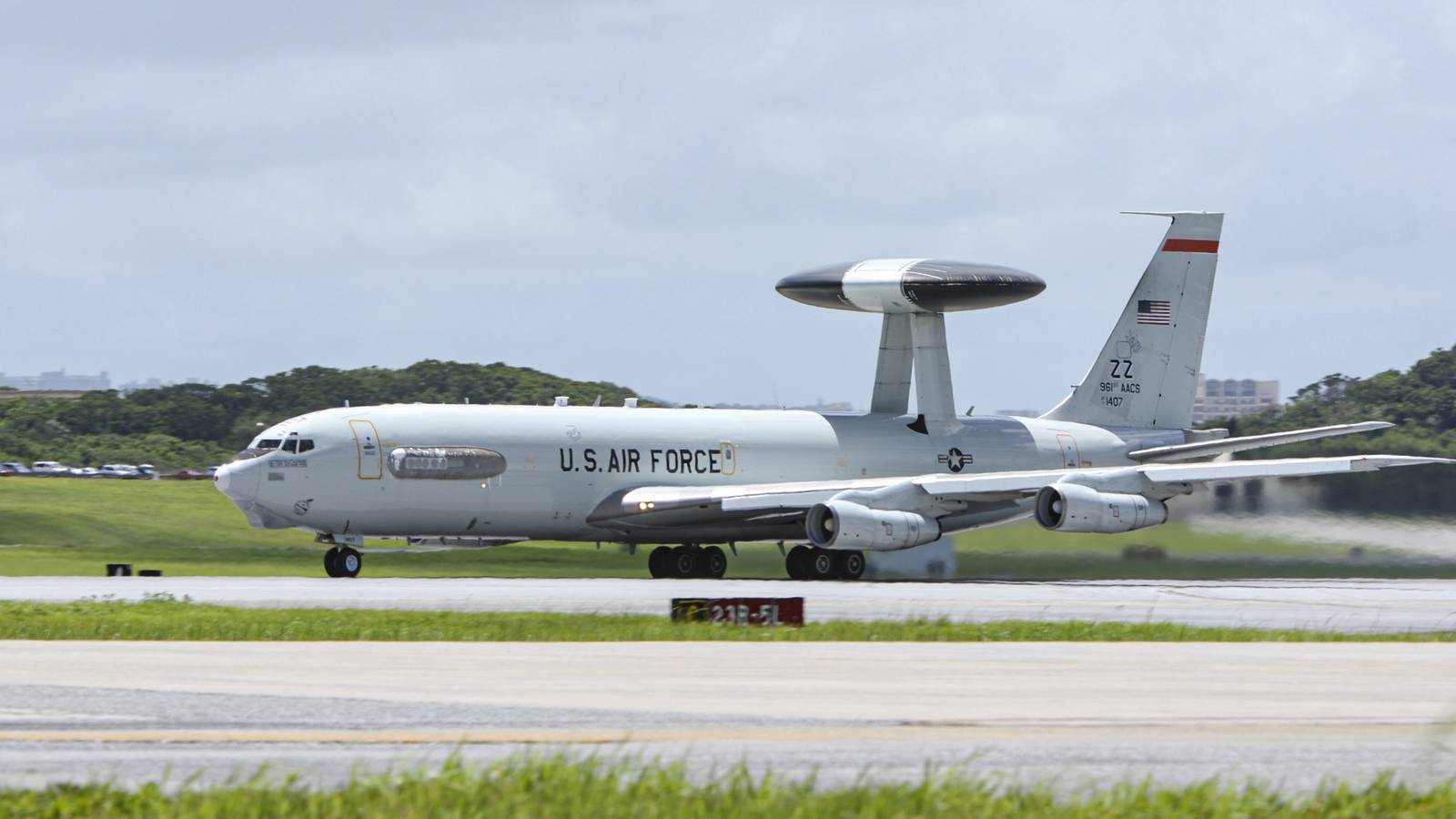
Published Jul 27, 2026, 3:00 PM EDT Luke Diaz is a freelance military writer with experience with active duty experience in the US Navy as well as defense and industrial engineering. He is a former Naval Flight Officer who performed tactical air control on the carrier-based E-2 Hawkeye. The US Armed Forces are in the midst of a watershed moment as troop levels are steadily decreased in Europe and the Middle East while simultaneously ramping up on the other side of the globe in what has been dubbed the 'Pivot to the Pacific.' The reason for this dramatic shift in military force posture is due to the rising security concerns over aggression in the South China Sea by the Chinese Navy and Air Force . The People's Liberation Army Air Force and Navy have made significant technological strides in recent years in areas like standoff missiles, hypersonic munitions, stealth fighter jets, and aircraft carriers. As they gain Blue Water naval might and superior air power, their forces have aggressively pushed out into open seas and even penetrated the territorial aerospace of their regional neighbors. There does not appear to be any slowdown in the new arms race as China established its first overseas military installation in Djibouti, Africa, and flew their first sixth-generation fighter jet prototypes in 2024. In order to check the growing challenge to America and its allies in the Indo-Pacific region, there are several historically strategic bases located in what is known as the first and second island chain. Kunsan Air Base The fighter jockeys on the tip of the spear Credit: US Air Force The 8th Fighter Wing is the presiding unit at this strategically vital installation in Korea. In the event of hostilities with the People's Republic of China, the squadrons deployed to this Air Base are some of the most forward-positioned combat air units in the entire region. The airfield is bristling with both US and Republic of Korea forces as it is situated just 240 miles (385 km) from the border of the PRC. The primary mission of the base is to conduct rapid counter-air, introduction, and close air support operations. Fighter jets are core platforms at Kunsan to disrupt enemy ground, air, and sea forces. In the event of a 'shooting conflict,' invasion would be expected over land and amphibiously along the coastline of Korea. While the base is in significant jeopardy of being attacked due to its close proximity to the enemy's front line, that also allows it to provide extremely rapid response times to troops on the ground. Historically, the predominant airframe seen at Kunsan was the General Dynamics F-16 Fighting Falcon, but they are being transitioned out in favor of the new Lockheed Martin F-35 Lightning II. The squadrons located here have traded in their legacy multirole fighter for a fifth-generation stealth platform to counter the growing complexity of Chinese integrated air defenses. Adding to the necessity for a more modern fleet, the PLAAF has amassed a large number of the Chengdu J-20 Mighty Dragon stealth fighters, with over 1,000 anticipated by the end of the decade. Osan Air Base Tactical air ops command and control Credit: US Air Force Also located in Korea, the 51st Fighter Wing houses the 7th Air Force Headquarters at this airfield, which is home to the regional air operations center to coordinate theater-wide air defense. Almost the exact same distance from the territorial border of China, the extreme proximity of this base makes it a key launchpad for strike aircraft in the event of open hostilities. The F-16 has been a workhorse at this base and, until only recently, the Fairchild A-10 Warthog was also a mainstay of the fighter squadrons at Osan. Osan is the C2 'brain,' or command and control, of air warfare over the Korean Peninsula as well as the wider battle space of the Western Pacific. The forces here do this critical mission by maximizing intelligence, surveillance, and reconnaissance assets to provide a real-time battlespace 'picture' over data link through multiple media forms. There are a number of ISR drones and crewed aircraft as well as many fighter jets stationed at the base. While all of the A-10 Thunderbolt II tank busters have officially been retired from the airfield, the F-16 Vipers will still be around for many years. They are undergoing extensive avionics upgrades, outfitting them with advanced Active Electronically Scanned Array radars to heavily bridge the gap with fifth-generation fighters like the F-35. They will be a core part of the 'high-low' fleet of the Air Force of the future to provide close air support and other missions that do not require stealth technology, which frees up more 'exquisite' airframes for higher-risk missions. Kadena Air Base Home of air superiority in the Western Pacific Credit: US Air Force Hosted by the 18th Wing of the Pacific Air Forces, the air base is a linchpin of the first island chain and of the entire defense network of the Indo-Pacific theater. This is the main fighter hub close to the Taiwan Strait. If Kadena is knocked out, the US loses its immediate ability to establish air superiority over the waters where an invasion would take place. It forces US fighters to fly from much further away, exhausting pilots and fuel before they even reach the fight. Known as the 'Keystone of the Pacific,' this base hosts arguably the most diverse and multi-domain aircraft fleet in the entire US military inventory. Kadena acts as a massive joint-service hub where the Air Force, Navy, Marine Corps, and allied nations pool their assets. Following the phased retirement of Kadena's aging, legacy F-15C/D Eagles, the base is actively transitioning to a permanent contingent of Boeing F-15EX Eagle II fighter jets but is supplemented by next-gen fighters like the F-35 and even the Lockheed Martin F-22 Raptor. The base serves as the eyes and ears of the Pacific, feeding sensor data from vast distances across the open ocean with its fleet of ISR and early warning aircraft like the Boeing RC-135 Rivet Joint, E-3 Sentry, and P-8A Poseidon, as well as drones like the MQ-9A Reaper. The US Air Force flies the Rivet Joint and Sentry, but the US Navy and allies like Japan and Australia operate their Poseidon aircraft from the airfield. The Japanese Air Self-Defense Force has a large contingent located at nearby Naha International Airport but also shares the field at Kadena. Misawa Air Base The first island chain fighter hub Credit: US Air Force The 35th Fighter Wing of the PACAF is charged with the defense of this crucial airfield in Aomori, Japan, from which it anchors the northern flank of the First Island Chain. Misawa is home to specialized "Wild Weasel" fighter squadrons. Their exact job is to hunt down and destroy enemy radar and surface-to-air missile systems. China is expected to target Misawa early to protect its own domestic air defense grid from being dismantled by US electronic warfare and anti-radiation missiles. The base is currently undergoing a major transition from the F-16 to the F-35. Its legacy Vipers have been sent to Korea as the new Joint Strike Fighters arrive, with plans for a total of 48 F-35A jets expected to be delivered. Because Misawa is a heavily integrated bilateral base, the US forces operate alongside highly Japanese units that also fly the JSF. On top of the fighter jets, its strategic location at the northern edge of Japan also makes it a valuable launchpad for P-8 maritime patrol aircraft as well. Yokota Air Base America's air bridge across the pacific Credit: US Air Force PACAF's 374th Airlift Wing is the resident unit that manages this vital logistical artery for the entire Western Pacific Theater. Just 28 miles (45 km) northwest of central Tokyo, Yokota is one of the most important command sites in the first island chain, hosting the headquarters of the US Forces Japan. Combat aircraft use huge sums of fuel, parts, and heavy munitions within days. If China were successful in cratering Yokota’s massive runways, the adversary would cut off the flow of transport planes carrying the critical supplies needed to sustain a high-intensity conflict. The 36th Airlift Squadron operates the Lockheed C-130J Super Hercules from Yokota to support tactical cargo drops, troop movements, and humanitarian disaster relief across the region. Meanwhile, the 21st Special Operations Squadron flies the Bell Boeing CV-22B Osprey tiltrotor. But because of its important logistical role, it is frequently home to the McDonnell Douglas C-17 Globemaster III, Lockheed C-5M Super Galaxy, as well as the Boeing KC-46A Pegasus and KC-135 Stratotanker. The airfield supports operations throughout the Pacific Theater in terms of logistics, diplomatic travel, and tactical missions. It's not uncommon to see anything from an F-35 to an RQ-4 Global Hawk or a Learjet flown by the 459th Airlift Squadron. It is also a joint command center with the JASDF, and many different airframes from the SDF frequent its airstrip regularly. Andersen Air Base Stronghold of the heavy hitters Credit: US Air Force Currently, undergoing major improvements to significantly enhance its flight line capacity and missile defense, this base falls under the purview of the 36th Wing of PACAF. Andersen is America's fortress of air power in the second island chain. It is a launchpad to reinforce positions in the first island chain and serves as the landing point of the air bridge from the continental US for incoming troops. While fighters can't easily reach the mainland from here without heavy refueling, long-range bombers like the Boeing B-52 Stratofortress or Northrop Grumman B-2 Spirit and B-21 Raider can launch from Guam. These strategic strike platforms carry immense volumes of anti-ship cruise missiles. China would likely use its long-range intermediate ballistic missiles to target Guam specifically to sink or destroy these bombers on the ground before they can devastate the invasion fleet. For that reason, the base is currently installing 16 new batteries of Patriot and THAAD missile defenses.
These 6 Indo-Pacific Air Force Bases Would Decide The Opening Hours Of A Major War
Full Article
Original Source
Read the full article at Simpleflying →KhanList aggregates and links to publicly available news content. We do not host full articles from third-party sources. Always verify important information with original sources.