
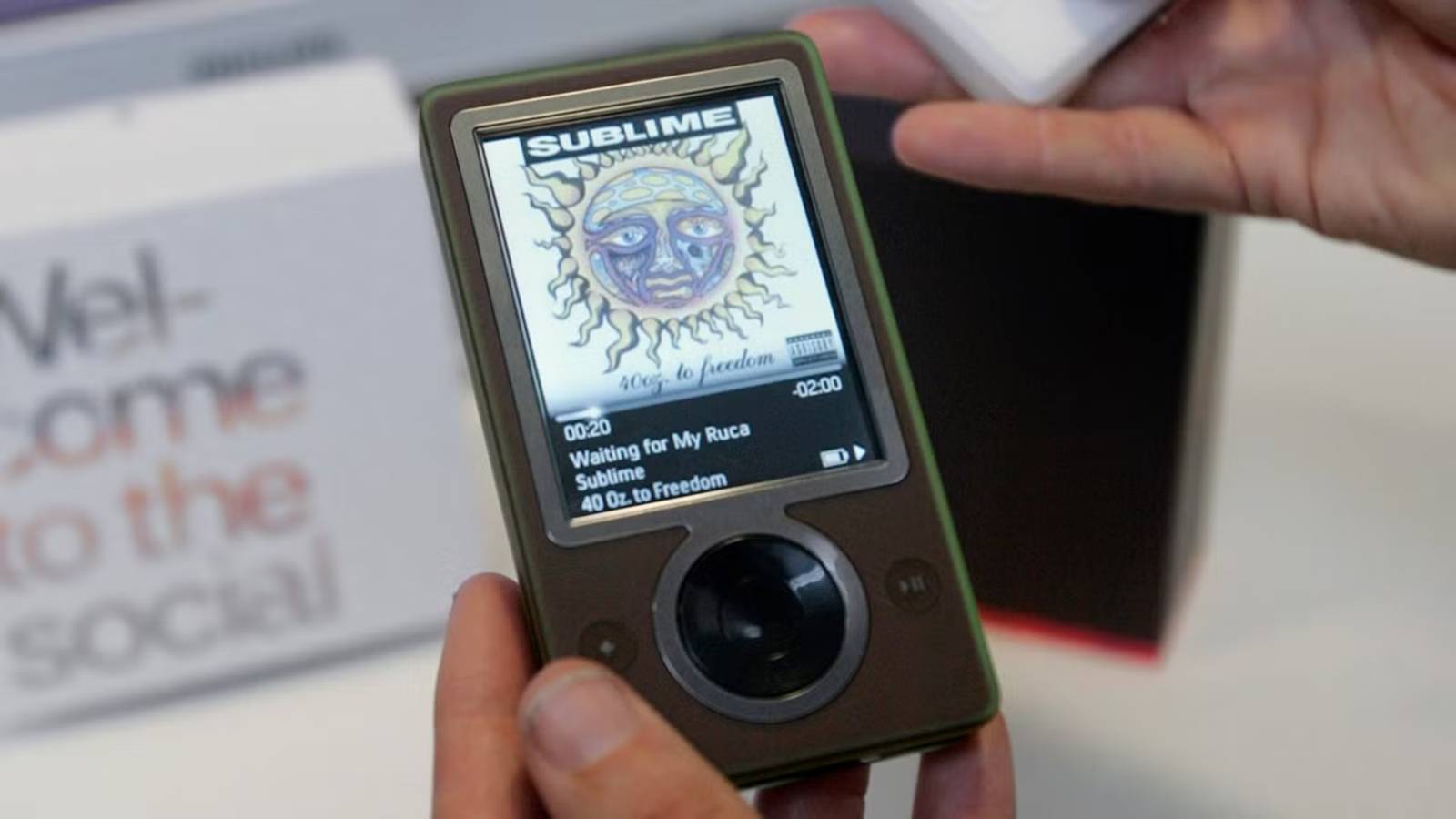
Published Nov 21, 2026, 1:30 PM EST His love of PCs and their components was born out of trying to squeeze every ounce of performance out of the family computer. Tinkering with his own build at age 10 turned into building PCs for friends and family, fostering a passion that would ultimately take shape as a career path. Besides being the first call for tech support for those close to him, Ty is a computer science student, with his focus being cloud computing and networking. He also competed in semi-pro Counter-Strike for 8 years, making him intimately familiar with everything to do with peripherals. On this very month 20 years ago, Microsoft released the Zune. It was their attempt to compete with Apple's massively successful iPod, but instead of trading blows with it, the Zune became a punchline about a "squirt" button and a failed late attempt to capture market share. Microsoft canned it in 2011 and switched off the very last Zune services in 2015, and by any commercial measure, it was a flop, but I think it deserved better. The Zune was far from perfect, but a lot of its fingerprints are all over what personal music devices ended up becoming. The Zune hardware got good really fast It didn't start pretty, but it finished strong Image credit: StudioYale The original Zune, later renamed to the Zune 30, was not a sight for sore eyes. Toshiba was responsible for building it, and while it was more or less functional, it felt like it lacked the polish of the iPod. It was a chunky block that came in black, white, and that now infamous brown color, and had that circular control pad that was clearly inspired by Apple's click wheel. Second-generation Zune 80 and Zune 4 models | Image credit: Bkwparadox (Wikipedia) (CC BY-SA 3.0) Despite all of that, it shipped with a larger 3-inch screen to the iPod's 2.5, had an FM tuner, and was capable of Wi-Fi from day one. Most of the complaints were fixed with the second generation of devices, which ditched the circular control pad for the square Zune Pad. It was a touch-sensitive surface you could swipe on to fly through long playlists, or press like a d-pad. It got much better reviews than the first generation, but the hardware didn't stall there. Credit:Tech Crunch The Zune HD came in 2009, just three short years after the original Zune 30, and it had an OLED touchscreen, an Nvidia Tegra chip, built-in HD Radio receiver, and docking functionality that could send 720p video to a TV. The app selection was thin compared to the iPod touch, but it had the Apple equivalent beat on screen quality, radio, and video output. Zune Pass brought music streaming to users before it was cool The software part of Zune was underrated Microsoft stumbled out of the gate with the software side of things too (which we'll get to), but Microsoft's Zune Pass was by far their best idea. Zune Pass gave subscribers unlimited downloads from the Zune Marketplace catalog for $14.99 a month. You could play songs on up to three PCs and three Zune devices for as long as the subscription stayed active, which is pretty generous in retrospect. Apple’s model at the time was primitive by comparison: pay 99 cents per song and own it. Microsoft was betting that people would rather rent a huge library than slowly build their own, and it might've been just a bit too early. In November of 2008, it went a step further to try and capture more market share by letting subscribers keep 10 tracks every month. Those were DRM-free MP3s that stayed theirs even if they cancelled. If you bought more than a handful of songs a month, Zune Pass was a better deal than iTunes, and that helped it gain a cult-like following into the late 2000s. Spotify wasn't going to hit the US until 2011, and Apple didn't get around to launching its own music subscription service until 2015, so in retrospect, Zune Pass was a bit prophetic in a way. Microsoft was 100% correct in where the market was heading, it were just a bit too early. The Zune wasn't long for this world You're not using a Zune today for very valid reasons The Zune wasn't hard done by or "robbed" of success by Apple—in some ways it was too early, and in a lot of ways it was too late. Microsoft brought the Zune to market five years after the iPod, at which point Apple had sold more than 100 million of them. That's an absolutely massive customer base for iTunes, and even a behemoth like Microsoft wasn't going to be able to pull users from their existing music libraries and click wheels. Microsoft also didn't do a great job at convincing people to do so: Zune's were priced roughly in line with what iPods were selling for, so the value argument was dead in the water. There are also a lot of Zune features that depend on another person having a Zune, like the very unfortunately-named "squirt" feature, which allowed users to send songs to another Zune over Wi-Fi. Sounds cool, but DRM implications meant a shared track was limited to three plays within three days, so it's not the killer feature that it might sound like on the surface. Then there were the trust issues. The Zune was incompatible with music bought from Microsoft’s own MSN Music store, which closed the day the Zune launched. Then, in 2008, Microsoft announced it would shut down the MSN Music license servers that customers needed to authorize new devices, just two years into a promised five. It backed down after a backlash and kept them running through 2011, but the damage was done. If you’d been burned by Microsoft’s music services once, the perceived safety of an iPod purchase with and iTunes music library made sense, and honestly, I don’t blame anyone who went that route. Zune: gone but not forgotten The Zune had no business beating the iPod. It simply couldn't compete in a completely saturated market, and Apple's formula ended up being ironclad. It executed brilliantly on future devices and innovated at a pace that was just fast enough to leave competitors in the dust while not alienating their users. But the Zune wasn't as bad as we might remember it. It shipped hardware and software that could compete with any media player, but it was simply a case of right place, wrong time.
The Zune was one of Microsoft's biggest flops, but I still think it deserved better
Full Article
Original Source
Read the full article at Xda-developers →KhanList aggregates and links to publicly available news content. We do not host full articles from third-party sources. Always verify important information with original sources.