
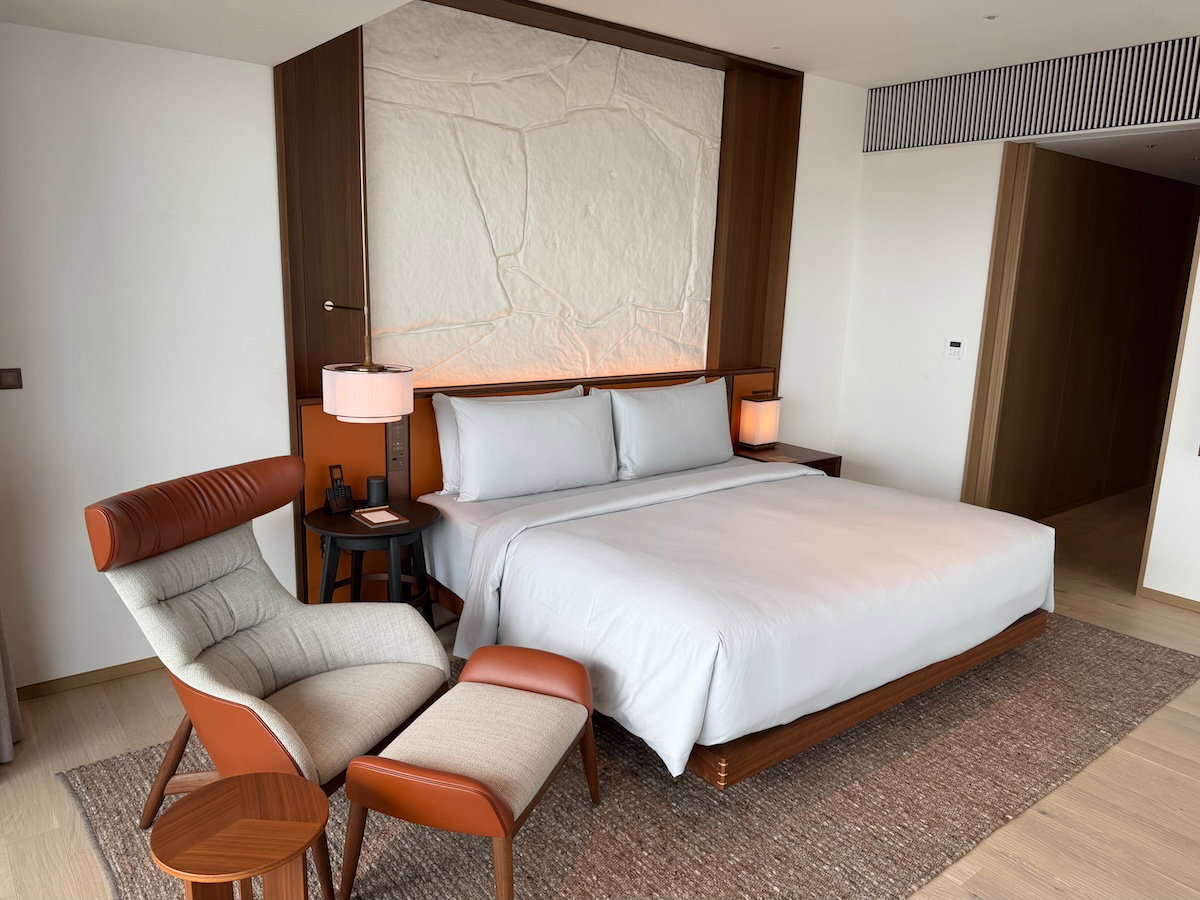
I recently completed a trip to Japan, where I stayed at Patina Osaka, which was recently rated the world’s best hotel by Travel + Leisure. It got a perfect score of 100 (and for the record, these ratings use decimals, so it wasn’t 99.XX, but literally 100.00). I’ll be reviewing this property shortly, but before I do, I’d like to discuss the topic of hotel awards and guest expectations more broadly. Obviously we live in peak recommendation culture era, especially in travel. There’s a big circle jerk (pardon my English) between hotels and publications — hotels love to get awards, and publications and other sources like to have their name marketed for free, for issuing certain rankings. And when you consider the way many people get information nowadays (through short form video, where “world’s best hotel” certainly gets some attention), it’s a great marketing technique. While “The World’s 50 Best” hotel rankings are perhaps the most anticipated by the industry, Travel + Leisure also has quite some pull (for the record, “The World’s 50 Best Hotels” list ranked Patina Osaka as number 33). So I’d like to talk about that briefly, including the psychology of how these rankings impacts consumers… or at least me! Being one of the world’s best hotels is great for ratesBeing one of the world’s best hotels is bad for expectationsBottom line Being one of the world’s best hotels is great for rates Hotels of course love to win awards that rank them as being among the best hotels in the world. It doesn’t take an economist to figure out why: The average person actually puts weight into these rankings It greatly increases demand for stays at the property, because who wouldn’t choose one of the best hotels in the world, if it’s within their budget? That increased demand also allows hotels to jack up their rates, because that’s how supply and demand works So yeah, these awards are the best thing that can happen to a hotel’s business (the above reference to “great” of course refers to how hotels should feel, rather than how guests should feel). Highly rated hotels can command higher room rates Being one of the world’s best hotels is bad for expectations Let me be perfectly honest, without giving away too much. I’ve already reviewed the Waldorf Astoria Osaka, and had an excellent stay. After that, I immediately went to the Patina Osaka. I was expecting I would come away with an even better impression, given that this is the world’s best hotel according to Travel + Leisure, while it’s the 33rd best hotel in the world according to “The World’s 50 Best” hotel rankings. The Waldorf Astoria Osaka otherwise doesn’t make either of those lists. The Patina Osaka was excellent, don’t get me wrong. I really enjoyed my stay. However, it had a couple of minor downsides, and I couldn’t help but walk away a bit disappointed. Ford (who wasn’t with me) was curious to hear about my stay at Patina Osaka, and when he asked me via text how it was, I said it was “pretty good.” Now, that’s probably not fair, because it’s a great hotel. But I also think it’s a good reminder of how perception of a hotel (or any experience, more broadly) comes down to the experience we actually had, compared to the experience we thought we were going to have. So when a hotel rating would have you believe that you’re about to have the most amazing hospitality experience of your life, and then it’s “just” very good, you can’t help but almost feel a little disappointed. Over the years, I’ve spoken to some hoteliers who work at properties that have won these same types of high ratings, and they have also expressed this same sentiment — it’s great for business, but it makes it hard for staff. As you’d expect, people think everything will be perfect, and that the hotel won’t say “no” to anything, because after all, this is the best in the world. The irony, of course, is that most of the hotels winning these awards have a high room count and those definitely aren’t my favorite kinds of hotels. But that gets at how these ratings are often handed out — whether it’s an expert panel or just the public voting, hotels with higher room counts are much more likely to actually have people staying who can contribute to these ratings, rather than a small hotel with just a dozen rooms. Of course I should know this as well as anyone, and not have my expectations impacted in this way. You really have to view these rankings more as a list of solid luxury hotels, rather than viewing them as some sort of holy scripture that needs to be followed. I mean, on the airline front, it’s kind of like Hainan Airlines, Korean Air, and Asiana Airlines, being Skytrax 5-star airlines, while some other world class airlines don’t make the list. But yeah, I think we all know what’s really going on there… It’s hard to manage expectations when guests expect perfection Bottom line We’re seeing an increasing number of publications claiming to have some sort of authoritative list of the world’s best hotels. I always enjoy seeing which hotels rank, though it’s really important to not to read too much into the lists. From the perspective of hotels, getting a very high ranking absolutely allows them to raise rates, given the increase in demand. The problem is that with that increase in demand also comes an increase in expectations. If you stay at a hotel that markets how it won an award for being the world’s best, you’re expecting a life changing hospitality experience, rather than just another good hotel stay. What do you make of all of these hotel rankings, and the psychology of it?
The World’s Best Hotel Awards Are Great For Rates, But Hard On Expectations
Full Article
Original Source
Read the full article at Onemileatatime →KhanList aggregates and links to publicly available news content. We do not host full articles from third-party sources. Always verify important information with original sources.