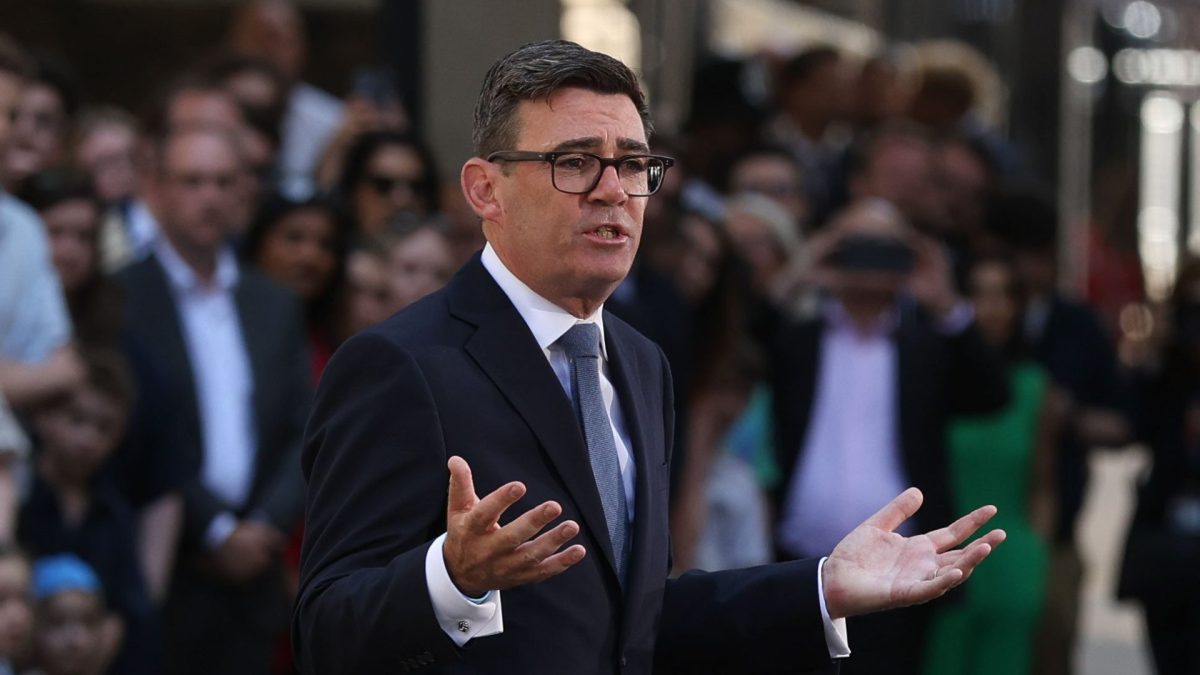
Andy Burnham became the UK’s seventh Prime Minister in a decade on Monday, telling crowds outside No 10 that his arrival marked “a moment for reflection and new resolution”. He used his inaugural speech to make his first official announcement in the role – a £340m fund to end rough sleeping, claiming “this is something a government can fix if it chooses to”. The former mayor of Greater Manchester also said he would set out further measures on Tuesday to give people “breathing space” on the cost of living, “including how we pay for them”. Shorts But Burnham has previously committed to sticking with Labour’s 2024 manifesto, ruling out rises to income tax, national insurance or VAT, and following Rachel Reeves’s fiscal rules. Deputy Labour leader Lucy Powell told the BBC on Sunday that Burnham’s leadership would be a moment for “clearing the decks of all the other things that might distract” from the cost of living and the economy, while insisting he would stand by the promises made in Labour’s manifesto. Burnham is still to set out many of his priorities, but here is who could win or lose out under his administration. Winner: Households Burnham said on Monday that he is preparing a package of cost of living measures for his first days in office. These are expected to be announced on Tuesday. Among the options reportedly being considered is a cut to VAT on energy bills, an idea previously championed by Home Secretary Shabana Mahmood, with claims it could save around £94 a year. His team is also said to be looking at pushing older wind and solar farms on to fixed-price contracts to avoid the surges in electricity costs that get passed on to household bills. Separately, Burnham’s team is reportedly considering extending the £2 bus fare cap he introduced in Greater Manchester in 2022 to the rest of the country, building on his record of bringing local buses back under public control through the Bee Network model. Cost of living has become an increasing concern for the public. According to ONS data published in May, 79 per cent of adults in Great Britain reported an increase in their cost of living in April compared with the previous month. Burnham has also confirmed he will scrap the previous government’s digital ID scheme, which the Office for Budget Responsibility estimated would have cost £1.8bn over three years. His office said the “time and resource” earmarked for the scheme would instead go towards helping with the cost of living. Winner: High-street businesses During his Makerfield by-election campaign, Burnham pledged to cut business rates – the property tax paid by commercial premises – for pubs, clubs and music venues by 20 per cent. He also said he would bring in a higher threshold before small hospitality and retail firms start paying business rates at all – the first change of its kind since 2017. The Prime Minister said he wants to fund it through higher levies on warehouse operators such as Amazon and on owners of empty high-street properties, arguing it is time to shift the tax burden away from struggling town centres. He has also suggested he is open to looking again at the increase to employer national insurance introduced at Reeves’s first Budget in October 2024, claiming it “wasn’t the right decision”. He told BBC Newsnight earlier this month there was “more that needs to be done to listen to the voice of small business” affected by the change, but has so far stopped short of committing to reverse it. Winner: Pensioners Burnham has committed to keeping the state pension triple lock until at least 2029, previously telling The i Paper that abandoning the manifesto commitment would be “very damaging”. The guarantee ensures the state pension rises each year by whichever is highest of inflation, wage increases or 2.5 per cent. But that commitment could have a shelf life. Liam Byrne, the former Cabinet minister, argued in a June essay for the think-tank Bright Blue that the policy should gradually be replaced with “a more stable uprating mechanism”. Lord Jim O’Neill, an economist advising Burnham, has said he has been “trying to convince” him it should go. Burnham has not commented on what he would do with the policy beyond 2029. Burnham also told BBC Question Time in June that he wants his team to “have a proper look” at raising the income tax personal allowance, pointing to the growing number of pensioners being dragged into paying tax as thresholds remain frozen at £12,570. He said he heard the case for this “on so many doorsteps” during his Makerfield by-election campaign. Loser: Wealthy homeowners Burnham is reportedly considering lowering the threshold for the mansion tax, formally the high value council tax surcharge, from £2m to £1.5m, according to the Mail on Sunday. The surcharge is already due to apply from 2028 to homes worth £2m or more, meaning any change would be an adjustment to an existing mechanism rather than a wholesale new tax. Modelling by the analysts Tax Policy Associates suggests lowering the threshold could bring around 150,000 more homes into scope, raising close to £800m a year. The effect would be concentrated in London and the South East, where high-value properties are most common. Loser: High earners Burnham has said he wants to look “in detail” at aligning capital gains tax – a tax on the profit someone makes when they sell or dispose of an asset that’s gone up in value – with income tax bands. That would mean raising the 18 and 24 per cent rates currently paid on gains to income tax bands of 20, 40 or 45 per cent, affecting anyone selling shares, a second home or other assets. The Prime Minister has signalled openness to going further still. Speaking to broadcaster Gary Lineker on the Goalhanger YouTube channel last week, Burnham said he was “not going to rule things out” when asked about a wealth tax. He added that “at some point” the public might be asked to give more, though “those decisions are not for now”. Burnham has not confirmed which option, if any, he might pursue on a wealth tax, but a handful of proposals are already circulating in Westminster. For example, campaign group Tax Justice UK has backed a 2 per cent levy on assets over £10m, while the Green Party has proposed a tiered levy, rising from 1 per cent on assets above £10m to 2 per cent above £1bn. Loser: Inheritors Burnham has floated replacing inheritance tax with a “national care levy” to fund a National Care Service, telling The Guardian in June he “wouldn’t flinch” from looking at the issue as prime minister. In his acceptance speech as Labour leader on Friday, Burnham said he wanted to “have the courage to fix the big things that politics has neglected – like social care”. The i Paper understands Burnham wants the Casey Commission on social care to bring forward its recommendations, including how the system should be funded, from 2028 to the end of this year – meaning a decision on the levy, and the trade-off with inheritance tax, could come within this Parliament rather than the next. Burnham first floated the idea of a universal “national care levy” in 2023, and it is reportedly expected to take the form of a flat rate of around 10 per cent applied to all estates, replacing the current 40 per cent rate of inheritance tax charged on estates worth more than £325,000. That would mean very large estates paying less than they do now, while smaller estates that currently pay nothing would start contributing – a universal levy rather than one targeted solely at the wealthy.
The winners and losers of Burnham’s Government – from pensioners to high earners
Full Article
Original Source
Read the full article at Inews →KhanList aggregates and links to publicly available news content. We do not host full articles from third-party sources. Always verify important information with original sources.