
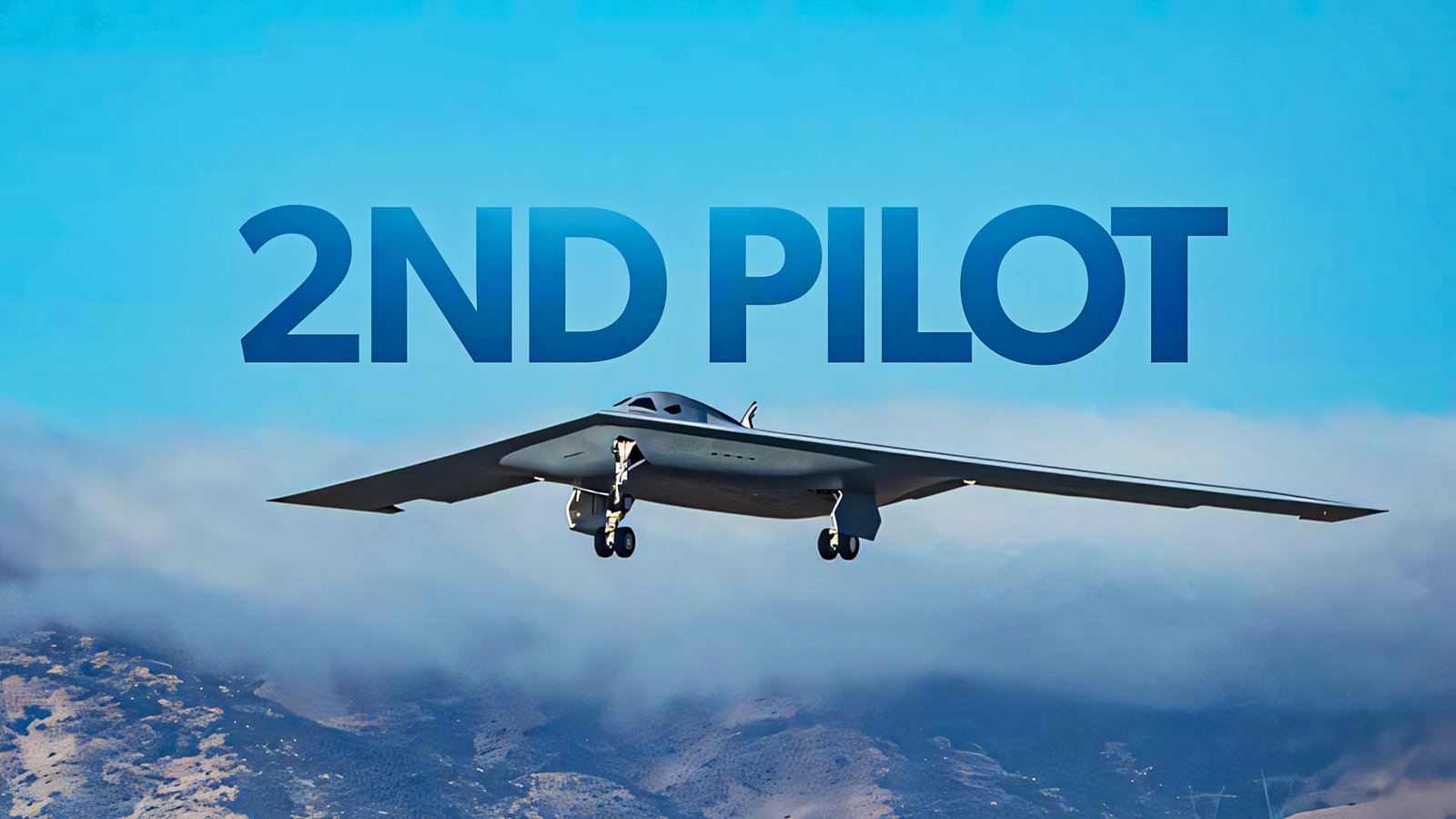
Published Sep 6, 2026, 5:00 PM EDT Luke Diaz is a freelance military writer with experience with active duty experience in the US Navy as well as defense and industrial engineering. He is a former Naval Flight Officer who performed tactical air control on the carrier-based E-2 Hawkeye. The US Air Force expects its first sixth-generation stealth bomber to arrive on the ramp at Ellsworth Air Force Base in early 2027 to begin active duty with the strategic strike fleet. The Air Force Global Strike Command is working with Northrop Grumman to prepare the first examples of the revolutionary new B-21 Raider for initial operating capability next year. There remains much speculation about the nature of the new plane as precious little information has been released, along with a handful of photos that show it conducting test flights over the deserts of the Southwestern United States. It is expected that the new plane will likely be optionally crewed, as it is one of the first new warplanes to bring online a new generation of data-link combat cloud technology along with artificial intelligence. It is well known that the new B-21 will be able to act as a kind of mothership to control collaborative combat aircraft, also known as loyal wingman drones, but many have speculated they may not require a pilot itself. The idea is not completely baseless, as previous configurations have been explored where a single human pilot would fly the aircraft while a ground-based 'virtual copilot' assisted with mission tasks and weapons employment alongside AI. However, the US Air Force formally announced that the crew configuration of the B-21 Raider would be a standard two-pilot complement in early July, dispelling the notion that its new plane would entirely substitute the right-seat crew member for a computer. Inside The B-21 Raider's Flight Deck Credit: US Air Force The July 9 decision ends speculation that began in fall 2025 with Gen. Thomas A. Bussiere, then head of Air Force Global Strike Command. The general had recommended that the plane be configured with only one pilot and one Weapons System Officer. The USAF concluded that the exceptionally long-endurance missions required of the B-21 to replace the B-2 Spirit and B-1 Lancer necessitate a dual-piloted platform. "The Department of the Air Force announced that the B-21 Raider, the nation’s newest long-range strike bomber, will officially operate with a two-pilot crew complement.... Following careful analysis of the B-21’s advanced capabilities, Air Force leadership determined that a two-pilot configuration optimally supports the aircraft’s mission profile... This deliberate talent management strategy secures the future of global strike capabilities, ensuring the Air Force remains postured to execute extended-duration, long-range strike missions in highly contested environments." The logic stands in alignment with current mission parameters. In recent sorties supporting Operation Epic Fury, B-1 and B-2 bombers flew 37-hour round-trip flights from the continental US to Iran and back. The presence of two pilots allowed the crew to alternate duties and allow for rest periods that prevented dangerous levels of fatigue. Notably, the service is also opening a path for Weapon System Officers and Combat System Officers to train as pilots in order to retain experienced aircrew within the future bomber fleet structure. The Future Of Air Force Global Strike Command Credit: US Air Force One of the largest questions that remains outstanding in reference to the new B-21s is just how many the Air Force expects to procure. The Air Force has stated that it expects a minimum of 100 Raiders but is already pushing for 145. There has even been support from US Navy top brass to procure as many as 185 B-21s to secure the future of joint-force interoperability. Air & Space Forces Magazine outlined that the USAF will likely aim for a target ratio of roughly 3.5 pilots per aircraft. That figure supports maintaining a 24/7 continuous global strike posture through a 1.75 crew-to-aircraft ratio. Thus, a fleet of 100 to 200 B-21 Raiders will ultimately require between 350 and 700 active pilots. Mark Gunzinger, a former deputy assistant secretary of defense and B-52 pilot, commented on the aircaft. “One hundred is a floor; it’s absolutely not a ceiling. Demand for bombers in peacetime and in conflict has been in one direction: up. And today’s bomber force is about one-third the size of the force we had at the end of the Cold War.” As the Lancer and Spirit are now slated to keep flying until at least the mid-2030s, the USAF needs a new source for Raider pilots. Generating a large volume of pilots solely via the standard Undergraduate Pilot Training would be insufficient due to the long timeline bottlenecks. Therefore, WSOs and CSOs from the B-1, B-52 Stratofortress, and F-15E Strike Eagle are expected to be given opportunities to make the switch. Streamlining American Air Power Credit: US Air Force The Air Force is actively consolidating its long-range strike inventory into a simplified two-type bomber fleet, moving aggressively to retire the B-1 and B-2 while focusing resources entirely on the B-21 Raider and the modernized B-52J Stratofortress. Rather than automating humans out of the cockpit, the Air Force is leveraging advanced automation to shift the crew's role from stick-and-rudder operators to airborne battle commanders. This is a crucial consideration not only to overcome a potential shortfall of qualified aircrew but also because the B-21 is both a conventional and nuclear strike platform. The terrible responsibility of deploying 'doomsday' weapons simply cannot be entrusted to computers without humans in the loop to make the final judgment calls. The USAF already has a shortage of pilots and while the phase out of B-1s and B-2s would have allowed for retraining to crew B-21s, both platforms are being retained longer than expected. The USAF commented on its pilot transition program in a statement obtained by Air & Space Forces Magazine. “The Air Force is establishing a pilot transition program for select weapons system officers and combat systems officers who will be chosen to attend pilot training with a follow-on assignment to the B-21. Eligible officers will be provided with additional information via command channels when available...To maximize the lethality and survivability of the Raider, it is imperative to retain the deep tactical and combat experience currently residing within the WSO and CSO communities.” Creating a dedicated pipeline to transition B-1 and B-52 WSOs and CSOs into B-21 pilots, the Air Force prevents a massive talent drain as older platforms are drawn down. It explicitly keeps these battle-tested officers in the loop, capitalizing on their deep familiarity with nuclear command and standoff weapons to effectively and safely crew the new Raiders. Standard UPT candidates spend months mastering basic airmanship, military aviation protocols, advanced systems operation, and air warfare tactics. Because WSOs and CSOs are already experienced, rated aircrew officers, they skip these initial steps. Their training bypasses basic aviation orientation and focuses entirely on the mechanics of flight control, making for a much shorter timeline to the cockpit. Automating The B-21 For Agile Combat Employment Credit: US Air Force The core directive of ACE is to scatter aircraft across a decentralized web of austere satellite airfields to complicate Chinese or Russian targeting algorithms. However, a stealth bomber force is traditionally the most logistically demanding asset in the inventory. The two-pilot B-21 configuration solves this. The internal automation of the B-21 means that a small deployment package can land at an austere location, hot-pit refuel, and re-arm without bringing a massive entourage of secondary support crew. Every extra body required to operate an aircraft compounds the logistical footprint needed at a forward operating location. A five-person B-52 crew or a four-strong B-1 crew demands significantly more support. By locking in a strict two-pilot configuration, the B-21 minimizes the personnel training. A minimal deployment package can be flown into a tiny Pacific island airfield on a single C-130, capable of servicing and turning around multiple B-21s. The Raider’s internal automation conducts rapid, automated self-diagnostics of its radar-absorbent skin, digital avionics, and mission systems the moment it touches down. The two pilots never had to leave the cockpit or manually configure electronic warfare suites. The onboard AI aligns the navigation and targeting systems automatically, allowing the aircraft to be refueled and airborne again in a fraction of the time. Using advanced cockpit automation to absorb the traditional tactical workloads of WSOs, the B-21 further transforms a two-pilot crew from traditional aviators into Airborne Battle Managers. Two Aircrew Are Better Than One To Win The Fight In The Air Credit: US Air Force The decision to retain two human pilots is not a rejection of AI but rather, automation inside the cockpit frees the crew to manage external uncrewed assets. In a heavily contested Anti-Access/Area-Denial bubble, a single pilot would suffer rapid cognitive overload if forced to fly the plane, evade surface-to-air threats, and command multiple autonomous drones. The two-pilot flight deck creates a stable, survivable division of labor. The two pilots use their cockpit interfaces to command forward-deployed CCAs via a low-probability-of-intercept data-link. The CCAs fly ahead with their radars active, absorbing the risk and detecting enemy targets. That data is fused by the B-21's computers and presented to the battle-managing pilot, who can then launch standoff weapons from the B-21 without the bomber revealing itself. The Air Force is using its transition pipeline to bring aircrew that already have tactical experience that is directly related to being an effective CCA Battle Manager. This role in a B-21 is almost identical to the skill set of a modern WSO. By retraining these WSOs to become actual pilots, the Air Force ensures that the second seat of the B-21 is occupied by an officer who is fully qualified to fly the aircraft, yet already possesses refined tactical skills.
The US Air Force Just Admitted AI Cannot Replace A 2nd Pilot On The B-21 Raider
Full Article
Original Source
Read the full article at Simpleflying →KhanList aggregates and links to publicly available news content. We do not host full articles from third-party sources. Always verify important information with original sources.