
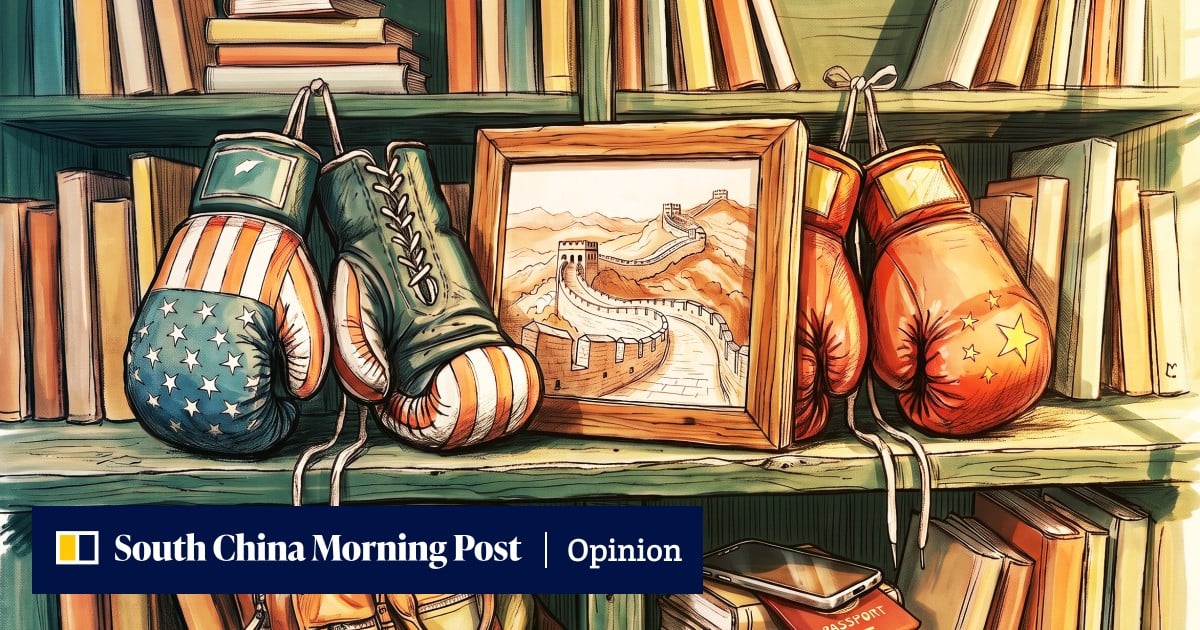
Before boarding my flight to Boston late last month, I spent the better part of three days doing something I never imagined I would do in more than 30 years of covering China: scrubbing my phone. Old emails, screenshots, WeChat threads that might be read the wrong way, anything that could be misconstrued in an airport interview room – all deleted, just in case.I was not being paranoid. I was following advice now routinely passed among Chinese travellers to the United States: carry a clean phone, or better yet, a burner. American officials, academics and business travellers headed into China have long been told the same thing. Two sets of citizens, one shared instinct – that what is on your phone could get you into trouble on the other side.As it turned out, my entry into the US was swift and unremarkable. No locked room, no confiscated devices, none of the horror stories that have circulated among Chinese academics in recent years. The gap between what I feared and what happened was, in miniature, what I have spent 35 years writing about: the gap between perception and reality in US-China relations. It is also the reason I am here.Beginning this month, I take up a one-year appointment as a senior visiting scholar at the Rajawali Foundation Institute for Asia at the Harvard Kennedy School. My purpose is straightforward to state and harder to fulfil: to sit down with American thought leaders across the political spectrum and ask them where they think this relationship is headed, and whether conflict is as inevitable as it now appears.To understand why this question matters so much, a brief look back is useful. The relationship began its current downward spiral in 2018, when the first Trump administration launched its opening salvo in the trade war. At the time, the confrontation felt sudden and jarring. It was not, in fact, sudden at all. Grievances had been quietly accumulating for decades across government, industry, trade, academia, science and technology. What changed in 2018 was that those grievances finally found their outlet.Layered on top were structural anxieties. In Washington, there is the perceived erosion of American primacy in manufacturing and superpower status. In Beijing, there is a mirror-image worry: that a declining but still-dominant America, unwilling to accept the reality of a rising China, is bent on containing its development, through tariffs, technology export controls and alliances built for that purpose.
Heading to America to bridge the gap in US-China relations
Full Article
Original Source
Read the full article at Scmp →KhanList aggregates and links to publicly available news content. We do not host full articles from third-party sources. Always verify important information with original sources.