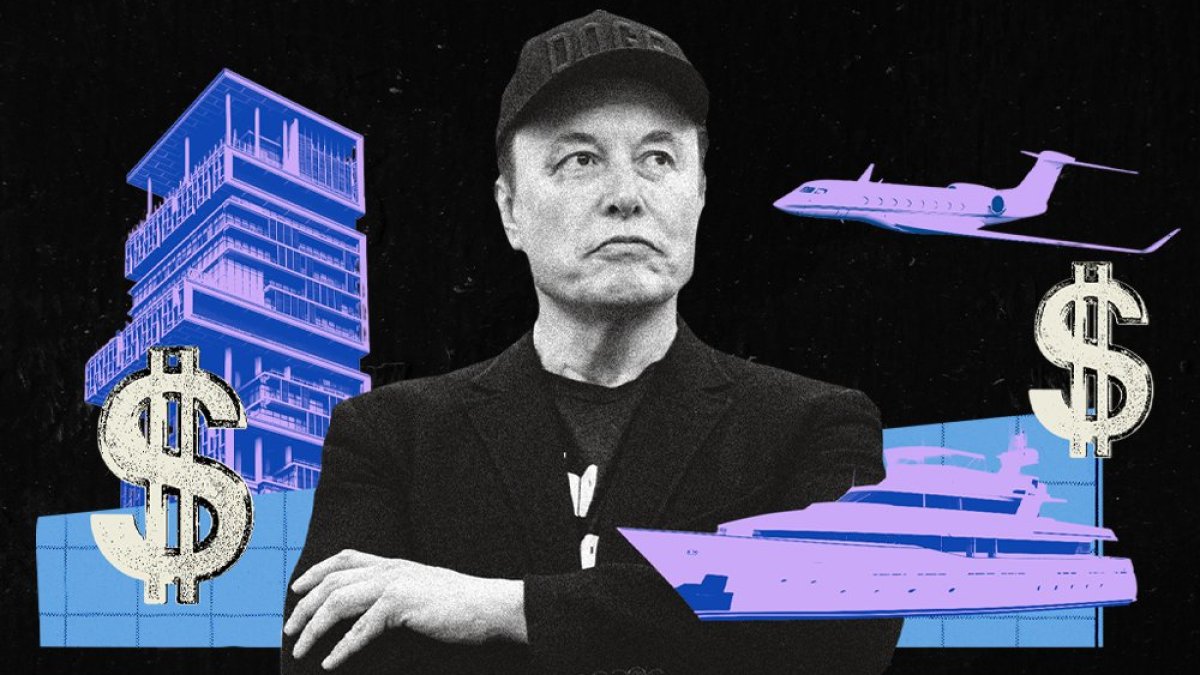
With Andy Burnham reported to be weighing up tax rises as he assumes office, some are calling for him to ramp up taxes on the richest people in the UK. Capital gains tax and income tax could go up for the wealthy, or Burnham could decide on a wealth tax, a levy on the entirety of a person or entity’s total worth. It’s a popular idea: last year YouGov found that 75 per cent of Britons backed it. Though other countries have brought in such a tax, they have had mixed success. And opponents suggest taxing the rich more would drive them abroad, and stifle the growth which Britain needs. So, should we tax the rich more? Entrepreneur Charlie Mullins, writer and broadcaster Zing Tsjeng and economist Professor Lucy Barnes give their perspectives. Of all the great one-liners and zingers in Succession – HBO’s black-hearted drama about extreme wealth and privilege – there’s one that sticks out. In an episode where Logan Roy triumphs over his business adversaries, the family patriarch and plutocrat raises a glass and declares: “Money wins.” But times are changing. If Succession were to be made now, there would surely be a storyline about public mood turning against the ultra rich. One recent Pew Research survey found that one in five Americans believe that it is “morally wrong” to be a billionaire, while another found that 71 per cent say that there should be a tax on billionaires. As the co-presenter of the Good Bad Billionaire podcast, I’ve seen that shift in public attitude first-hand. In every episode, we trace the journey of some of the wealthiest people on the planet – a list that includes Elon Musk, now the first trillionaire in human history thanks to the ludicrously successful SpaceX IPO. While we’ve always had listeners who tune in seeking personal and business inspiration, a number now write in to express discomfort – if not outright distaste – with some of the more ruthless and ambitious people we’ve covered. As the gap between the haves and the have-nots widens into a seemingly impassable gulf, public sentiment has clearly turned a corner. That’s the reason behind increasingly loud calls for a wealth tax, now supported by Labour’s Wes Streeting, the Green Party of England and Wales and three-quarters of the British public. Exact policy details vary from politician to politician – for instance, New York Mayor Zohran Mamdani is taxing luxury second homes in the city, while the Greens are calling for a 1 per cent tax on assets above £10m. It may seem counter-intuitive, but I’d argue that it is actually in the interests of the uber rich to support a wealth tax. Let me explain. Acquiring tonnes of cash while the rest of society lags behind puts you, rather understandably, in the public firing line. But you only need to look at French history to see that populist anger towards monied elites has a tendency to end in bloodshed. In fact, one study has found that higher inequality increases political instability and even contributed towards the collapse of ancient empires in Rome and China. According to historian Peter Turchin, calamity results when money is siphoned from the population and into the hands of a small elite – he calls this the wealth pump. “To end a crisis,” he argues, “a society, first and foremost, needs to shut down the wealth pump.” In the past, that looked like widening political participation to non-elites and giving them the vote. In the 21st century, it looks like the redistribution of wealth from these elites to the rest of society – and the wealth tax is the most powerfully symbolic means of accomplishing this. There is also a moral imperative to this. On our podcast, the number of people who come from abject poverty and manage to scale the height of wealth is vanishingly tiny. Many come from middle- to upper-class families and have benefited from living in relatively prosperous countries with access to education and opportunity. Their businesses, too, have profited from this political and economic stability. If their success has now made our societies more unstable, it is only right for them to give back. The rich American industrialists of the past understood this well – just take the words of 19th century steel magnate Andrew Carnegie, who once observed that “the man who dies thus rich dies disgraced”. Carnegie went on to build almost 3,000 libraries around the world and founded educational institutions, relief funds and charitable foundations that still bear his name. Do rich people today care about being disgraced, even hated? Maybe not. Money makes it both easy and desirable to separate yourself from the masses. (That’s the entire point of getting a private jet, after all.) But they should care – and that starts with paying a wealth tax. It’s the most straightforward way to demonstrate you’re happy to give back. As the symbols of inequality become harder to stomach – Antilia, the 27-storey $2bn (£1.5bn) Mumbai skyscraper which is home to Indian business tycoon Mukesh Ambani, comes to mind – the wealthy need to show at least some cursory interest in tackling the gap between the rich and the poor. If nothing else, it’s an easy PR win – just think of the praise Amazon boss Jeff Bezos recently received after he said it was “a fine thing for New York” to introduce Mamdani’s wealth tax. And who knows? In the long run, it might actually stop civilisation from crumbling. The new season of Good Bad Billionaire is out now on BBC Sounds, Spotify or wherever you get your podcasts Perspectives
The ultra rich should be delighted to pay a wealth tax
Full Article
Original Source
Read the full article at Inews →KhanList aggregates and links to publicly available news content. We do not host full articles from third-party sources. Always verify important information with original sources.