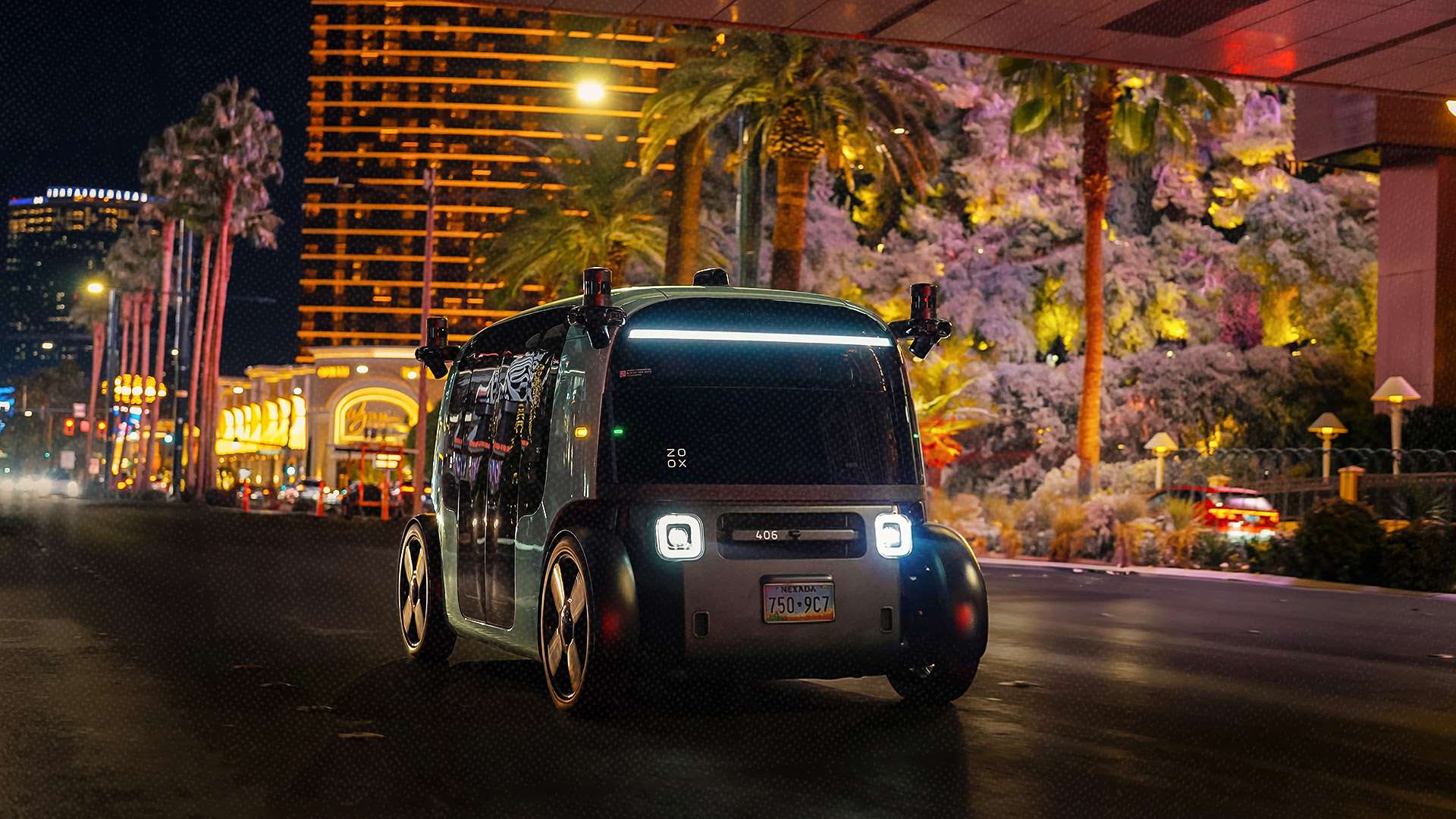
Driverless Cars Zoox got the first commercial exemption for a driverless car. It came with a promise that safety regulations would evolve “as Zoox's technology advances.” | 7.31.2026 12:00 PM (Photo courtesy of Zoox, Inc.) Riding in a car without brakes or a steering wheel might soon be a regular occurrence for residents of Las Vegas and San Francisco. On Thursday, the Transportation Department's National Highway Traffic Safety Administration (NHTSA) announced it is granting a two-year temporary exemption to autonomous robotaxi company Zoox for commercial deployment of up to 2,500 vehicles annually. Last August, Zoox became the first American autonomous vehicle (A.V.) company to receive a demonstration exemption for its fleet. The company has been operating free rides in Las Vegas and San Francisco, with plans to expand to Austin, Texas, and Miami in the near future. The move aligns with Transportation Secretary Sean Duffy's "transportation innovation agenda," which aims to "unleash innovation" and "enable commercial deployment" of A.V.s through deregulation and modernization of federal motor vehicle standards. The agency is simplifying its application process for Part 555 exemptions—a regulatory carveout that allows car companies to test new technology by deploying products in small batches—so more A.V. companies can demonstrate their ability to deploy commercially. In the same press release, the NHTSA also announced it would enter into a three-year partnership with the technology trade association SAE Industry Technologies Consortia to "gather data and accelerate creation" of a national safety standard for A.V.s and replace the "patchwork" of state regulations. In a statement sent to Reason, the NHTSA says it will provide funding for the $5 million consortium of experts responsible for making recommendations. Current motor vehicle standards often fail to consider that required features in typical cars—like rearview mirrors, foot pedals, manual gear shifts, steering wheels, or front-facing seats—are often unnecessary in autonomous vehicles. The NHTSA recognizes this, telling Reason it plans to remove mandates applicable only to human drivers, such as those for "manual brake pedals, transmission shifters, and windshield wipers and defrosters." The agency also intends to update federal standards for "controls and displays, vehicle lighting, mirrors and rearview display, electronic stability control systems, and sun visors and warning labels." It also says its new standards will be "technology neutral," and will give A.V. developers the ability to self-certify that their vehicles meet all safety requirements. NHTSA Administrator Jonathan Morrison says the agency is "taking a balanced approach to AV regulation," one focused on removing barriers instead of adding new ones. However, it's fair to wonder how "technology neutral" standards for A.V.s will be. Since Zoox is the first and only A.V. company to receive a commercial exemption, it has all the advantages of incumbency, which could enable regulatory capture. It doesn't help that the NHTSA is apparently planning to build its oversight structure to "evolve as Zoox's technology advances." That's hardly a neutral approach to creating new standards that treat each A.V. company the same. Still, plenty of people are excited about the commercial deployment of A.V.s. Zoox got support for its exemption from all corners of the political spectrum, including cyclists, right-wing women's groups, road safety organizations, and disability rights groups. Of course, the exemption also drew the ire of transportation workers unions, who couched their fears of replacement with concern for public safety. Thursday's announcement was a major step forward for the A.V. industry. But it could also lead to regulatory capture and keep competitors out of the market if the government's standards are based on the technology of its favored company. NEXT: Meet The Spice Entrepreneur Challenging Trump's Newest Tariffs Driverless CarsSelf-driving vehiclesAutomationAutomobilesDeregulationTaxisTransportation PolicyDepartment of TransportationTrump Administration
The Trump Administration Just Named a Front-Runner in the Robotaxi Race
Full Article
Original Source
Read the full article at Reason →KhanList aggregates and links to publicly available news content. We do not host full articles from third-party sources. Always verify important information with original sources.