
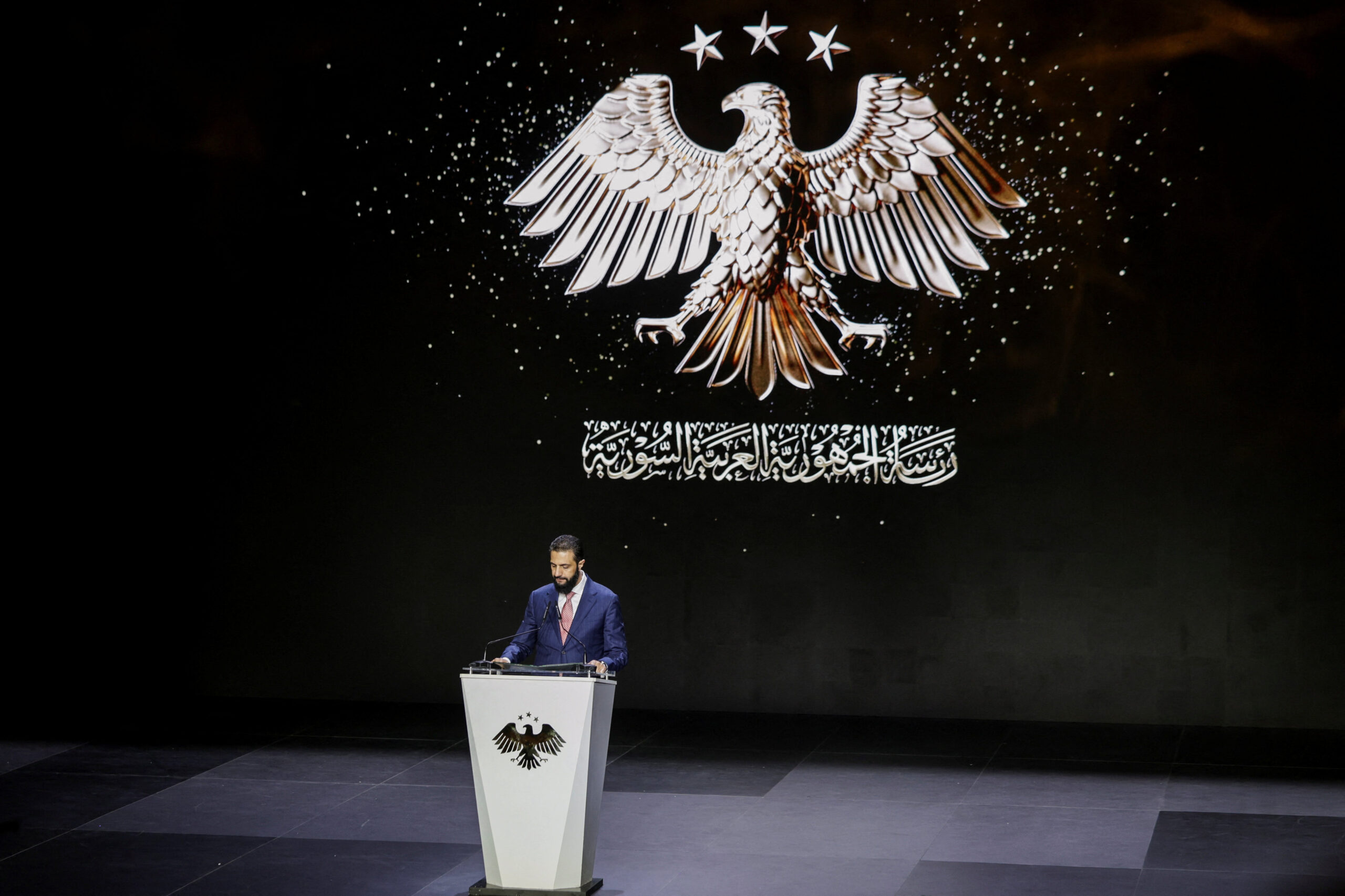
Last month, the Syrian Democratic Forces (SDF) dissolved their militia force and announced their integration into the Syrian army. A day earlier, the United States formally rescinded Syria’s designation as a State Sponsor of Terrorism and removed Hay’at Tahrir al-Sham (HTS) from its terrorism designations. These major developments, combined with the removal of all major sanctions against Syria, including the repeal of congressional sanctions contained in the Caesar Act, represent the end of nearly fifty years of US economic isolation of Syria. For those of us who advocated for a more coherent policy toward the country, it is a bittersweet moment. Because much of this could have happened earlier, and perhaps could have saved many thousands of lives. I know because I was inside the US government during the early phase of the war when the administration made critical decisions that shaped the trajectory of the conflict. As a senior liaison to the Syrian opposition, I saw firsthand how the United States pursued two different objectives that should have been complementary: defeating the Islamic State of Iraq and al-Sham (ISIS) and defending the Syrian people from the Assad regime. Instead, the policies were kept separate, and at times were at odds with one another. The United States succeeded at the first, but failed at the second, at an enormous cost. SIGN UP FOR THIS WEEK IN THE MIDEAST NEWSLETTER During the Obama administration, the Central Intelligence Agency supported elements of the Syrian opposition, including the Free Syrian Army, in support of political transition away from dictator Bashar al-Assad. At the same time, the Pentagon supported the People’s Defense Units (YPG), which later rebranded as the SDF, to confront ISIS in northeast Syria. There was a logic to this, but a more cohesive strategy was never implemented. The YPG was the Syrian franchise of the Kurdistan Workers’ Party, a US-designated terrorist organization that was at war with Turkey, a NATO ally. The problem became more pronounced when the SDF fought against the Syrian opposition that the United States was also supporting. In other words, the United States was supporting two groups that had different objectives vis-à-vis each other and the broader Syrian conflict. That was not a sustainable grand strategy, but rather gross policy incoherence. At the time, I argued that if the United States was going to support the SDF, Washington would need a broader political and military strategy that addressed what would happen to the Assad regime. Otherwise, Washington risked creating a powerful new actor in Syria while abandoning the political objective that had brought the United States into the Syrian conflict in the first place. The United States could defeat ISIS and still lose Syria. Administration officials increasingly focused on the tactical question of how to defeat ISIS while ignoring the political problem of Assad’s continued rule and oppression of his people. The result was catastrophic. Russia and Iran intervened on Assad’s behalf, while Hezbollah became a central component of the regime’s war effort. The involvement of these actors caused perhaps the most damage to lives, infrastructure, and displacement. Turkey increasingly chafed at the US-YPG partnership, and the Syrian opposition became progressively weaker and more fragmented. During the war, one million Syrians died and twelve million became displaced inside and outside of the country. Kremlin-aligned far right parties in Europe weaponized the mass migration of Syrian refugees. Then there was Idlib. The Obama administration treated the actors controlling northwest Syria as untouchable because HTS (formerly Jabhat al-Nusra) remained designated as a terrorist organization. According to senior US officials, Idlib was too marbled with al-Qaeda. Communication and engagement with the militias controlling Idlib became politically toxic in Washington. That turned out to be a big miscalculation. The United States did not have to trust HTS, but it could have recognized that Syria was more than just a counterterrorism problem. In fact, it was a political conflict involving millions of Syrians who were competing for the country’s future. Instead, the United States increasingly reduced the problem to counterterrorism and left the political battlefield to others. The US could have maintained contact with rebel groups in Idlib to better understand what was going on there and even communicated with HTS, perhaps indirectly through third parties such as Turkey. This would have given Washington a more nuanced and accurate understanding of the nature and capacity of the group that would one day defeat Assad. There is remarkable irony in where Syria stands today. Washington considered HTS too dangerous to engage, but it is now in charge in Damascus. Washington tried for years to manage, contain, and even marginalize the opposition, yet it eventually won. And the force the United States supported as its principal actor on the ground has now dissolved itself and is integrating into the Syrian state. There is a tendency in Washington to judge foreign policy primarily by whether individual decisions were reasonable at the moment they were made. Washington should also judge foreign policy by where those decisions ultimately lead. Supporting the SDF helped defeat ISIS. That was a real achievement, and the sacrifices of Kurdish fighters against ISIS should not be diminished. But tactical success against ISIS was never the same thing as a grand strategy for Syria. Similarly, isolating HTS and refusing meaningful engagement was understandable given the group’s history and designation. But policy cannot stop because a group is designated as a terrorist. The lack of a coherent strategy for Syria ensured minimal and ineffective US influence over the trajectory of the conflict, which had catastrophic consequences for the country and the reigon. It also distorted the balance of power on the ground, where Washington believed that Assad and his allies had won and therefore became resigned to Assad’s rehabilitation. Syria is no longer Assad’s Syria. It is also not the Syria that Washington bet on in 2015. And it is not the Syria that Moscow or Tehran wanted to maintain. It is a country emerging from a devastating war, with enormous challenges ahead but also an extraordinary opportunity. The United States should seize that opportunity. It should help Syria build functioning institutions, rehabilitate its economy, integrate its armed forces, protect Kurdish and other minority rights, prevent the return of terrorism, and reduce the space for Iran and other destabilizing actors. Most importantly, Washington should treat Syrians as political actors—not merely as proxies, partners, terrorists, refugees, or victims. Syria shows us what happens when tactical objectives come at the expense of strategic ones. Perhaps the most important lesson now is that it is not too late to get the strategy right. Wa’el Alzayat is non-resident fellow with the Syria Project at the Atlantic Council’s Middle East programs and the director of the US-Syria Business Council. He previously served at the State Department for a decade. Image: Syrian President Ahmed al-Sharaa speaks during the opening ceremony of the Damascus International Fair in Damascus, Syria, August 26, 2026. REUTERS/Khalil Ashawi
The Syria policy the US got wrong—and the bittersweet moment Washington finally got right
Full Article
Original Source
Read the full article at Atlanticcouncil →KhanList aggregates and links to publicly available news content. We do not host full articles from third-party sources. Always verify important information with original sources.