
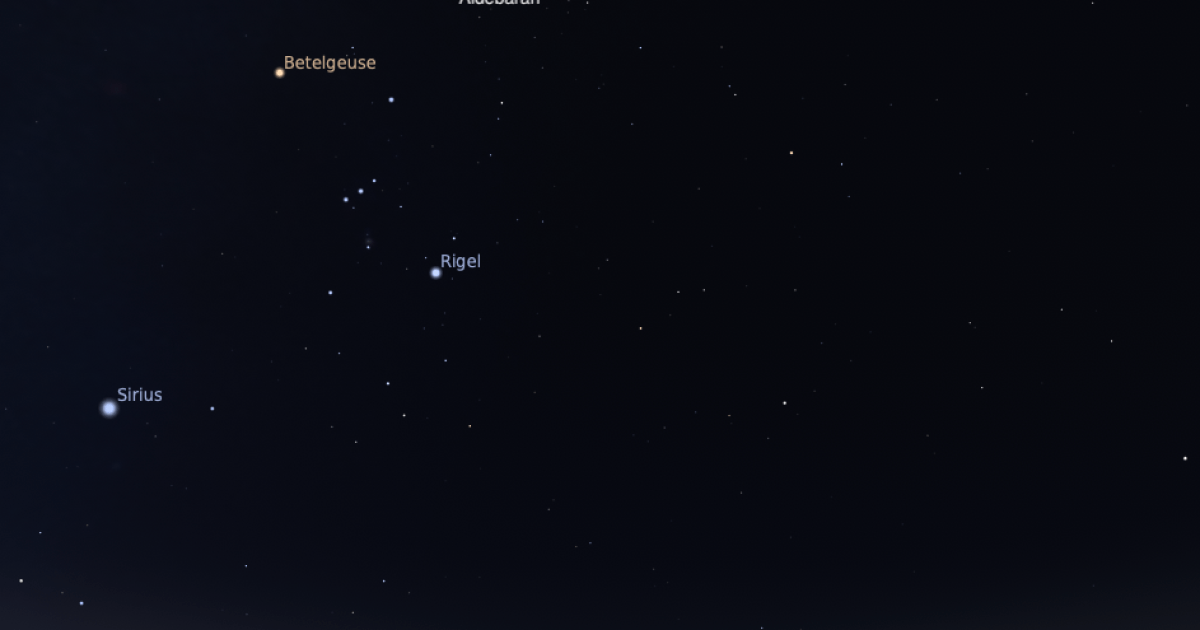
Traveling through Taurus the Bull, the ice giant Uranus comes to a standstill against the background stars today. | Published: September 10, 2026 Uranus (marked by the red crosshairs) lies roughly midway between the bright star Aldebaran and the Pleiades star cluster. It is highest in the early-morning, and best visible an hour or so before dawn, while the sky is still dark. Credit: Stellarium Looking for a sky event this week? Check out our full Sky This Week column. September 9: Visualize the ecliptic Uranus reaches a stationary point at 2 P.M. EDT, coming to a halt amid the stars of Taurus the Bull. Rising around 10:40 P.M. local daylight time, the best time to view the ice giant is in the early morning, in the hour or so before dawn, when the sky is dark enough that the 5th-magnitude world can be picked up at nearly its highest point in the sky. In the hour before dawn, Uranus stands 70° high in the south, near the small V of stars that makes up the face of Taurus. If you’re facing south, that V will appear tilted on its side, opening toward the left, with the bright star Aldebaran along the left side. Look to the V’s upper right to find the Pleiades, an open cluster of stars also cataloged as M45. They are easy to see with the naked eye. Uranus is about halfway along a line drawn between Aldebaran and the Pleiades, just 1° to the upper right (west-northwest) of magnitude 4.9 Omega (ω) Tauri. If you center that star in binoculars or a telescope, the planet should be within view as well. Its tiny disk spans 4” and may appear grayish in color, like a “flat” star. Prior to today’s halt, Uranus was moving eastward, or prograde, against the background stars. After today, it will begin moving westward, or retrograde, across our sky. New Moon occurs tonight at 11:27 P.M. EDT. Sunrise: 6:36 A.M.Sunset: 7:17 P.M.Moonrise: 5:59 A.M.Moonset: 7:00 P.M.Moon Phase: New*Times for sunrise, sunset, moonrise, and moonset are given in local time from 40° N 90° W. The Moon’s illumination is given at 10 P.M. local time from the same location. Alison Klesman is senior editor of Astronomy magazine. She holds a Ph.D. in astronomy and has studied a variety of topics, from minor planets to supermassive black holes.
The Sky Today on Thursday, September 10: Uranus is stationary
Full Article
Original Source
Read the full article at Astronomy →KhanList aggregates and links to publicly available news content. We do not host full articles from third-party sources. Always verify important information with original sources.