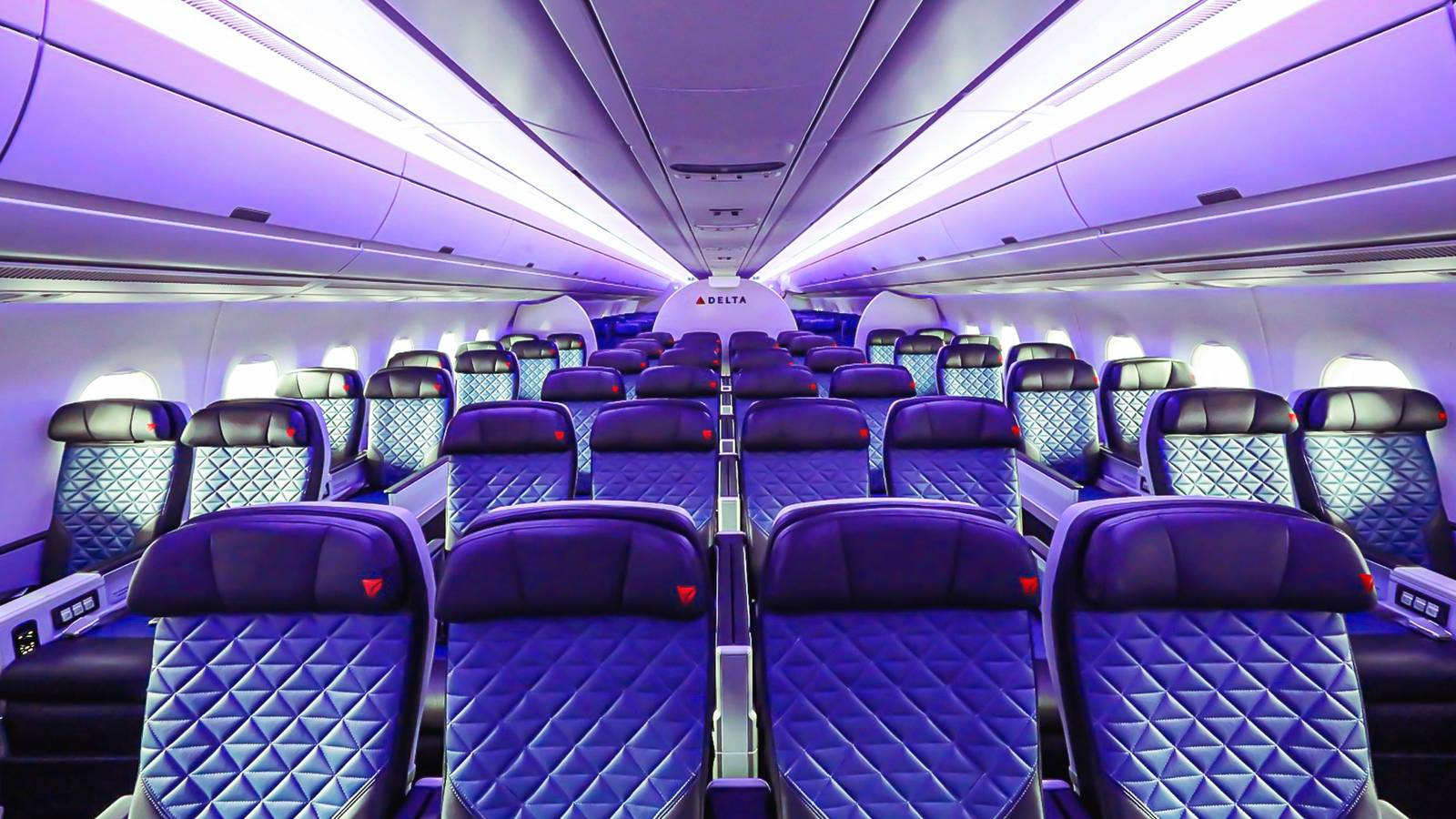
Published Jul 21, 2026, 9:00 AM EDT Josh is an Aviation Journalist and lifelong aviation enthusiast who's now turning that passion into a career. From watching planes and playing flight simulators at a young age to now sitting in the cockpit, Josh has always been drawn to the world of flight. Currently training to become a commercial pilot, Josh aims to make aviation interesting and accessible to everyone, whether you're in the industry or simply passionate about aviation. Now actively building a career in Aviation, Josh is focused on telling stories from inside the aviation world, stories shaped by firsthand experience, curiosity, and a genuine love of all things that fly. Sign in to your Simple Flying account Premium economy has become one of commercial aviation's fastest-growing cabin classes, transforming from a niche product into a standard feature on long-haul aircraft around the world. Airlines have steadily expanded the cabin over the past decade as they look to bridge the gap between economy and business class, giving travelers a more comfortable experience without the significant price tag of a premium cabin. In 2026, around 45% of the world's widebody aircraft feature premium economy seating, while adoption across North American widebody fleets has reached approximately 90%, underlining just how mainstream the product has become. That rapid expansion has coincided with changing travel habits. Leisure travelers are increasingly prepared to spend more for additional comfort on flights lasting eight hours or longer, while many companies have tightened travel budgets and now view premium economy as an acceptable alternative to business class. At the same time, airlines have invested heavily in improving seats, meals, and onboard service, making the cabin substantially more attractive than it was just a decade ago. Premium Economy Has Gone From Niche To Industry Standard Credit: EVA Air Premium economy may feel like a relatively new cabin, but its origins stretch back more than three decades. Airlines including Virgin Atlantic and EVA Air helped pioneer the concept during the early 1990s, recognizing there was a sizable gap between standard economy and business class. For many years, however, uptake remained relatively limited. Premium economy was largely confined to flagship routes or specific carriers, while many airlines instead focused on selling extra-legroom economy seats without creating a dedicated cabin. As a result, travelers often encounter inconsistent products depending on the airline or aircraft type. That picture has changed dramatically. Today's long-haul fleet has been designed with premium economy firmly in mind, particularly on aircraft such as the Airbus A350 and Boeing 787 Dreamliner. Airlines have increasingly allocated cabin space to premium economy because it appeals to both leisure and corporate travelers, while generating significantly higher yields than standard economy. Perhaps the biggest sign of the cabin's maturity is how widespread it has become. Airlines including British Airways, Singapore Airlines, and United Airlines now regard premium economy as a standard part of their long-haul product, a trend that has been mirrored by carriers across the world. Instead of wondering whether an airline offers premium economy, passengers are increasingly comparing products between airlines, a sign that the cabin has firmly established itself as a mainstream part of the global aviation market. Why The Fare Difference Makes Premium Economy So Attractive Credit: Shutterstock The strongest argument in favor of premium economy is not that it offers luxury, but that it delivers measurable improvements without requiring travelers to pay business-class prices. On many transatlantic routes during 2026, return economy fares typically range from around $750 to $1,000, while premium economy generally costs between $1,200 and $2,000. Business class, meanwhile, frequently exceeds $3,500, with peak-season fares comfortably reaching $5,000 or more. Although prices vary by airline and season, the gap between premium economy and business class remains considerably larger than the gap between economy and premium economy. Airlines deliberately structure fares this way. Revenue management teams understand that many travelers are prepared to spend a sizable amount more for additional comfort, but cannot justify paying several thousand dollars more for business class. Premium economy, therefore, occupies an important middle ground, encouraging passengers to upgrade while remaining accessible to a much broader audience. From an airline's perspective, this strategy increases overall revenue without relying solely on filling the highest-priced premium cabins. However, value should never be confused with automatically choosing the middle option. Airline pricing changes constantly in response to demand, competition, and remaining seat availability. There are occasions when discounted business class fares, upgrade auctions or frequent flyer promotions significantly narrow the price difference between cabins. If business class is only marginally more expensive than premium economy, the additional benefits, including lounge access, priority services, and a fully flat bed, may justify paying the extra cost. Credit: Air India At first glance, premium economy can appear to be little more than a larger economy seat, but the differences now extend well beyond a few additional inches of legroom. Seats are typically between 18 and 19.5 inches (45.72 and 49.5 cm) wide, compared with approximately 17 to 18 inches (43.18 to 45.72 cm) in economy, while seat pitch usually increases from 31 to 34 inches (78.74 to 86.36 cm) up to 37 to 42 inches (93.98 to 106.68 cm). Many airlines also fit leg rests, footrests, greater recline, and improved cushioning, creating a noticeably more comfortable seating position on longer flights. The onboard experience has also become increasingly differentiated. Most airlines serve upgraded meals using proper tableware, offer complimentary alcoholic beverages, provide larger in-flight entertainment screens, and include enhanced amenity kits on long-haul flights. Passengers frequently receive increased checked baggage allowances, while priority check-in and boarding help streamline the airport experience before the flight even begins. Although the exact offering varies by airline, premium economy today represents a complete product rather than simply an economy seat with extra space. Another advantage is the cabin environment itself. Premium economy cabins are considerably smaller than economy sections, meaning fewer passengers, shorter queues for overhead bins, and a quieter atmosphere throughout the flight. These factors rarely appear in airline marketing materials, yet they can have a meaningful impact on how passengers perceive a journey, particularly on overnight or ultra-long-haul routes where small improvements accumulate over many hours. Where Premium Economy Delivers The Greatest Value Credit: Qantas The value of premium economy becomes increasingly apparent as flight duration increases because the physical effects of long-haul travel become more pronounced. A flight between John F. Kennedy International Airport (JFK) and London Heathrow Airport (LHR) lasts around seven hours, while services such as Los Angeles International Airport (LAX) and Sydney Kingsford Smith Airport (SYD) regularly exceed 14 hours. On these sectors, passengers may spend the equivalent of an entire waking day in the same seat, making ergonomics, seat width and personal space considerably more important than on medium-haul flights. The importance of premium economy on longer sectors is perhaps best illustrated by Qantas Project Sunrise, which is scheduled to launch nonstop flights from Sydney to London and New York using specially configured Airbus A350-1000ULR aircraft. Designed for journeys lasting up to 22 hours, the aircraft will carry just 238 passengers, including 40 premium economy seats, significantly fewer than a typical A350-1000 to maximize passenger comfort and range. Alongside the premium cabins, Qantas is introducing a dedicated Wellbeing Zone, allowing passengers to stretch, hydrate, and move around during the flight. The timing of a flight is equally important when assessing value. Premium economy often delivers its strongest return on daytime long-haul sectors, where passengers spend most of the journey working, reading or watching entertainment rather than sleeping. In these situations, the wider seat, increased recline and additional personal space provide many of the practical benefits travelers are looking for without the significant premium of business class. Overnight flights present a different calculation. When arriving well-rested is the priority, a fully flat bed becomes a genuine functional advantage, particularly on journeys exceeding 12 or 14 hours. For most daytime long-haul flights, however, premium economy strikes one of the strongest balances between cost, comfort, and practicality available in commercial aviation. Why Airlines And Companies Are Investing In Premium Economy Credit: Riyadh Air Premium economy's rapid expansion is being driven as much by airline economics as passenger demand. According to McKinsey & Company, profit margins in premium cabins are 15 percentage points higher than those in standard economy. Because premium economy requires only slightly more physical space than economy while commanding significantly higher fares, it has quietly become the most profitable real estate on aircraft. That strategy is not limited to factory-fresh aircraft. Airlines are increasingly modernizing older fleets to introduce or expand the cabin. Lufthansa's ongoing Allegris program is a good example, with the airline retrofitting aircraft with redesigned premium cabins. Across the Lufthansa Group, the initiative will ultimately see more than 40,000 seats replaced, bringing the updated cabin experience to the vast majority of its long-haul fleet. While global business travel has continued to recover, many companies have introduced stricter travel policies that require business-class bookings to be justified, particularly on shorter long-haul flights. Premium economy has emerged as the preferred compromise, offering employees additional comfort, greater workspace, and improved onboard service while keeping travel budgets under control. At the same time, rising numbers of affluent leisure travelers are choosing premium economy for milestone holidays and long-distance family trips, giving airlines a broader customer base and reducing their reliance on traditional corporate business-class demand. Premium Economy Is The Sweet Spot, But Only If You Buy It At The Right Price Credit: Emirates Despite its growing reputation, premium economy should not automatically be viewed as the best booking on every flight. Airline fares are managed using sophisticated revenue-management systems that continuously adjust prices according to demand, booking trends, competition, and remaining seat availability. As a result, the premium economy surcharge can vary dramatically on the same route depending on when the ticket is purchased. Passengers should also look beyond the advertised fare. Many airlines now offer upgrade auctions, discounted cash upgrades through their mobile apps, or loyalty program redemptions that can substantially alter the value equation. On some occasions, upgrading from premium economy to business class may cost only a few hundred dollars, making the lie-flat bed, lounge access, and enhanced dining worthwhile. Equally, frequent flyer status or airline credit card benefits can reduce the effective cost of premium economy, meaning savvy travelers often pay considerably less than the published fare. Premium economy has nevertheless established itself as one of the most important developments in long-haul aviation over the past decade. For the majority of long-haul travelers, it delivers the strongest combination of comfort, convenience, and affordability, particularly on flights lasting eight hours or more. The key is to compare the live fare spread rather than simply choosing the middle cabin by default. When priced sensibly, premium economy offers one of the best comfort-per-dollar returns in commercial aviation, explaining why it has quietly become the value sweet spot in 2026.
The Real Reason Why Premium Economy Is Quietly Becoming The Best Value In Long-Haul Travel In 2026
Full Article
Original Source
Read the full article at Simpleflying →KhanList aggregates and links to publicly available news content. We do not host full articles from third-party sources. Always verify important information with original sources.