
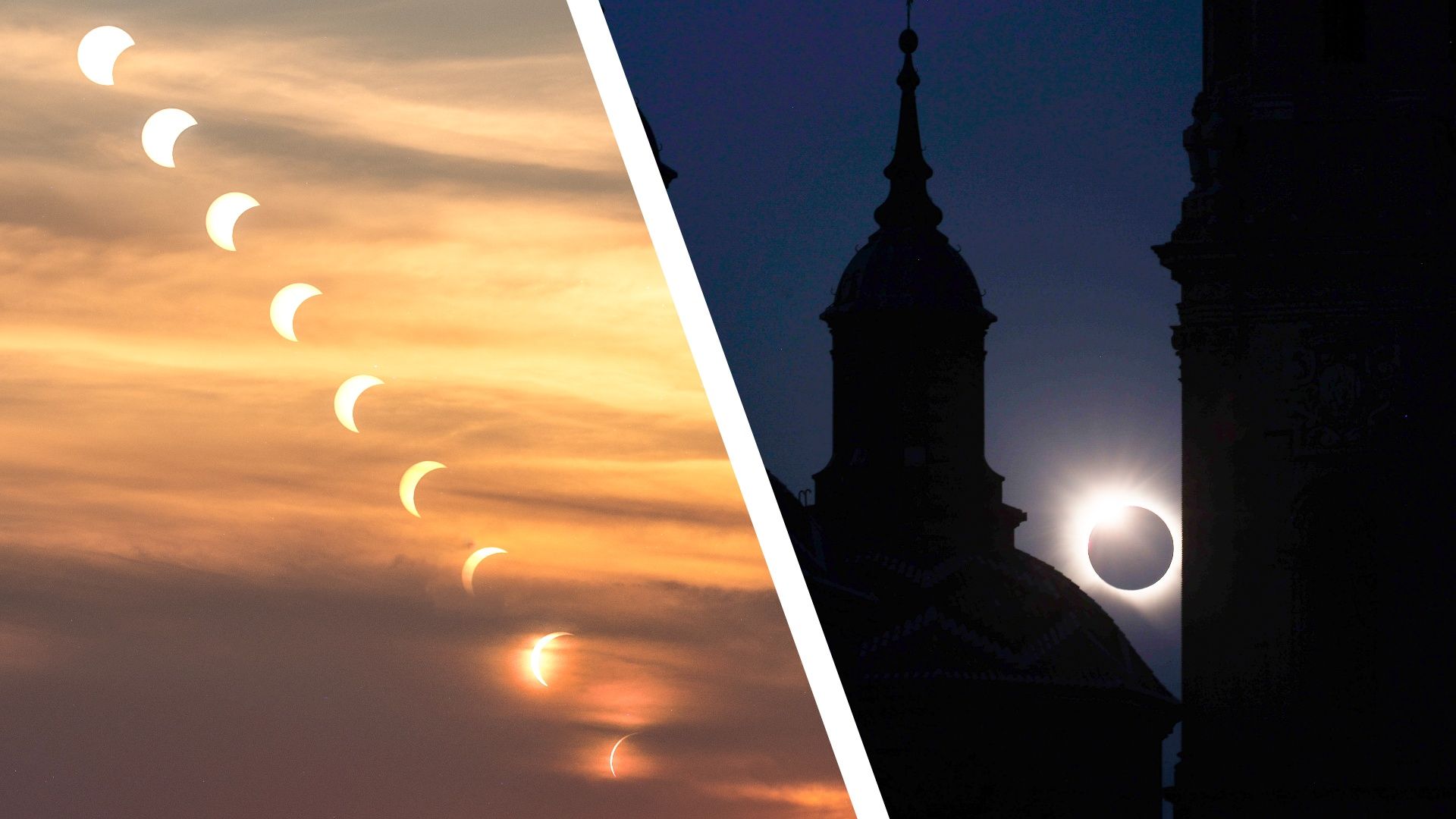
(Image credit: Gongora/ Jakub Porzycki /NurPhoto via Getty Images) The "eclipse of the century" takes place on August 2, 2027Its totality will be up to six minutes and 22 seconds The total eclipse track covers parts of North Africa, Southern Spain and the Middle EastThis year's solar eclipse was a magical sight, but 2027's is being billed as the "eclipse of the century", with six minutes and 22 seconds of totality set for Luxor in Egypt — that's almost three times longer than this year's, and an eclipse duration which won't be matched again until 2114.We can expect hotels and flights to peak destinations to sell out way in advance, so if you're keen to see the spectacle in person, it'll pay to arrange your travel plans ASAP if you haven't already (and start saving!).Fortunately for eclipse chasers, the eclipse track will cover thousands of miles, meaning there are plenty of other alternatives to Luxor, including popular holiday destinations spanning Spain, Gibraltar, North Africa and the Middle East.If you're especially keen to photograph the solar eclipse (over simply observing it), there's a major consideration beyond the length of totality, though for the full experience you will of course want to head somewhere that will experience totality. That consideration is the solar altitude — in other words, the position of the sun in the sky during totality. The 2026 total eclipse lasted around 2 minutes in Mallorca, and the solar altitude was low, making for excellent photography opportunities, though cloud cover was an issue here (Image credit: Gongora/NurPhoto via Getty Images)Best places to photograph the eclipse of the centuryTo photograph the 2027 solar eclipse in all its glory, you'll need to be in a place where there is totality. Not even 99% will do, but a full 100%. And while Luxor gets the longest totality (and the headlines), the solar altitude will be approximately 82 degrees high – that's almost overhead, limiting photography opportunities.With solar altitude so high during totality, not only will it be hard to frame the eclipse with landmarks or subjects, but even framing a closeup of the sun's corona means pointing your camera straight up, which makes composition especially fiddly.The very best eclipse photos almost always frame the eclipse with points of interest in the landscape — Olympic skateboarder Danny León jumping mid-air on a half-pipe positioned on the horizon in rural Spain, as the moon eclipsed the sun behind him, was this year's viral solar eclipse shot.Sign up for breaking news, reviews, opinion, top tech deals, and more.So where is the solar altitude more favorable than Luxor? Tangier in Morocco, for one, where solar altitude will be approximately 39 degrees high. Gibraltar and parts of southern Spain will have a similar solar altitude to Tangier. Options in this region include historic Cadiz, which will have totality lasting two minutes and 56 seconds, while Tarifa (overlooking the Strait of Gibraltar) is closer to the eclipse path centerline and will experience four minutes and 40 seconds of totality. These European locations are blessed with plenty of seascapes and mountains to frame your shot. Image 1 of 2 A view of the sun with Catedral-Basilica de Nuestra Senora del Pilar during the total solar eclipse in Zaragoza, Spain on August 12, 2026 (Image credit: Jakub Porzycki/NurPhoto via Getty Images) Total solar eclipse 2027: further resourcesParts of Spain, Gibraltar, Tunisia, Morocco and Algeria are in the solar eclipse pathway, while Luxor in Egypt will grab the headlines (rightly so) because it's right on the centerline and will enjoy the longest totality. Top alternative tourist locations with transport infrastructure and accommodation options to consider include Tangier (Morocco), Oran (Algeria) and Sfax (Tunisia).If we've learnt anything from previous eclipses, sometimes the best plan is to simply look up (with the correct safety equipment) and enjoy the spectacle without getting bogged down by camera gear. That said, with a particularly lengthy totality for the 2027 eclipse, it could be possible to do both — enjoy and photograph it!I've already shared some top tips on how to photograph a solar eclipse, a major part of which includes planning your shot. For next year's solar eclipse, try an interactive eclipse map such as Xavier Jubier’s Google Map, as well as handy apps such as The Photographer’s Ephemeris (which has a highly detailed Solar Eclipse Simulator) and PhotoPills (which is a personal favorite of mine) to discover the altitude and azimuth of the sun at any given location. Locations with totality and low solar altitude are a good place to start for eclipse photography.For an even more detailed breakdown of the precise time and places to watch the total solar eclipse, you can visit the European Space Agency website, or consult an interactive map at the Time and Date site.Will you be visiting a location for the solar eclipse totality on August 2, 2027? You can vote in our poll below to let us know what camera gear you plan to use to photograph the event with. Follow TechRadar on Google News and add us as a preferred source to get our expert news, reviews, and opinion in your feeds. Tim joined the TechRadar team as Cameras Editor in 2023 and has enjoyed more than 15 years as a tech journalist specializing in camera gear. He's previously worked at Amateur Photographer, for a photo accessory manufacturer and as a freelance photographer and video producer, with clients including Studio 44 and Canon. He also started a media team in Nairobi, Kenya, where he lived for a few years volunteering for a faith-based organisation. Tim is married, father of three children, and loves being active, primarily running since hanging up his football boots.
The photographers’ secret that changes everything for the 2027 total solar eclipse
Full Article
Original Source
Read the full article at Techradar →KhanList aggregates and links to publicly available news content. We do not host full articles from third-party sources. Always verify important information with original sources.