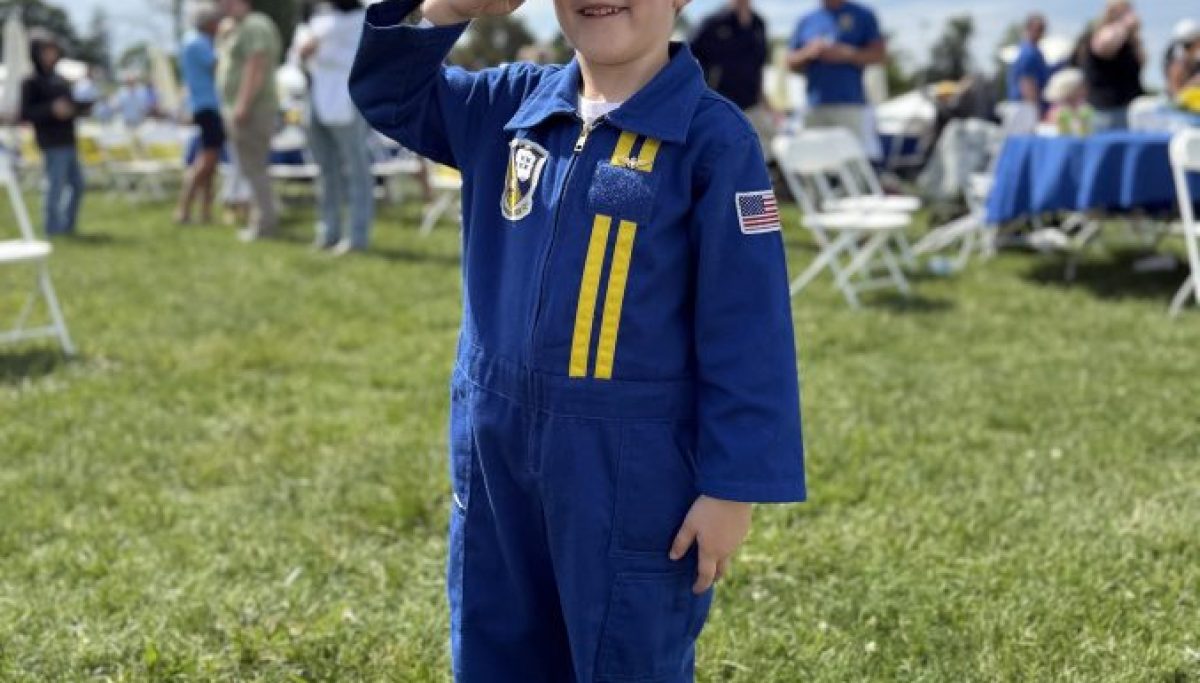
In Focus delivers deeper coverage of the political, cultural, and ideological issues shaping America. Published daily by senior writers and experts, these in-depth pieces go beyond the headlines to give readers the full picture. You can find our full list of In Focus pieces here.For parents across the country navigating the healthcare system, it’s a reality few Americans are aware of: A 3-year-old with a rare genetic liver disease can find himself competing for the same donated organ as a man in his 70s suffering from alcohol-related liver failure.Most Americans would assume that, in such a situation, the child would naturally receive special consideration and a better chance at receiving a life-saving organ. After all, we build children’s hospitals, have pediatric specialists for nearly every field of medicine, and generally agree that children deserve protections adults do not. Yet when it comes to liver transplantation, that isn’t how America’s organ allocation system works.This is the reality at the heart of a new inquiry by Sen. Chuck Grassley (R-IA), who recently asked the Government Accountability Office to investigate whether the nation’s organ procurement and allocation system is adequately serving pediatric patients. Of the move, Grassley said, “These families ride an emotional roller coaster every day while they navigate the complex medical care their child needs to survive.”It is an overdue question, because behind the technical language of transplant policy lies a system that many of the country’s leading pediatric transplant surgeons believe has quietly disadvantaged children for years — not because of a shortage of medical expertise or technology, but because the rules themselves have failed to keep pace with either.The debate is easy to dismiss as an obscure fight over medical regulations until you meet families like Ryan and Maria Bell.Their son William was born with biliary atresia, a rare and progressive liver disease that has no known cause and is fatal without a transplant. Much of his first two years of life were spent in hospitals as his liver deteriorated toward failure, infections threatened his life, and his bones became so fragile that they fractured easily. While his doctors worked desperately to keep him alive, they also found themselves fighting an entirely different battle: petitioning the national transplant system to recognize just how sick William had become. Every day was an agonizing waiting game.Courtesy of the William Bell family Just before Christmas, only two months before William’s second birthday, they got a call they had prayed for: an anonymous living donor gave William the transplant that saved his life. Today, he is five years old and dreams of someday flying with the U.S. Navy Blue Angels. Another little boy, Jett Dirksen, was born with nearly the same diagnosis. Like William, his physicians repeatedly fought to increase his priority on the transplant waiting list as his condition deteriorated. His parents, Tiziana and Jamir, celebrated his first birthday not at home surrounded by balloons and birthday cake, but in a hospital room, hoping each day would finally bring the organ their son needed.Eventually, Jett’s condition became so critical that he was granted Status 1B, a designation reserved for patients in immediate need of a transplant, but the call never came.Jett died in 2021, before his second birthday, before an organ became available.“No family should have to fight a system that feels out of their control when every day matters to keep their child alive,” his parents would later say.The difference between William and Jett was not parental devotion, nor the skill of their physicians. Both families had world-class medical teams advocating tirelessly on their behalf. Both had doctors repeatedly asking the transplant system to recognize that their patients were sicker than their scores suggested.William received the call every parent of a critically ill child prays for, but Jett never did.For years, many assumed tragedies like Jett’s were simply the unavoidable consequence of too few donated organs. But according to pediatric transplant surgeons, that explanation is increasingly incomplete.Dr. George Mazariegos is the co-founder of the Starzl Network, formed to advocate for children waiting for and recovering from transplant and the chief of transplant surgery at UPMC Children’s Hospital of Pittsburgh, is one of the world’s foremost pediatric transplant surgeons. He believes Grassley’s inquiry presents an important opportunity to examine whether the system itself contributes to preventable pediatric deaths. Courtesy of the Jett Dirksen family “We are tremendously encouraged by Senator Grassley’s request for important data that ultimately can spark action to protect children on the transplant journey,” Mazariegos told the Washington Examiner. “The OPTN system has done much to enact important transplant policy over the past decades but inadvertently pitted children against the larger adult population on transplant lists. We believe policy can be coupled with existing expertise to make sure both children and adults get the life-saving transplant they need.”The problem, he and other pediatric specialists argue, is not simply one of scarcity. It is one of governance.Only about 500 pediatric liver transplants are performed each year in the United States, compared with roughly 12,000 adult liver transplants. The committees that write national allocation policy are, therefore, overwhelmingly composed of representatives from adult transplant programs. Adult transplants have doubled over the course of the last decade, while pediatric transplants have remained steady. Adult programs understandably advocate for adult patients, while pediatric specialists make up a comparatively small voice in a system whose decisions affect thousands of children over time.The consequences have been profound. Despite decades of advances in pediatric surgery and a doubling of donated livers in the last ten years, infants in the U.S. continue to experience the highest wait-list mortality of any age group awaiting liver transplantation.What makes that statistic especially frustrating is that medicine has advanced dramatically while policy has largely stood still.Today, surgeons can frequently split a single donated adult liver, transplanting one portion into a child while using the remainder for an adult recipient, effectively saving two lives with one organ. New preservation technologies have dramatically expanded the number of usable donor livers.Several European countries now require suitable organs to be considered for splitting before they can be transplanted whole into a single adult. The U.S. has no such requirement.Meanwhile, pediatric physicians routinely find themselves forced to submit special petitions asking the transplant system to acknowledge that a child is actually sicker than his or her calculated score indicates. More than half of the children listed for liver transplantation require these extraordinary petitions, while adults rarely do.Dr. Sang-Mo Kang, the surgical director of liver transplant at UCSF Benioff Children’s Hospital, sees the issue from both sides as a surgeon who does both adult and pediatric transplants. The practice has become so commonplace that a recent national pediatric transplant conference devoted an entire symposium to teaching physicians how to write better petitions.That should strike policymakers as absurd. A system designed to identify the sickest patients should not require doctors to become experts in bureaucratic appeals simply to give dying children a fair chance.Congress itself recognized decades ago that children have unique medical needs, directing that transplant policy account for those differences. Yet, as Grassley’s inquiry suggests, good intentions written into law have not necessarily translated into practice.IS VIVEK RAMASWAMY THROWING AWAY HIS CHANCE IN OHIO?No transplant system can save every child. There will never be enough organs to eliminate every tragedy, but those tragedies should result from the limits of medicine, not from rules that experts have been warning are outdated for years.Grassley’s letter asks whether America’s transplant system is truly serving its youngest patients. The answer may determine whether the next family spends Christmas celebrating a miracle like William’s, or mourning a child like Jett.
The organ transplant system is failing sick children
Full Article
Original Source
Read the full article at Washingtonexaminer →KhanList aggregates and links to publicly available news content. We do not host full articles from third-party sources. Always verify important information with original sources.