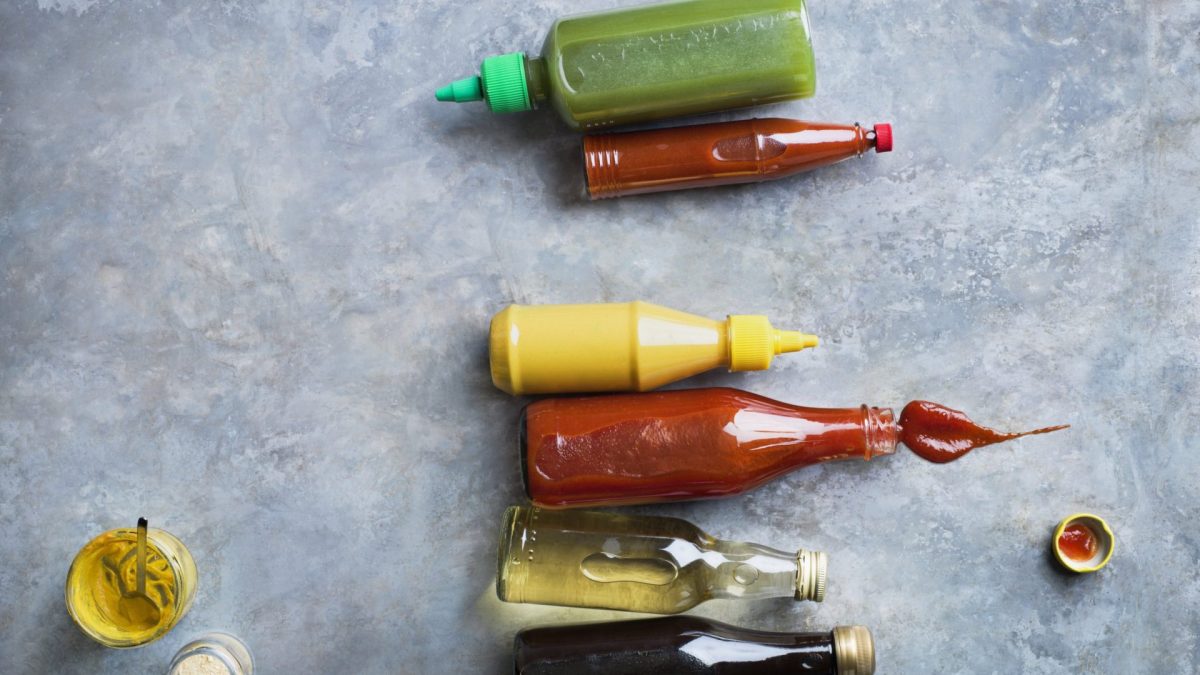
If you are someone who takes their condiments seriously, you will probably argue they make the meal. You are either someone who douses, drizzles and dollops on every plate, or not. And, frankly, life, or at least meal times, must be far duller for the latter. “It’s important to enjoy your food,” says registered dietitian Kyra Collins. “Being both satisfied and satiated by what you eat is all part of the picture in eating healthily. If adding a spoonful of mayonnaise, ketchup or hot sauce helps someone eat more vegetables, that’s a worthwhile trade-off.” When it comes to condiments, the main things to consider are portion size, how often they’re used, and being mindful of whether your chosen brands contain lots of added salt, sugar or calories, without you realising, Collins adds. So how healthy is your chilli oil addiction? How much mayonnaise is too much? Which “healthier” alternatives are a waste of money, and are there any reasonable alternatives to the condiments that are saltier than is ideal? We asked experts to rank their favourites. Shorts Mustard “Mustard is one of my favourite condiments because it’s naturally very flavourful – a little goes a long way – while being relatively low in energy and sugar, meaning you can add lots of taste with relatively little added calories, salt or sugar, as it’s generally lower in these added ingredients compared to many other condiments,” says nutritionist and author Rhiannon Lambert. To tip: whether you choose wholegrain, Dijon or English mustard is largely a matter of taste rather than nutrition, Lambert says. “Wholegrain mustard contains a little more fibre because the seeds remain intact, but the difference is fairly small given the quantities we usually eat.” Balsamic vinegar “Balsamic is a great way to add flavour with very few calories, but while some claim you should upgrade your basic balsamic for apple cider vinegar, there’s little evidence to support this nutritionally,” Collins says. “Apple cider vinegar has been heavily promoted for weight loss and blood sugar control, but the evidence is less impressive than social media suggests. The effects found in studies are relatively small and certainly not something I’d recommend people start drinking. If, like me, you enjoy it as a salad dressing, that’s absolutely fine but I wouldn’t swap it for balsamic for health reasons alone.” Vinegars like balsamic can add a burst of flavour to otherwise dull dishes – just be sure to go for the original rather than ‘glazes’ (Photo: Maria Korneeva/Getty) Top tip: do opt for balsamic vinegar over glazes, which tend to contain added sugars and/or thickeners to achieve the syrupy consistency. Hot sauce “Most hot sauces like Frank’s hot sauce, Encona, Tabasco or Sriracha are very low in calories, so from that perspective they’re a great way to add flavour,” says specialist registered dietitian Nichola Ludlam-Raine. “The biggest difference is sodium – some are considerably saltier than others, so it’s worth checking the ingredients if you use them daily.” Sriracha tends to contain more sugar than something like Tabasco or Frank’s, she adds, “although the amounts consumed are usually small.” Tabasco is made using just three ingredients, and has one of the lower salt contents of popular brands — though, equally, it sits on the milder end of the heat scale. Ketchup The OG table sauce might not be the most sophisticated condiment in your collection. Yet, while it doesn’t count towards one of your five a day, it does contain a small dose of lycopene (an antioxidant) because it is made from cooked tomatoes. “Cooking makes lycopene more available for your body to absorb,” explains Collins. “That said, you’d get more lycopene from eating tomato-based foods like passata or tomato soup”. Ketchup is a classic for a reason. While it may not boost your health, it certainly won’t harm it (in small doses) (Photo: Guvendemir/Getty) The main things to be mindful of when it comes to ketchup are the added sugar and salt, Lambert adds. Is it worth opting for reduced sugar and salt versions? The difference is fairly minimal, so unless you’re having generous helpings several meals a day, “a small dollop alongside a balanced meal is absolutely fine,’ she says. “Sugar-free versions can reduce the sugar content, although they may use sweeteners instead.” Mayonnaise Mayonnaise gets an unfair reputation, argues Ludlam-Raine. “It’s high in fat because it’s made largely from oil (usually around 75 per cent), but unsaturated oils such as rapeseed oil aren’t something most people need to avoid. The key is portion size – a tablespoon is very different from half a jar. The calories can add up without contributing much nutritionally – but a small amount isn’t going to do any harm.” Collins agrees that recent criticisms of seed oils are not supported by the current body of evidence. “Rapeseed oil, which is commonly used in mayonnaise, is actually low in saturated fat and high in heart-healthy unsaturated fats. The current evidence doesn’t support avoiding it.” And what of the posher varieties, such as M&S Only 6 Ingredients Olive Oil Mayonnaise or Hunter & Gather Avocado Oil Mayonnaise, which are marketed as “healthier” — are they worth the splurge? Probably not, according to Ludlam-Raine. “Olive oil mayonnaise offers a slightly different flavour profile, while avocado oil mayonnaise is often significantly more expensive without convincing evidence that it’s substantially healthier. I’d choose whichever you enjoy and use sparingly rather than paying a premium.” Top tip: make your own (egg-free) version. “A lighter homemade alternative could be a Greek-yoghurt-based dressing which provides protein,” suggests Collins. “Whisk Greek yoghurt with a pinch of garlic powder, onion powder, a dash of Dijon and lemon juice.” Crispy chilli oil Chilli oils, also known as chilli crisp, are everyone’s new obsession. Packed with concoctions of dried chillies, garlic, onion, spices, soybean oil and soy sauce to deliver highly addictive crunchy or jammy pastes that can add heat to – and level up – everything from rice bowls to stir-fries and scrambled eggs. So how do they weigh up nutritionally? “Chilli oils add plenty of flavour, which can make healthy meals more enjoyable, helping you to eat more vegetables or pulses,” says specialist registered dietitian Nichola Ludlam-Raine. “But it’s still an oil, so it’s energy-dense at around 100-120 kcal per tablespoon.” If you’re pouring chilli oil generously over several meals a day, those calories can add up, points out Collins. “It’s also worth noting that some versions contain quite a bit of salt, so check the label of your favourite brand, particularly if you use it regularly.” Eating spicy foods regularly may mean you build up a tolerance, meaning you need more heat to get the same sensation, Ludlam-Raine adds. So if you find yourself getting through a jar more and more quickly, that could be why. “It’s worth noting that anyone with acid reflux or Irritable Bowel Syndrome may find spicy foods worsen their symptoms.” Soy sauce “Soy sauce is one condiment where I’d be most mindful because it’s very high in sodium,” says Lambert. “If you use it regularly, I’d recommend choosing a reduced-salt version, which can contain around 40 per cent less sodium while tasting very similar.” Collins agrees, adding: “Soy sauce is one of the highest salt condiments available, so it makes it easy to consume quite a lot of sodium without noticing. You can further reduce the salt in your food when using soy sauce by cooking the rest of the meal salt-free.” Sweet chilli sauce “Sweet chilli sauce is much higher in sugar than hot sauces, as sugar is one of the main ingredients,” points out Collins. “These sauces tend to be easy to over-consume so be mindful of portion sizes.” It’s in the name: sweet chilli sauce is easy to overeat because of the added sugar, so dole it out with caution (Photo: Rapeepong Puttakumwong/Getty) Think of it as an occasional condiment rather than an everyday staple, Lambert suggests. “Again, portion size is key – a little goes a long way.” Dietitian and nutritionist-approved swaps When thinking about your condiment rotation, Lambert encourages considering what you can add to meals, whether that’s more plant sources, such as veggies, pulses or herbs, as well as fermented foods and/or healthy fats. Best swaps from nutrition experts: “Greek yoghurt is a brilliant swap for creamy dressings because it adds protein and calcium,” Ludlam-Raine says. Guacamole or mashed avocado is a delicious homemade alternative to shop-bought sauces, Collins adds. “My favourite quick guac recipe is one avocado, half a small red onion, one diced tomato, a pinch of chilli flakes, a pinch of salt and squeeze of lime blended together.” “Extra virgin olive oil is one of the best choices for everyday dressings thanks to its unsaturated fats and polyphenols,” according to Ludlam-Raine. “Hummus adds fibre and plant protein to meals,” Collins says. “Use sparingly.” Tomato salsa, made from tomatoes, onions, herbs and spices, is a nutritious condiment, says Collins. “Kimchi adds flavour and fermented vegetables to meals,” Ludlam-Raine says, “although it’s relatively high in salt, so it’s best enjoyed as part of a balanced diet.”
The least healthy condiments, according to nutritionists – and what to swap
Full Article
Original Source
Read the full article at Inews →KhanList aggregates and links to publicly available news content. We do not host full articles from third-party sources. Always verify important information with original sources.